
Softened water and water-heater life
Scale on a heater's elements and tank floor is what ends its life early. See how softening changes that, and the numbers that decide payback.
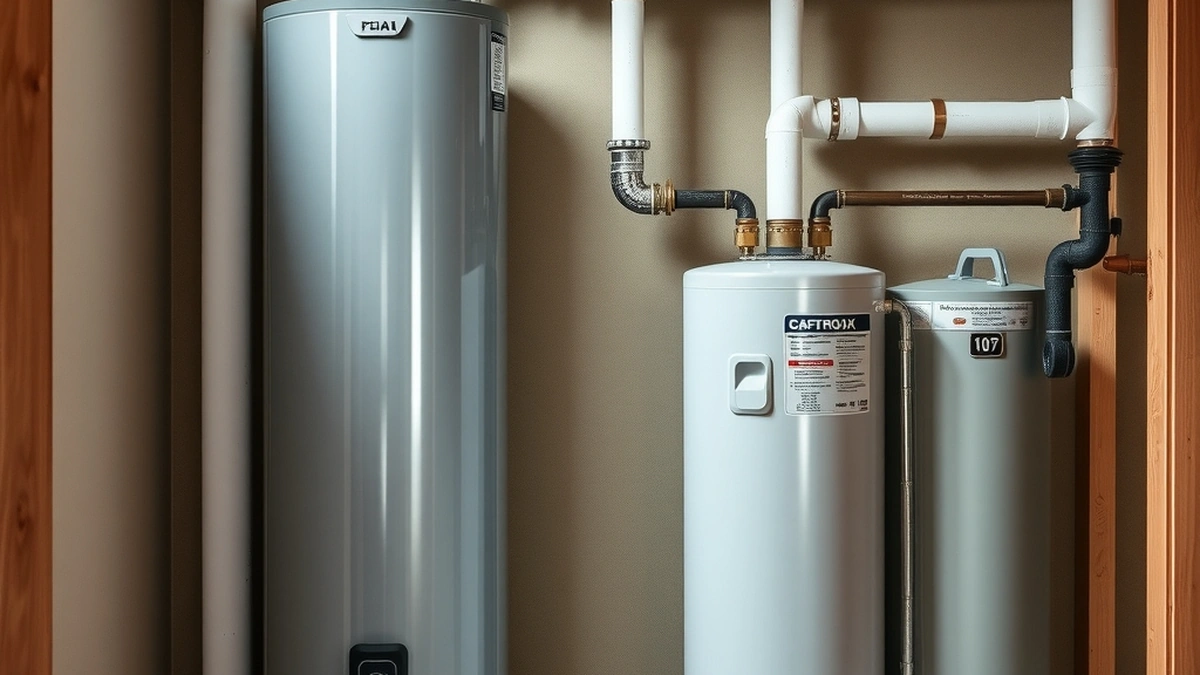
Softened water prevents the calcium and magnesium scale that insulates heating elements and coats tank floors, so a heater keeps its rated efficiency and lasts closer to its full service life. Softening does not remove the need for anode rod service or flushing.
- Scale effect
- Insulates elements, reduces efficiency
- Hardness threshold
- 7 GPG and above
- Softener installed
- $1,200 - $4,500
- Annual salt
- $120 - $400
- Heater flush interval
- 1 - 2 years
Some links on this page are affiliate links.If you buy through them we may earn a commission at no extra cost to you. We do not accept payment for rankings. Read the full disclosure.
Softened water protects a water heater by removing the calcium and magnesium that form scale on heating surfaces. That scale is an insulator: it sits between the flame or element and the water, so the heater runs longer and hotter to deliver the same hot water. Remove the minerals upstream and the scale stops forming.
What Scale Does Inside a Heater
Hard water carries dissolved calcium and magnesium bicarbonates. Heat drives the bicarbonate equilibrium toward carbonate, which is far less soluble, and it precipitates onto the hottest surface available. In a tank heater that is the burner plate or the elements. In a tankless heater it is the heat exchanger tubes.
Scale has a thermal conductivity roughly a fraction of steel’s, so a layer of even a few tenths of a millimeter raises the surface temperature needed to transfer heat. The consequences stack:
- The burner or element runs longer for the same recovery
- The tank floor and flue surfaces run hotter, accelerating corrosion
- Sediment traps at the bottom, creating a zone where the tank wall overheats
- In tankless units, narrow passages narrow further until flow drops
The last item is where tankless owners notice first: a shower that starts hot and fades, or a unit that trips a flow error.
Hardness Bands and the Threshold
Hardness is measured in grains per gallon. The bands are 0 to 3 GPG soft, 3 to 7 moderate, 7 to 10 hard, and above 10 very hard. Scale becomes a practical problem in the hard band and above, which is why 7 GPG is the usual threshold for recommending a softener.
| Hardness | Scale risk | Heater impact |
|---|---|---|
| 0 - 3 GPG | Low | Minimal |
| 3 - 7 GPG | Moderate | Slow buildup over years |
| 7 - 10 GPG | High | Visible scale, efficiency loss |
| 10+ GPG | Very high | Rapid buildup, early failure |
A heater on 15 GPG water in a hard-water state may accumulate enough scale to affect recovery within two or three years. The same heater on softened water may go its full service life with only annual flushing.
The Economics
A softener installed runs $1,200 to $4,500. Salt runs $120 to $400 per year. A tank water heater replacement runs roughly $1,000 to $2,500 installed depending on size and fuel, and a tankless unit considerably more.
The payback case is not one heater. It is the whole set of appliances that scale affects: the heater, the dishwasher, the washing machine, the coffee maker, and the fixtures. Attributing the entire softener cost to the heater overstates the case, and attributing none of it understates it.
A defensible way to frame it: if softening extends a $1,500 heater’s life from 8 years to 12 years, that is one avoided replacement every 12 years instead of every 8, or about $125 per year of avoided capital cost. Add the efficiency difference and the case is real but not dramatic. The stronger argument is convenience and the other appliances.
What Softening Does Not Fix
Softening removes hardness. It does not remove sediment, and it does not stop corrosion.
Sediment still arrives from a municipal supply or a well, and it still settles at the bottom of a tank. Flush the tank every one to two years through the drain valve, even with a softener.
Corrosion is a pH and chemistry issue. Softened water is typically less scaling and sometimes slightly more corrosive to metal than very hard water, which is why the anode rod matters. Check the rod every three to four years and replace it when it is more than half consumed. A $20 to $40 rod is what protects the tank lining.
Chlorine passes through a softener. If the municipal supply is heavily chlorinated, a carbon filter ahead of the softener reduces the oxidant load on the anode and the tank.
Tank vs Tankless
| Heater type | Scale sensitivity | Softener value |
|---|---|---|
| Gas tank | Moderate | Extends tank life, preserves recovery |
| Electric tank | High on elements | Prevents element replacement |
| Tankless gas | Very high | Avoids frequent descaling |
| Heat pump water heater | Moderate | Protects the immersed coil |
Electric tank heaters are the clearest case: scale on an element causes it to overheat and fail, and element replacement is a service call. A softener prevents that specific failure.
Tankless units are the highest-value case. Descaling a tankless heat exchanger is a recurring maintenance item in hard water, and in very hard water it can be needed every year. Softening removes the task or reduces its frequency substantially. The descaling procedure is covered in scale in a tankless heater.
Five Steps to Protect the Heater
- Test hardness and confirm the GPG number with a $40 to $150 lab panel.
- Install a softener if hardness is 7 GPG or above, sized to the household load.
- Flush the tank annually through the drain valve until the water runs clear.
- Check the anode rod every three to four years and replace it before it is consumed.
- Descale a tankless unit per the manufacturer’s interval, or annually in hard water.
The Order of Operations
Softener before the heater, always. A softener installed downstream of the heater protects nothing, because the scale has already formed. It also exposes the resin to hot water, which most resins tolerate only up to about 100 to 120 F continuously.
That means the softener goes on the cold main before the heater branch. If the house has a hot-water recirculation loop, confirm the softener is not on it. The layout is the same one described in well water system layout, and the sizing math is in water softener sizing.
If you are already seeing reduced hot water recovery, the heater may need a flush or a descale before any treatment decision. Fix the symptom, then prevent the cause.
Frequently asked questions
Does softened water make a water heater last longer?
It removes the hardness minerals that form scale on elements and tank floors, which is the main cause of reduced efficiency and early failure in hard water areas.
Is softened water bad for a water heater?
No, at normal hardness levels the sodium added by softening does not attack the tank or the anode rod in a way that shortens heater life.
How much efficiency does scale cost?
Scale insulates the heat transfer surface, so the burner or element runs longer to deliver the same hot water; the loss grows as the layer thickens and is typically described in single-digit percentages per year of buildup.
Do tankless heaters benefit from softened water?
Especially yes, because scale coats the narrow heat exchanger passages and descaling is the main maintenance item on a tankless unit in hard water.
Should I still flush the heater if I have a softener?
Yes, every one to two years, because sediment and corrosion products still accumulate even when hardness scale does not.
Does a softener affect the anode rod?
It does not consume the rod directly, but softened water is often less corrosive than very hard water, and the rod should still be checked every few years on any tank.
Sources
Some links are affiliate links.If you buy through them we may earn a commission at no extra cost to you. We do not accept payment for rankings. Read the full disclosure.


