Scale in a tankless heater: prevention and descaling
Hard water scales a tankless heat exchanger and cuts flow. See the descaling process, the vinegar and pump setup, and how a softener prevents it.
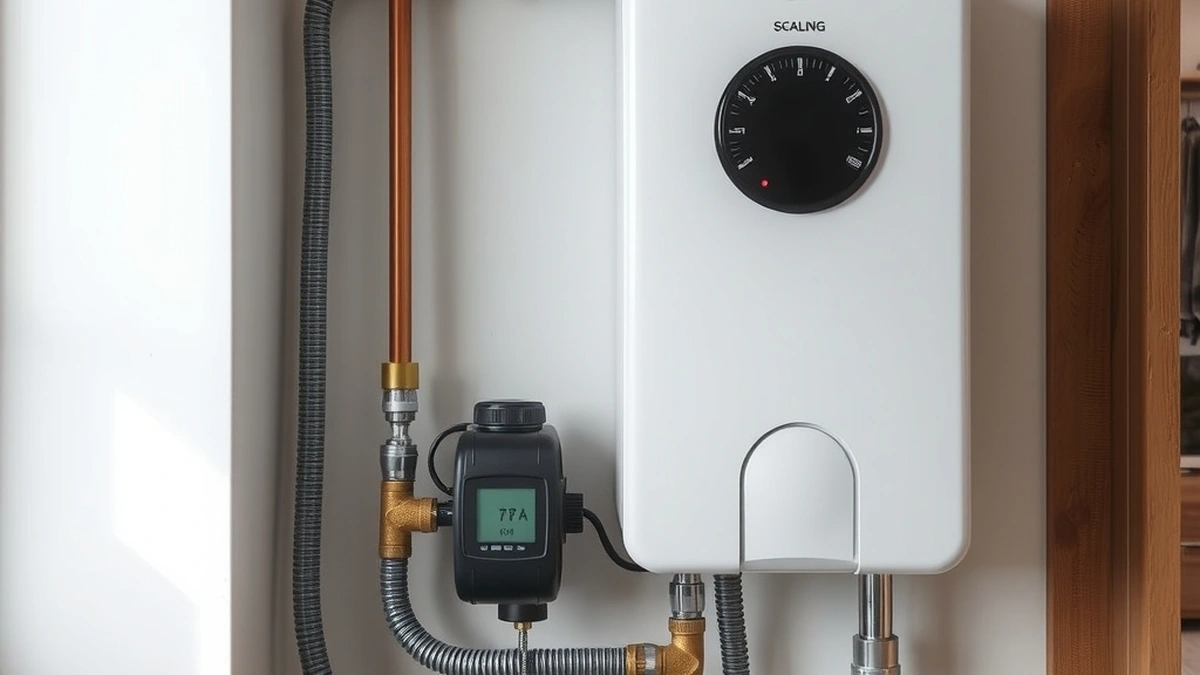
Scale coats the narrow passages of a tankless heat exchanger, reducing flow and hot water output. Descaling with a pump, hoses, and a mild acid flush restores performance, and a water softener removes the hardness minerals so the scale stops forming in the first place.
- Descale interval
- Every 1 - 2 years in hard water
- Hardness threshold
- 7 GPG and above
- Descale kit cost
- $100 - $250
- Softener installed
- $1,200 - $4,500
- Scale band
- 10+ GPG is very hard
Some links on this page are affiliate links.If you buy through them we may earn a commission at no extra cost to you. We do not accept payment for rankings. Read the full disclosure.
Scale in a tankless heater forms inside the heat exchanger, where the water gets hottest and the passages are narrowest. It reduces flow, makes hot water output erratic, and eventually triggers error codes. Descaling removes it; a softener prevents it. The order matters, because descaling a scaled unit every year is a maintenance bill that never ends.
Why Tankless Units Scale Faster Than Tanks
A tank heater has a large volume of water and a heating surface that scale can coat, but the passages are wide. A tankless unit forces water through a copper or stainless exchanger with channels measured in millimetres. Heat transfer is intense and the water is at its hottest right at the metal.
That combination is exactly what precipitation needs: high temperature plus a surface. Calcium carbonate comes out of solution and adheres. The layer grows inward, narrowing the channel. Flow drops, the unit senses a lower flow rate, and it may derate or shut down to protect itself.
The hardness bands tell you the risk: 0 to 3 GPG soft, 3 to 7 moderate, 7 to 10 hard, above 10 very hard. In the very hard band, annual descaling is not optional maintenance; it is what keeps the unit running.
The Symptoms
Scale does not announce itself. The early signs are easy to attribute to something else:
- Hot water flow at a tap feels weaker than it used to
- The shower starts hot and cools after a few minutes
- Temperature fluctuates when two fixtures run
- The unit displays a flow or overheat error
- The unit runs longer to reach the set temperature
Any of those on a unit more than a year old in hard water is a reason to descale before calling for service. A descale is cheap; a heat exchanger replacement is not.
The Descaling Process
Most tankless units have service valves on the cold inlet and hot outlet specifically for this. The procedure takes about an hour.
- Shut off the gas or power and close the isolation valves.
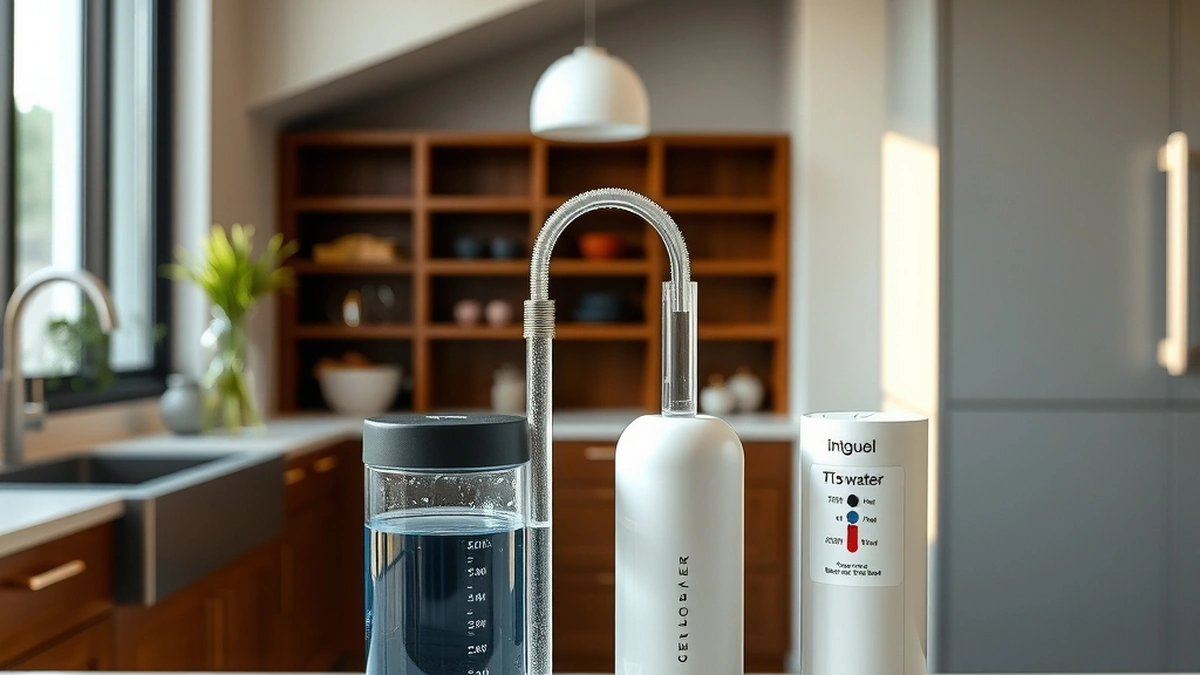
- Connect the pump to the cold service port and a return hose from the hot port into a bucket.
- Mix the descaler in the bucket per the manufacturer’s ratio; white vinegar works for light scale where the manual allows it.
- Circulate for 30 to 60 minutes, then flush with clean water until the return runs clear.
- Restore the valves, reopen water, and run hot to confirm flow and temperature.
| Descaling option | Cost | Notes |
|---|---|---|
| DIY pump kit | $100 - $250 | Reusable, pays back after two services |
| Vinegar flush | $5 - $15 per session | Mild, good for light scale |
| Proprietary descaler | $20 - $50 per session | Matched to the unit’s materials |
| Plumber service | $150 - $300 | Includes inspection and error check |
Prevention Beats Descaling
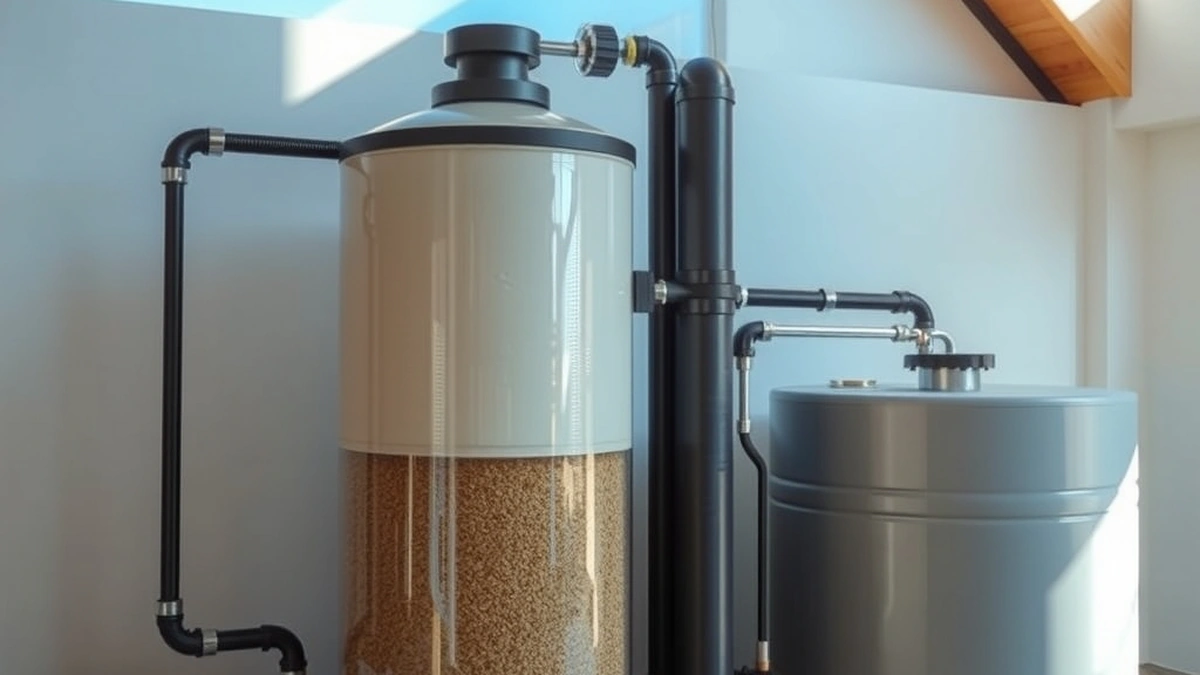
The upstream fix is removing hardness before the water enters the heater. A softener does that by ion exchange, and it is the only approach that eliminates the calcium and magnesium rather than altering how they behave.
Installed cost runs $1,200 to $4,500, with salt at $120 to $400 per year. Against that, a plumber descale at $200 every year for ten years is $2,000, and it does not prevent the gradual loss of heat transfer between services. The softener also protects the dishwasher, the washing machine, and the fixtures, which is where the rest of the value sits.
Salt-free conditioners are a different product. They alter crystallization so scale adheres less, which may reduce descaling frequency, but they do not remove hardness from the water. If the goal is to stop descaling entirely, they will not do it. The distinction is in salt-based versus salt-free.
Softener Sizing for a Tankless House
Tankless heaters often appear in high-demand households, which means the softener must handle peak flow as well as capacity. A four-person home at 12 GPG has a daily load of 4 × 75 × 12 = 3,600 grains. Weekly regeneration needs about 25,200 grains, so a 32,000 grain unit covers it.
Peak flow is the second constraint. Two showers plus a dishwasher is about 6.5 gpm, which a 32,000 grain unit in a 10 inch tank with a 3/4 inch valve handles. A larger house with three simultaneous showers needs a 1 inch valve. The split between capacity and flow is covered in capacity versus flow rate.
Five Steps to Protect the Unit
- Test hardness and record the GPG number before choosing equipment.
- Install a softener if hardness is 7 GPG or higher, sized on both capacity and peak flow.
- Descale on the manufacturer’s interval even with a softener, because some scale still forms.
- Keep the service valves accessible and label them, so descaling does not require moving the unit.
- Log each descale with the date and the descaler used, which helps at warranty time.
What Not to Do
Do not run a descaling solution through the domestic hot water system; it is for the heater only, connected at the service ports. Do not use a stronger acid than the manual allows, because it can attack the exchanger. Do not skip the clean-water flush, because residual acid will sit in the unit.
Do not assume a softener makes descaling unnecessary forever. It reduces scale dramatically, and the manufacturer’s interval still applies, especially in the very hard band. A softener plus a biennial descale is a reasonable regime; a softener alone with no descale for a decade is not.
If the unit is already erroring on flow, descale first and see whether the error clears before authorising a repair. Many flow errors are scale, not a failed sensor. The same logic applies to softened water and water heater life, where the tank version of this problem is covered.
Frequently asked questions
How often should a tankless heater be descaled?
Every one to two years in water at 7 GPG or harder, and annually in very hard water above 10 GPG; manufacturers publish a specific interval for their unit.
What does descaling a tankless heater cost?
A DIY kit with a pump, hoses, and a bucket runs $100 to $250, while a plumber typically charges $150 to $300 per service.
Can vinegar descale a tankless heat exchanger?
White vinegar is a mild acid and works for light scale, but manufacturers often specify a proprietary descaler rated for the unit's materials, so follow the manual.
What are the signs of scale in a tankless heater?
Reduced hot water flow, temperature fluctuations, error codes for flow or overheat, and a shower that starts hot then cools as the exchanger struggles.
Does a water softener prevent tankless scale?
Yes, because it removes the calcium and magnesium that precipitate as scale; it is the upstream fix rather than a treatment for scale that has already formed.
Can I install a scale inhibitor instead of a softener?
A scale inhibitor or salt-free conditioner may reduce adhesion but does not remove hardness, so descaling frequency may drop without being eliminated.
Sources
Some links are affiliate links.If you buy through them we may earn a commission at no extra cost to you. We do not accept payment for rankings. Read the full disclosure.