
Capacity vs flow rate: two different limits
Grain capacity and flow rate are separate limits on a softener. A big tank can still choke a shower. See how each is measured and how to size both.
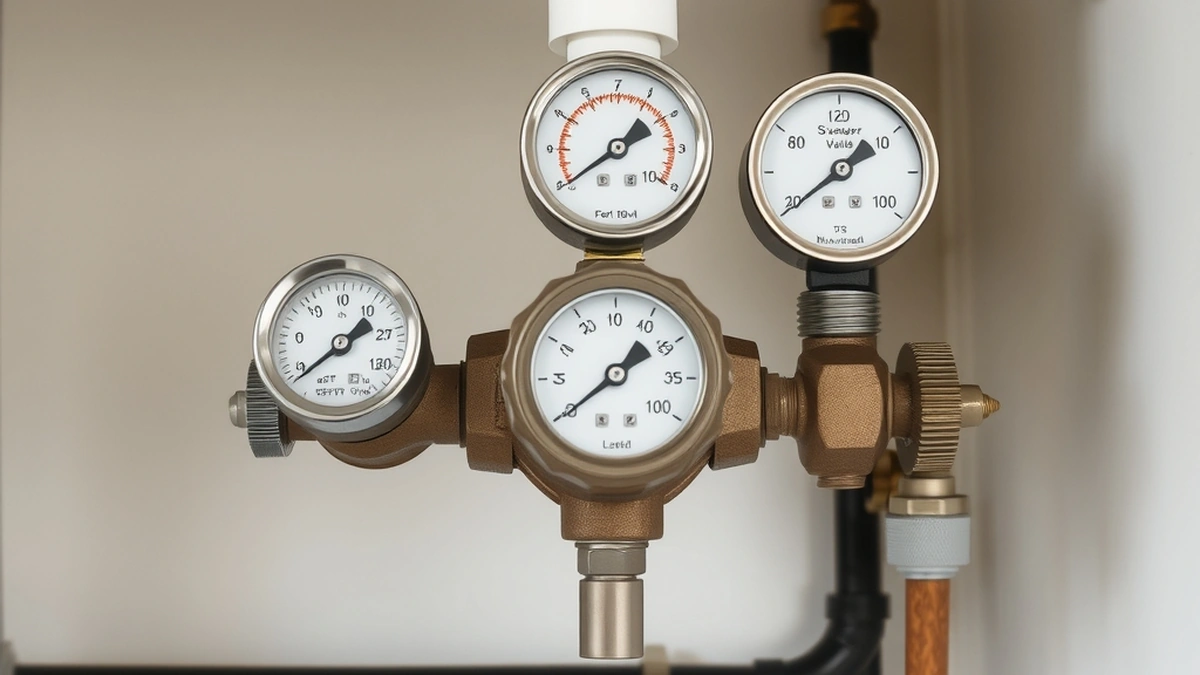
Capacity is how much hardness a softener removes between regenerations, in grains. Flow rate is how many gallons per minute it passes without excessive pressure drop. A unit can have ample capacity and still be too small on flow.
- Capacity range
- 24,000 - 64,000 grains
- Typical peak flow
- 8 - 15 gpm
- Pressure drop target
- Under 15 psi at peak
- Valve sizes
- 3/4 inch and 1 inch
- Resin bed depth
- About 30 inches minimum
Some links on this page are affiliate links.If you buy through them we may earn a commission at no extra cost to you. We do not accept payment for rankings. Read the full disclosure.
Capacity and flow rate are two independent limits, and confusing them is the most common sizing error in residential softening. Capacity tells you how long the unit lasts between regenerations. Flow rate tells you whether it can supply a shower and a washing machine at the same time. A softener can be generous on one and marginal on the other.
Two Measurements, Two Jobs
Capacity is expressed in grains, the same unit as hardness. A 48,000 grain softener can remove 48,000 grains of hardness before it must regenerate. It is a total, like the size of a fuel tank.
Flow rate is expressed in gallons per minute. It is the rate at which water can pass through the resin bed without the pressure drop becoming noticeable. It is a pipe, not a tank.
A unit with a tall, narrow tank can hold a great deal of resin, which gives high capacity, while presenting a small cross-section to the water, which limits flow. A short, wide tank does the opposite. That is why two softeners with the same grain rating can behave completely differently in the same house.
How Each Is Sized
Capacity comes from the load calculation: people × gallons per person per day × hardness in GPG. Four people at 75 gallons and 10 GPG is 3,000 grains per day, so a 32,000 grain unit regenerates about weekly. That math is in what size softener a family of four needs.
Flow comes from fixture demand. Add the fixtures likely to run at once:
| Fixture | Approximate flow |
|---|---|
| Shower | 2.5 gpm |
| Tub filler | 4 - 6 gpm |
| Washing machine | 2 - 3 gpm |
| Dishwasher | 1 - 2 gpm |
| Kitchen faucet | 1.5 - 2 gpm |
| Outdoor hose bib | 5 - 10 gpm |
A house where a shower, a washer, and a dishwasher overlap peaks around 6 to 8 gpm. Add a second shower and it is 9 to 11 gpm. Add an irrigation line and the number jumps again, which is why outdoor watering is often plumbed upstream of the softener.
The Pressure Drop Test
The practical measure of flow adequacy is pressure drop across the unit at peak demand. Put a gauge on the inlet and another on the outlet, run several fixtures, and read the difference. Under about 15 psi is fine. Over 20 psi, the unit is restricting the house.
That restriction is felt as weak showers, slow toilet fill, and a washing machine that takes forever to fill. Homeowners often blame the municipal supply or the well pump when the softener is the bottleneck. If the pressure is fine at an outdoor tap upstream of the softener and weak at a shower downstream, the softener is the cause.
| Symptom | Capacity problem | Flow problem |
|---|---|---|
| Hard water returns in days | Yes | No |
| High salt use | Yes | No |
| Weak shower pressure | No | Yes |
| Slow fixture fill | No | Yes |
| Pressure fine upstream, weak downstream | No | Yes |
| Regenerates nightly | Yes | No |
Valve Size, Bed Depth, and Tank Diameter
Three physical details set the flow limit.
Valve size. A 3/4 inch control valve passes less water than a 1 inch valve. For a house with three or more bathrooms, the 1 inch valve is often the difference between adequate and marginal.
Bed depth. Resin needs a minimum depth, commonly around 30 inches, to achieve proper contact and backwash expansion. A tank that is too short for its resin volume will either lose resin to the drain or fail to clean the bed.
Tank diameter. A larger diameter gives more cross-sectional area for water to pass, reducing velocity through the bed and lowering pressure drop. This is why 48,000 grain units are sometimes built in a 10 inch tank rather than a 9 inch tank.
Put together: capacity scales with resin volume, flow scales with cross-section and valve size. Buying the biggest tank available does not fix a flow problem, and buying the widest tank does not fix a capacity problem.
Working an Example
Take a four-person home at 12 GPG hardness with three bathrooms. Daily load is 4 × 75 × 12 = 3,600 grains. Weekly regeneration needs about 25,200 grains, so a 32,000 grain unit covers capacity with margin.
Peak flow with two showers, a washer, and a dishwasher is about 2.5 + 2.5 + 3 + 1.5 = 9.5 gpm. A 32,000 grain unit in a 9 inch tank with a 3/4 inch valve may be rated near 8 to 10 gpm and sit right at the edge. The better pick is a 32,000 grain unit in a 10 inch tank with a 1 inch valve, which keeps capacity the same and improves flow.
Cost difference between those two configurations is typically a few hundred dollars on equipment, inside the $600 to $2,500 range, and it is cheaper than replumbing after the fact.
Five Steps to Size Both
- Test hardness and get a GPG number. A $40 to $150 lab panel gives you the input for capacity.
- Calculate daily grains from people, gallons, and hardness.
- Add up peak fixture flow for a realistic simultaneous demand.
- Match both numbers to a spec sheet, not just the grain rating on the box.
- Verify with gauges after install. If pressure drop at peak exceeds 15 psi, the flow side is wrong.
Where This Goes Wrong in Practice
The classic failure is a homeowner upgrading from a 24,000 grain unit to a 64,000 grain unit to fix hard water that keeps returning, when the real problem was a hardness setting that did not match the water. The larger unit regenerates less often, which masks the setting error for a while, then the same symptom returns.
The second classic is a builder installing a 32,000 grain unit with a 3/4 inch valve in a four-bath house because the grain rating looked adequate. Capacity is fine and pressure is not.
Both errors are avoidable with two numbers instead of one. If you are also choosing between metered and timer control, metered versus timer valve explains how the regeneration trigger interacts with capacity, and water softener sizing walks the full method including reserve settings.
Frequently asked questions
What is the difference between capacity and flow rate?
Capacity is the total hardness a softener can remove before regenerating, in grains; flow rate is the volume per minute it can pass while doing so, in gallons per minute.
Can a softener be oversized on capacity but undersized on flow?
Yes, and it is common. A tall narrow tank holds a lot of resin but restricts flow, so a four-bathroom house can lose pressure even with plenty of capacity left.
How much pressure drop is acceptable across a softener?
Under about 15 psi at peak demand is the usual target; more than that shows up as weak shower pressure and slow fixture fill.
Does a 1 inch valve increase flow?
Yes. A 1 inch control valve and matching plumbing pass substantially more water than 3/4 inch, which is why large homes often need the larger valve more than a larger tank.
How do I estimate peak flow for my house?
Count simultaneous fixtures: a shower is about 2.5 gpm, a tub filler 4 to 6 gpm, a washer 2 to 3 gpm, and add them for a realistic peak.
Does resin volume decide both limits?
No. Resin volume sets capacity, while tank diameter, bed depth, and valve size set flow; that is why the two numbers do not scale together.
Sources
Some links are affiliate links.If you buy through them we may earn a commission at no extra cost to you. We do not accept payment for rankings. Read the full disclosure.


