
Metered vs Timer Control Valve: Key Differences
Compare metered and timer control valves for water softeners, including regeneration triggers, salt use, and installed cost.
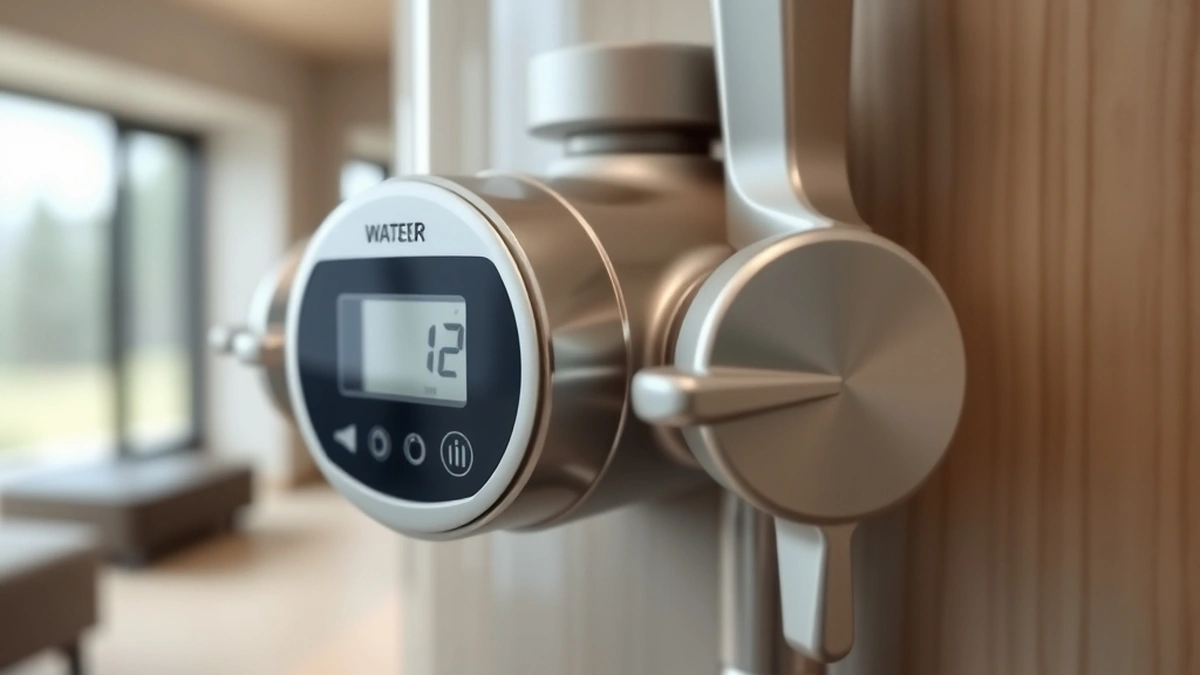
Metered valves regenerate after a set volume of water is used; timer valves regenerate on a fixed calendar schedule regardless of usage.
- Metered valve trigger
- Water volume (gallons)
- Timer valve trigger
- Days on calendar
- Typical salt per regeneration
- 8-12 lbs
- Softener equipment cost
- $600-$2,500
- Typical installed cost
- $1,200-$4,500
Some links on this page are affiliate links.If you buy through them we may earn a commission at no extra cost to you. We do not accept payment for rankings. Read the full disclosure.
A metered control valve regenerates a water softener after a measured number of gallons has passed through the resin tank. A timer control valve regenerates on a fixed calendar schedule, such as every three days, whether the household has used any water or not. For most homes, the metered approach matches regeneration to actual demand and typically reduces salt and wastewater compared with a timer.
How Each Control Valve Works
The control valve is the brain of a water softener. It tracks when the resin bed is nearing its exchange limit and starts a regeneration cycle to flush hardness minerals down the drain and recharge the resin with sodium or potassium ions.
A metered valve uses a flow meter, usually a small paddlewheel or turbine inside the valve body, to count gallons. The owner or installer programs the valve with the softener’s grain capacity and the water’s hardness in grains per gallon. The valve calculates how many gallons can be treated before regeneration is required. When that volume is reached, the next regeneration starts, often at a preset time such as 2:00 a.m.
A timer valve ignores flow. It regenerates after a set number of days, regardless of whether the household used 50 gallons or 500 gallons that week. Some timers allow a 7-day or 12-day cycle, while older mechanical models may offer fewer options. Because the timer does not know how much capacity remains, it can regenerate too early or too late.
Regeneration Frequency and Salt Use
Salt use is directly tied to regeneration frequency. A typical regeneration uses 8-12 pounds of salt, depending on the softener size and the programmed salt dose. If a timer regenerates every three days, that is roughly 120 regenerations per year. At 10 pounds per regeneration, that is 1,200 pounds of salt annually. At $0.30-$0.60 per pound, annual salt cost could run roughly $360-$720, though actual prices vary by region and bag size. This falls near or above the typical $120-$400 yearly salt range for many households, so a timer can push operating costs toward the high end.
A metered valve regenerates only when the calculated gallon capacity is reached. In a household that uses less water than the timer assumes, the metered valve might regenerate every six or eight days instead of every three. That cuts the number of regenerations roughly in half and can reduce salt use proportionally. In a household with high water use, the metered valve may regenerate more often than a conservative timer, but it is responding to real demand rather than a guess.
Here is a simplified comparison for a household using 300 gallons per day with water at 10 grains per gallon hardness:
| Factor | Metered Valve | Timer Valve |
|---|---|---|
| Trigger | Gallons used | Days elapsed |
| Regenerations per year | Varies with usage | Fixed schedule |
| Salt per regeneration | 8-12 lbs | 8-12 lbs |
| Risk of wasted regeneration | Low | Moderate to high |
| Risk of hard-water breakthrough | Low if sized correctly | Moderate if usage spikes |
| Typical upfront cost difference | Slightly higher | Slightly lower |
These figures are estimates. Actual salt consumption depends on resin volume, salt dose setting, iron content, and household water habits.
Sizing the Softener for the Valve Type
Control valve choice does not change the resin tank size, but it changes how effectively that capacity is used. Softeners are commonly sold in sizes from 24,000 to 64,000 grains. To estimate daily grain removal, multiply daily water use by hardness in grains per gallon.
Example: A home uses 350 gallons per day. Water hardness is 12 grains per gallon.
350 gallons × 12 grains per gallon = 4,200 grains per day
A 32,000-grain softener would theoretically last about 7.6 days between regenerations if no reserve is held. A metered valve can be programmed to regenerate at roughly 80 percent of capacity, leaving a reserve for unexpected high-use days. A timer set to regenerate every three days would regenerate well before the resin is exhausted, wasting salt and water. A timer set to every seven days might run the resin close to or past capacity on heavy-use days, potentially allowing hard water to bypass.
Iron can also affect sizing. Many softeners handle dissolved iron up to about 2-3 parts per million, but iron fouling reduces effective capacity over time. If iron is present, a metered valve still tracks gallons, but the resin may need more frequent cleaning or a dedicated iron filter. For more on iron treatment, see /iron-filter-cost/.
Installed Cost and Long-Term Value
Water softener equipment typically costs $600-$2,500. Professional installation typically adds $500-$1,500, for a total installed range of $1,200-$4,500. A metered valve usually costs more than a basic mechanical timer, but the difference is often a fraction of the total installed price. Over a 10-15 year softener life, salt savings from a metered valve can offset the higher upfront cost.
For context, resin rebeds typically cost $300-$600 and are commonly needed after 8-12 years, while the full softener may last 10-15 years. Salt typically costs $120-$400 per year for an efficiently run household, though heavy use or inefficient timer settings can push costs higher. More detail on equipment and installation pricing is available at /how-much-does-a-water-softener-cost/ and /water-softener-installation-cost/.
When a Timer Valve Makes Sense
Timer valves are not obsolete. They can be appropriate for properties with extremely predictable water use, such as a small vacation cabin occupied on the same weekends every month. If the household always uses roughly the same volume between visits, a timer can be set to regenerate after departure so the system is ready for the next arrival.
Timers are also simpler mechanically and may have fewer electronic components to fail. In locations with unstable power or where no one wants to program grain capacity and hardness settings, a basic timer can be easier to set and leave alone. The tradeoff is less efficiency: the timer does not know if the house was empty for two weeks, so it may still regenerate on schedule and discharge brine unnecessarily.
When a Metered Valve Is the Better Fit
Metered valves suit most full-time households, especially those with variable water use. Families with laundry-heavy weeks, houseguests, or irrigation seasons will see demand fluctuate. A metered valve adjusts automatically, while a timer requires manual reprogramming to avoid running out of soft water or wasting salt.
Metered controls also pair well with high-efficiency softeners that use brinemaking and upflow regeneration to reduce salt and water per cycle. Because the valve knows exactly how much water has passed, it can initiate regeneration precisely when the resin approaches exhaustion rather than on a calendar guess.
For homes evaluating broader treatment options, whole-house filtration typically runs $500-$1,800 installed, and reverse osmosis systems range from $300-$900 installed for under-sink models. Whole-house reverse osmosis can run $3,000-$8,000 installed. These systems serve different purposes than softening, and a water test should come before any equipment decision. More information is available at /whole-house-water-filter-cost/ and /reverse-osmosis-system-cost/.
Maintenance and Service Considerations
Both valve types need occasional attention. The meter turbine on a metered valve can collect sediment or scale, so a pre-filter or sediment cartridge may be wise if the water contains particles. Sediment cartridges typically need replacement every 3-6 months. Timer valves have fewer moving parts but still use seals, pistons, and motors that wear over 10-15 years.
Regeneration cycles on either valve produce brine discharge. Homeowners should confirm local plumbing codes allow discharge into a septic system or municipal sewer, and they should ensure the drain line has an air gap to prevent backflow. Neither valve type removes contaminants such as nitrate, arsenic, or bacteria. A lab water test typically costs $40-$150 and should guide whether softening alone is sufficient or whether additional treatment, such as UV ($30-$90 per lamp annually) or carbon filtration ($80-$300 per year for cartridges), is needed.
Bottom Line
Choose a timer valve if water use is highly predictable and upfront simplicity matters most. Choose a metered valve if you want regeneration tied to actual gallons used, which generally means less salt, less wastewater, and better protection against hard-water breakthrough during high-use periods. Equipment and installation for a softener typically fall in the $1,200-$4,500 range, and the control valve is only one part of that total. Always test the water first, then size the equipment to the results.
Next, compare how much does a water softener cost, water softener installation cost, whole house water filter cost before you commit.
Frequently asked questions
What is the main difference between metered and timer valves?
A metered valve starts regeneration based on gallons used, while a timer valve starts regeneration on a set day interval whether water was used or not.
Which valve type uses less salt?
Metered valves generally use less salt because they only regenerate when the resin approaches capacity, whereas timers can regenerate unnecessarily during low-use periods.
Do metered valves cost more up front?
Metered controls often add modest upfront cost compared with basic timers, but total installed price still falls within the typical $1,200-$4,500 softener range.
How often does a timer valve regenerate?
A timer valve regenerates on a fixed schedule, such as every 2, 3, or 7 days, independent of actual water consumption.
Can a timer valve work for a vacation home?
Yes, a timer may be practical for predictable, low-occupancy use, but it can waste salt and water if the home sits unused during a scheduled regeneration.
What size softener should I consider?
Residential softeners commonly range from 24,000 to 64,000 grains; proper size depends on hardness, iron, and daily water usage.
Sources
Some links are affiliate links.If you buy through them we may earn a commission at no extra cost to you. We do not accept payment for rankings. Read the full disclosure.


