How to Test for Tannins in Water: Color vs Iron
Tannins tint water tea-colored, and iron can look similar. See the lab panel, the bleach test, and how to separate organic color from metal.
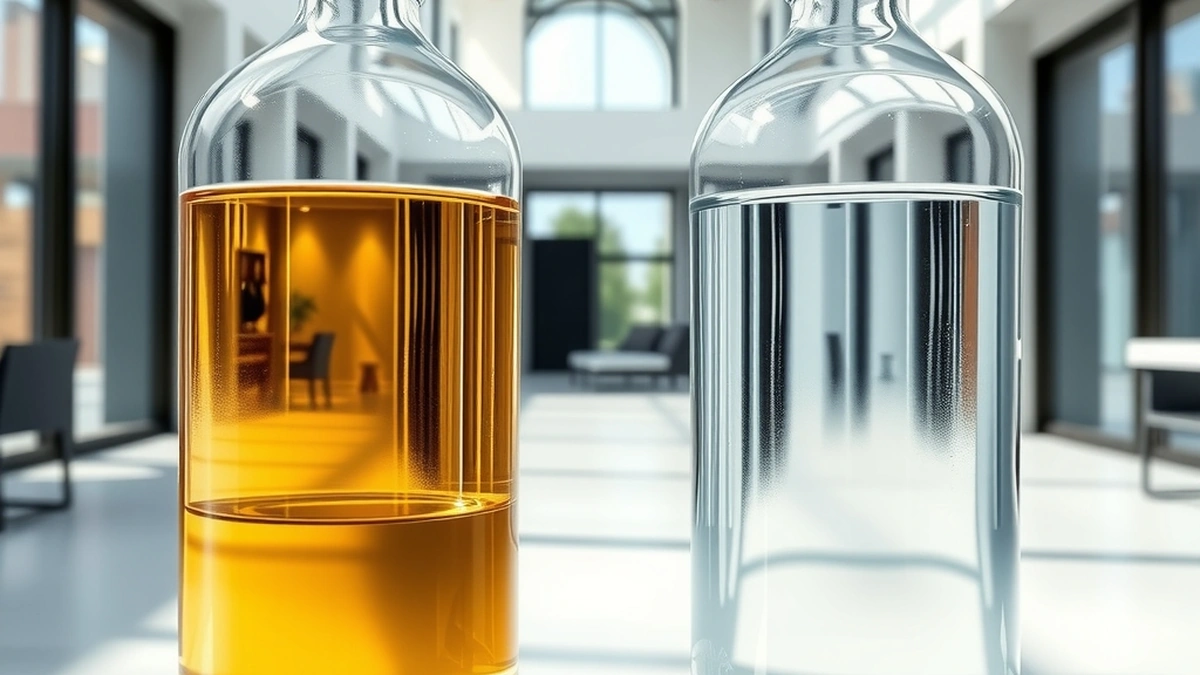
Test for tannins with a lab panel that reports color and tannins alongside iron and manganese. A simple bleach test can separate organic color from metal: tannin color fades with bleach, iron color does not.
- Lab panel
- $40 - $150
- Color test
- $15 - $40
- Bleach test
- No cost
- Sample tap
- Cold, untreated
- Bacteria test
- $20 - $50
Some links on this page are affiliate links.If you buy through them we may earn a commission at no extra cost to you. We do not accept payment for rankings. Read the full disclosure.
Testing for tannins means separating organic color from metal. Both can tint water brown, and the treatments are different. A lab panel plus a simple bleach test at the kitchen sink settles the question in an afternoon.
The Bleach Test
Fill two glasses with the same water. Add a few drops of household bleach to one and stir.
Tannin color fades within minutes because the organic molecules oxidize. Iron color persists, and it may darken as the iron oxidizes further.
The test is not quantitative, and it is a reliable first cut. It costs nothing and points to which lab test to order.
The Standing Test
Leave a glass undisturbed for an hour. Tannins stay in solution and the color remains uniform.
Iron often settles as rust particles, and the water clears from the top down. Manganese behaves similarly with a black deposit.
A sample that clears on standing has particulate matter. A sample that stays tinted has dissolved color.
Lab Testing
A lab panel should report color in color units, tannins where the method is available, and iron, manganese, and pH.
The panel costs $40 - $150. Ask for the reporting method and the detection limit, because color results vary between labs.
Bacteria belong on the same panel when tannins are present, since surface water influence is the usual cause.
Taking the Sample
| Step | Action | Reason |
|---|---|---|
| 1 | Use a clean lab bottle | Contamination skews color |
| 2 | Sample a cold untreated tap | Treatment changes color |
| 3 | Run water 3 - 5 minutes | Clears the line |
| 4 | Fill without touching the cap | Avoids contamination |
| 5 | Note the color and clarity | Helps interpret the result |
| 6 | Deliver within the holding time | Color can change |
Photograph the sample next to a white card. The photo is useful when discussing the result with a dealer who was not there.
Reading the Result
A color of 5 - 15 color units is faintly tinted and usually acceptable. Above 15, the tint is visible in a glass.
A tannin result above 1 mg/L is enough to justify treatment if the color bothers the household.
Iron above 0.3 mg/L contributes color and staining, and it needs its own treatment stage.
If both are present, treat the iron first and the tannins second. A tannin resin can be fouled by iron, and an iron filter protects it.
Tannins come from decaying vegetation, which means surface water or shallow groundwater influence. A well in a low area, near a creek, or with a shallow casing is the usual case.
Color that appears after rain is a strong clue. So is color that varies with the season.
That pattern points to a wellhead or casing issue as much as to the water itself. A filter treats the color, and the casing repair addresses the source.
What the Test Does Not Tell You
A color reading does not identify the compound. Humic acids, fulvic acids, and other organics all contribute color, and the lab reports a combined figure.
It does not measure the risk from surface water contamination. Only a bacteria test does that.
It does not predict how a treatment will perform. A bench test or a dealer trial is the way to confirm that a resin will handle the color load.
Testing After Treatment
Sample downstream of the treatment and compare with the raw result. A working anion system should bring color below 15 units.
Test after every regeneration for the first month, then quarterly. A resin that is exhausting will show rising color before it fails completely.
Retest annually, and after any change in the well or the weather pattern.
When to Test
Test when the water first shows color, and again after any rain event that changes it.
Test before buying treatment, and after installation to confirm performance.
Test the hot and cold taps separately if only one is tinted. A hot-only tint points to the water heater.
Color that appears after rain is a strong clue, and so is color that varies with the season.
- Collect the lab bottle and read the holding time.
- Run the cold tap for five minutes.
- Fill without touching the cap.
- Note the color against a white card.
- Deliver the sample the same day if possible.
- Compare color, tannins, iron, and bacteria on one report.
A color reading does not identify the compound, and it does not measure the risk from surface water contamination. Only a bacteria test does that. It also does not predict how a treatment will perform, which is why a dealer bench test is worth asking for before a resin is ordered.
A final check is the hot tap. If the color appears only in hot water, the water heater is the source, and the fix is flushing or replacement rather than a filter. That single comparison saves a lot of unnecessary equipment.
If the color is present in both taps, the well is the source. If it is present only in the cold, the heater is excluded. Those two facts narrow the lab panel and the budget before a single dollar is spent on treatment.
A final check is the ice maker and any second refrigerator. Those lines branch off the same plumbing, and a tinted ice cube is often the first sign a household notices. Testing a glass from the fridge dispenser can confirm color in a supply that looks clear at the kitchen tap.
For the treatment options, see tannins in water treatment. For the general problem, see tannins in water. For the iron question, see iron in water test.
Frequently asked questions
How do I test for tannins in water?
Use a lab panel that reports color and tannins along with iron, manganese, and bacteria. A bleach test at home helps separate organic color from iron staining.
What does tannin water look like?
It looks like weak tea: yellow, amber, or brown, and it does not settle out on standing. Iron tends to look orange or rust-red and may leave sediment.
Does bleach remove tannin color?
It usually fades organic color within minutes, while iron color persists or darkens. That difference is the basis of a simple home test.
Can I test tannins with a strip?
No. Strips do not measure tannins. Color and organic content need a lab method or a visual comparison.
Why does tannin color appear after rain?
Rain can carry organic matter from soil and vegetation into a shallow well or a well with a casing problem, raising the color.
Should I test for bacteria with tannins?
Yes. Tannins often indicate surface water influence, and a bacteria test is the way to check whether the well is compromised.
Sources
Some links are affiliate links.If you buy through them we may earn a commission at no extra cost to you. We do not accept payment for rankings. Read the full disclosure.