Tannins in Water Treatment: Resin, Carbon, and Oxidation
Tannins tint water yellow-brown and come from decaying vegetation. See anion resin, carbon, and oxidation options, with costs and limits.
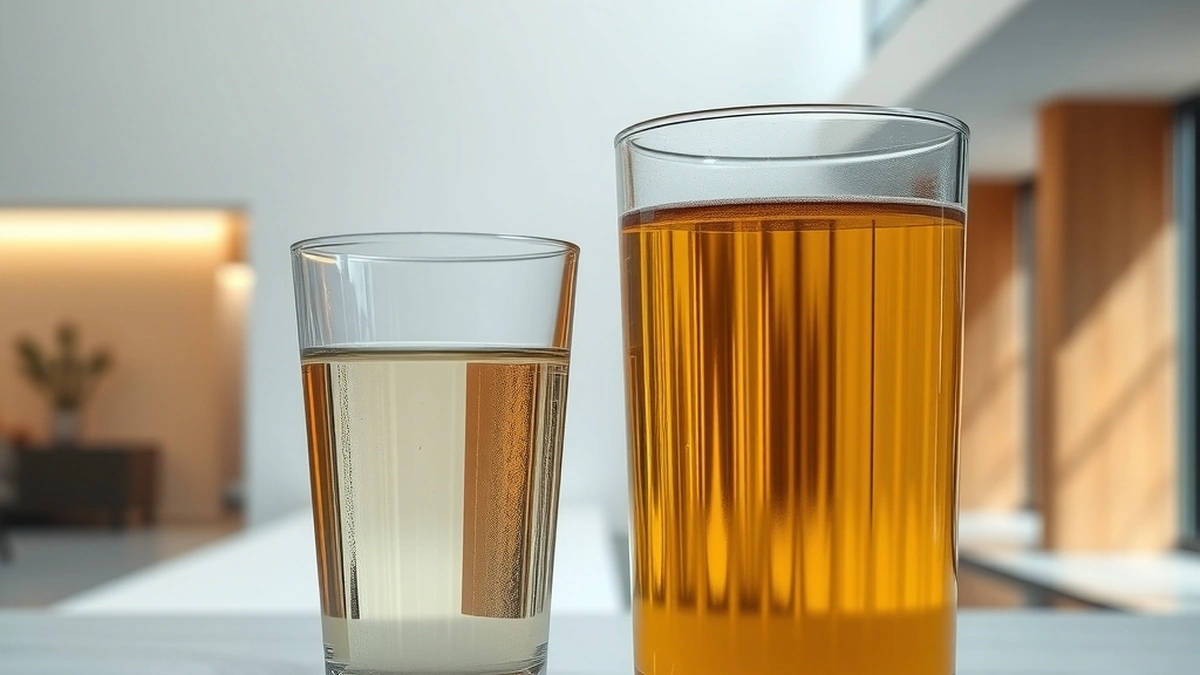
Tannins in water are treated with anion exchange resin, which is the most reliable residential method, or with carbon and oxidation for light cases. Installed costs run $800 - $3,000, and a softener alone will not remove the color.
- Anion resin system
- $800 - $3,000 installed
- Carbon filter
- $500 - $1,800
- Oxidation system
- $1,500 - $3,500
- Lab test
- $40 - $150
- Softener effect
- None on color
Some links on this page are affiliate links.If you buy through them we may earn a commission at no extra cost to you. We do not accept payment for rankings. Read the full disclosure.
Tannins in water come from decaying vegetation and tint the water yellow, tea-colored, or brown. Treatment means anion exchange resin for most homes, with carbon and oxidation for light cases. Installed cost runs $800 - $3,000, and a softener alone will not remove the color.
What Tannins Are
Tannins are natural organic compounds released as leaves, bark, and plant matter break down. They dissolve in water and are small enough to pass through most mechanical filters.
They are common in shallow wells, wells influenced by surface water, and areas with peaty soil. The color ranges from pale yellow to dark brown depending on concentration.
Tannins are not the same as iron, though both can color water. Iron usually turns orange or rust-red and stains; tannins give a tea-like tint that does not settle.
Anion Exchange
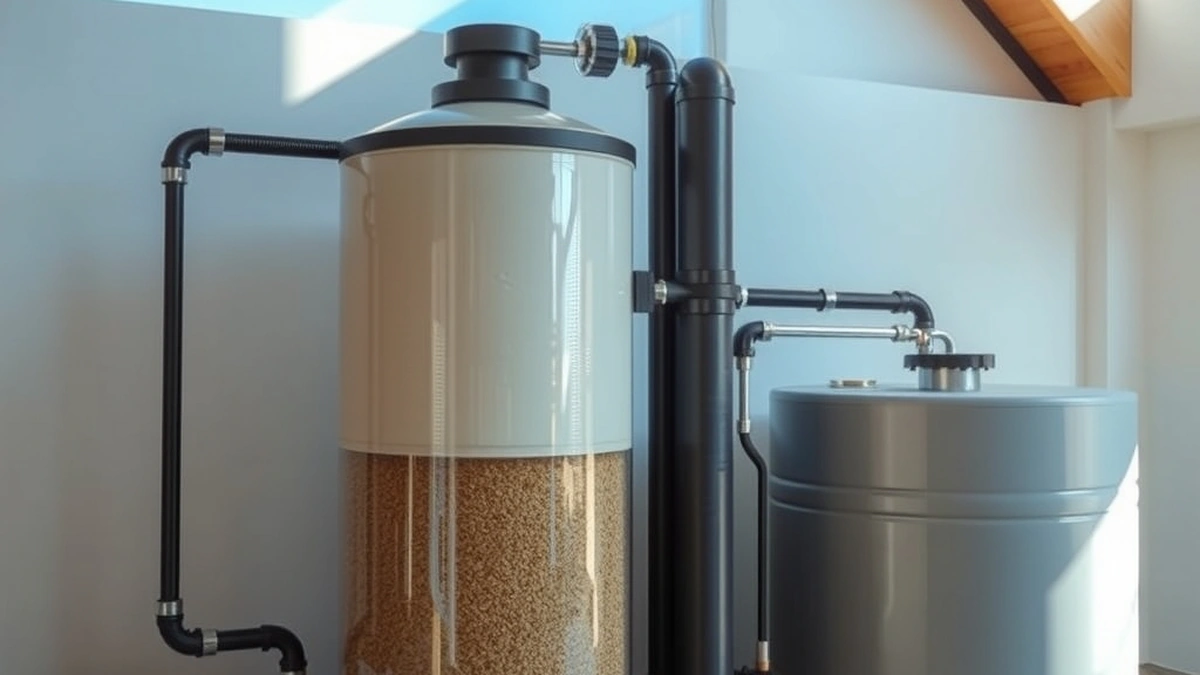
An anion exchange resin captures negatively charged organic molecules, including tannins. The resin regenerates with salt, similar to a softener.
Installed cost is $800 - $3,000. The system needs a brine tank and a drain, and the resin has a limited capacity before it must be replaced.
It is the most reliable residential method for moderate to heavy color, and it is often paired with a softener in a two-tank configuration.
Carbon Filtration
Carbon adsorbs some organic color, and it is effective for light tannin loads. Installed cost is $500 - $1,800, with cartridges every 6 - 12 months.
Carbon exhausts faster on high tannin water, and the color returns when the media is spent. It is a reasonable first step and a poor long-term solution for heavy color.
Carbon also improves taste and removes chlorine, which makes it a useful stage even when it is not the primary tannin treatment.
Oxidation and Coagulation
Chlorine or ozone oxidizes organic matter, and a filter removes the resulting particles. Some systems add a coagulant to help the organics clump.
Installed cost is $1,500 - $3,500. It handles heavy color and also disinfects, which matters when surface water influence is suspected.
The tradeoff is complexity and the need to manage chemical feed and contact time.
Comparison
| Method | Color range | Installed cost | Best use |
|---|---|---|---|
| Anion exchange | Moderate to heavy | $800 - $3,000 | Most homes |
| Carbon | Light | $500 - $1,800 | Taste and light color |
| Oxidation | Moderate to heavy | $1,500 - $3,500 | Color plus bacteria |
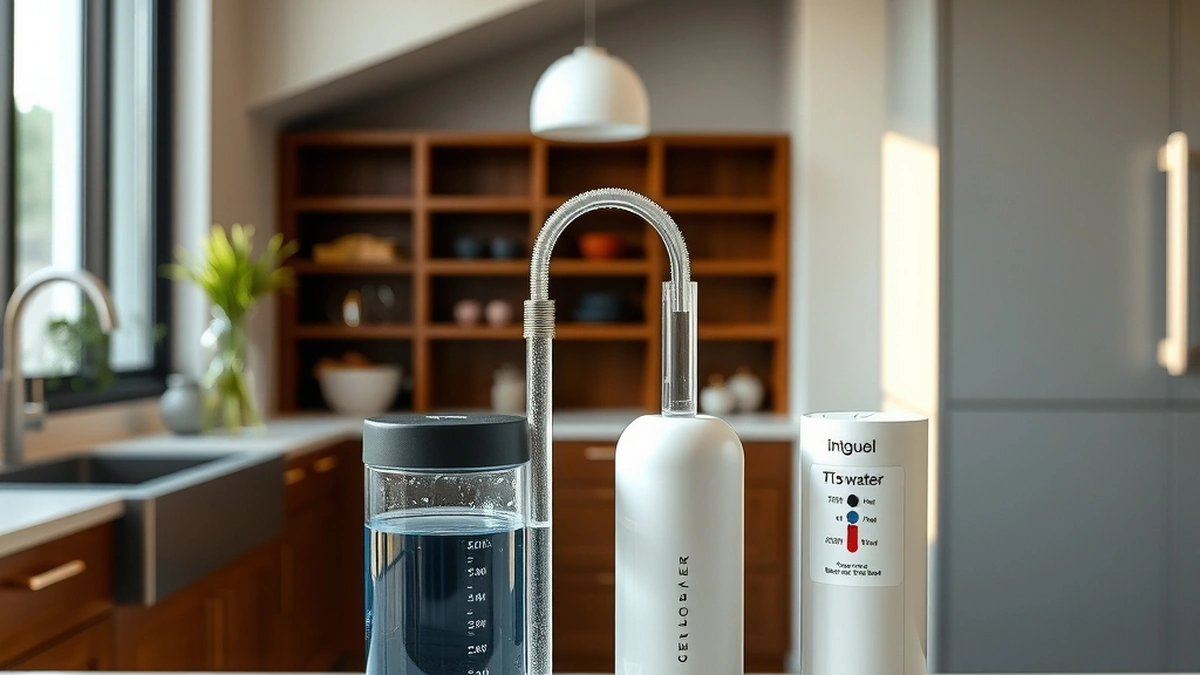
| Reverse osmosis | Any, one tap | $300 - $900 | Drinking water only |
| Softener | None | $1,200 - $4,500 | Hardness, not color |
RO removes tannins at the tap where it is installed, which is useful for drinking water but does not fix the shower or the laundry.
Testing Before Treatment
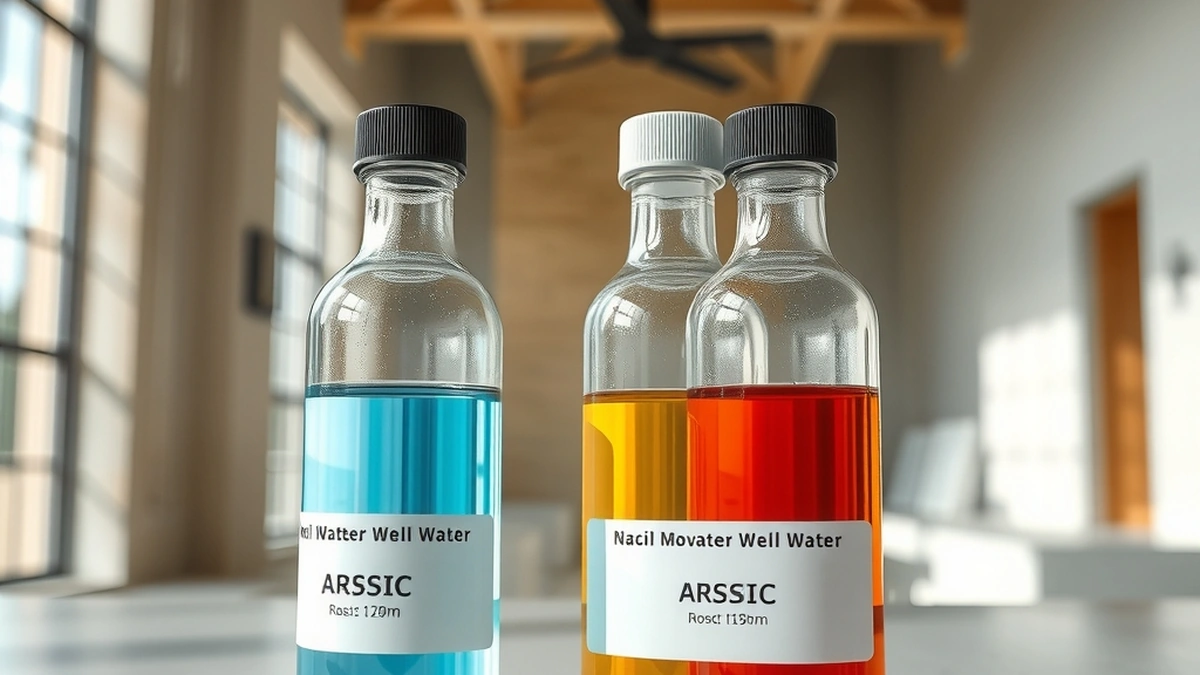
A lab test should include color, tannins, iron, manganese, and bacteria. The panel costs $40 - $150.
Color alone does not identify tannins. Iron produces a similar tint, and the treatment is different, so both parameters belong on the same report.
Bacteria matter because tannins often indicate surface water influence. A positive coliform result changes the priority order.
Sizing and Installation
- Test the water for color, tannins, iron, and bacteria.
- Confirm the color is organic rather than metallic.
- Choose anion exchange for moderate to heavy color.
- Size the system to the flow, typically 8 - 15 GPM.
- Provide a drain and power for regeneration.
- Install ahead of the softener, not after it.
- Retest after commissioning.
An anion system at $1,800 installed plus $250 a year in salt and resin costs $4,300 over ten years.
A carbon system at $900 installed plus $200 a year in cartridges costs $2,900, and it may not keep up with heavy color.
An oxidation system at $2,500 installed plus $300 a year in chemicals and service costs $5,500.
What Treatment Does Not Fix
Treatment does not fix the source. Tannins come from surface water or shallow groundwater influence, and a well with a casing problem will keep producing color.
A wellhead inspection and a bacteria test come first when color appears suddenly or after rain.
Treatment also does not soften water. Most households with tannins also have hardness, and the two stages are installed together.
The cheapest path is often a two-stage train: an iron filter if iron is present, then an anion resin for color. That combination addresses both causes and costs less than replacing media every year because the resin is fouled.
Ask the dealer to quote the media replacement interval along with the equipment. A system with a $400 media change every three years costs more than its sticker over a decade.
One more practical point: tannin treatment is often installed with a softener, and the order matters. The anion tank goes first so the softener resin is not coated with organic color, which reduces its capacity and shortens its life.
If the household is on a well with visible color, a sediment prefilter ahead of the anion tank is also worth the $150 - $600. Grit blinds the resin the same way it blinds carbon, and the prefilter is the cheapest protection in the train.
One more design point: anion resin is regenerated with salt, so the system needs a brine tank and a drain just like a softener. A household that wanted to avoid salt entirely will not get that from anion exchange, even though the salt is used for regeneration rather than added to the water.
For the testing side, see tannins in water test. For the general problem, see tannins in water. For softening, see how to treat hard water.
Frequently asked questions
What removes tannins from well water?
Anion exchange resin is the most reliable residential treatment. Carbon and oxidation help with light cases, and reverse osmosis removes color at a single tap.
Does a water softener remove tannins?
No. A standard cation-exchange softener removes hardness, not the organic color from tannins.
Why is my well water yellow-brown?
Yellow-brown color usually comes from tannins, dissolved organic matter from decaying leaves and vegetation. Iron can produce a similar color, so a lab test is needed.
How much does tannin treatment cost?
An anion exchange system runs $800-$3,000 installed, a carbon filter $500-$1,800, and an oxidation system $1,500-$3,500.
Are tannins harmful?
Tannins are primarily an aesthetic problem at typical levels, but their presence suggests surface water influence. Test for bacteria along with color.
Can I remove tannins by boiling?
No. Boiling concentrates the color and does not remove dissolved organic matter.
Sources
Some links are affiliate links.If you buy through them we may earn a commission at no extra cost to you. We do not accept payment for rankings. Read the full disclosure.