Water Distiller vs Reverse Osmosis: Which Costs Less?
Compare water distillers and reverse osmosis systems by upfront cost, operating cost, output, and maintenance.
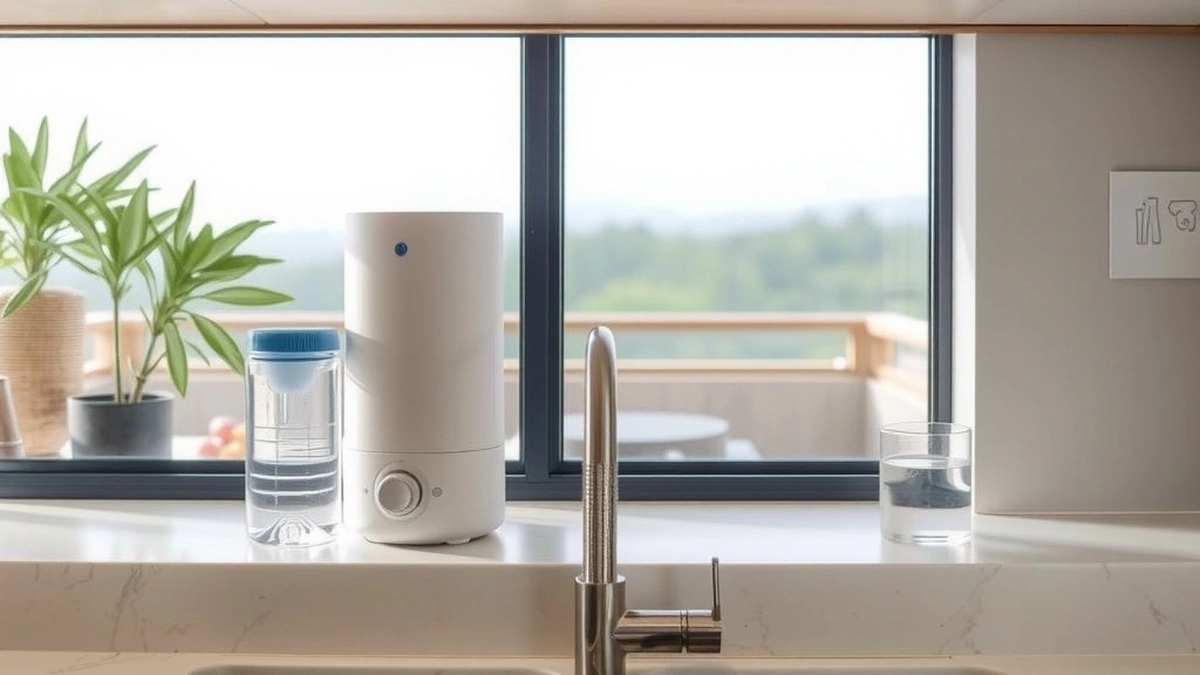
Reverse osmosis typically costs less per gallon and produces more water daily than a countertop distiller, but distillers remove a broader range of dissolved solids without plumbing.
- Best for
- Point-of-use drinking water
- RO under-sink installed
- $300–$900
- Countertop distiller equipment
- $100–$500
- RO annual running cost
- $60–$150
- Distiller annual energy cost
- $100–$300
Some links on this page are affiliate links.If you buy through them we may earn a commission at no extra cost to you. We do not accept payment for rankings. Read the full disclosure.
Water distillers and reverse osmosis (RO) systems both treat drinking water at the point of use, but they work differently and carry different cost structures. A distiller boils water and collects the condensed steam, leaving most dissolved solids behind in the boiling chamber. Reverse osmosis forces water through a semi-permeable membrane, sending a portion of the feed water to drain as concentrate.
This comparison covers equipment price, installed cost, annual operating cost, daily output, and maintenance for both technologies. All cost figures are estimates unless noted.
How Each System Works
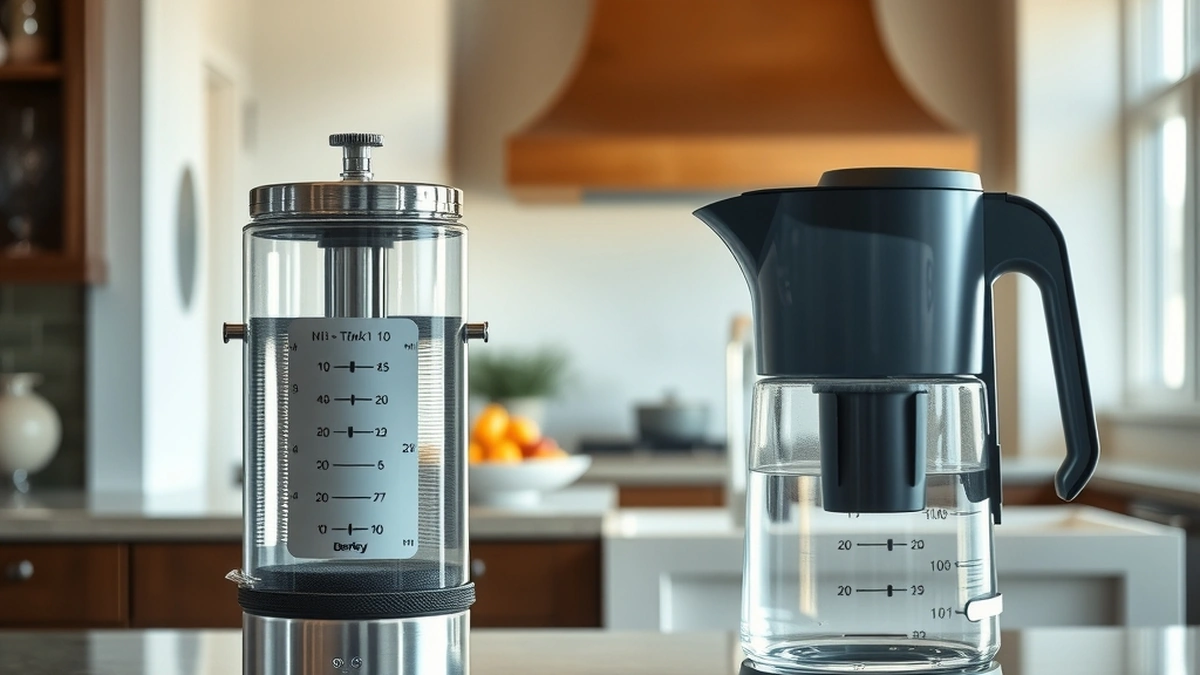
A countertop distiller heats water to boiling, captures the steam, and cools it back into liquid in a separate collection container. The process leaves hardness minerals, dissolved solids, and many other contaminants in the boiling tank, which must be rinsed out periodically. Distillers need only an electrical outlet and a sink for filling; no plumbing or drain connection is required.
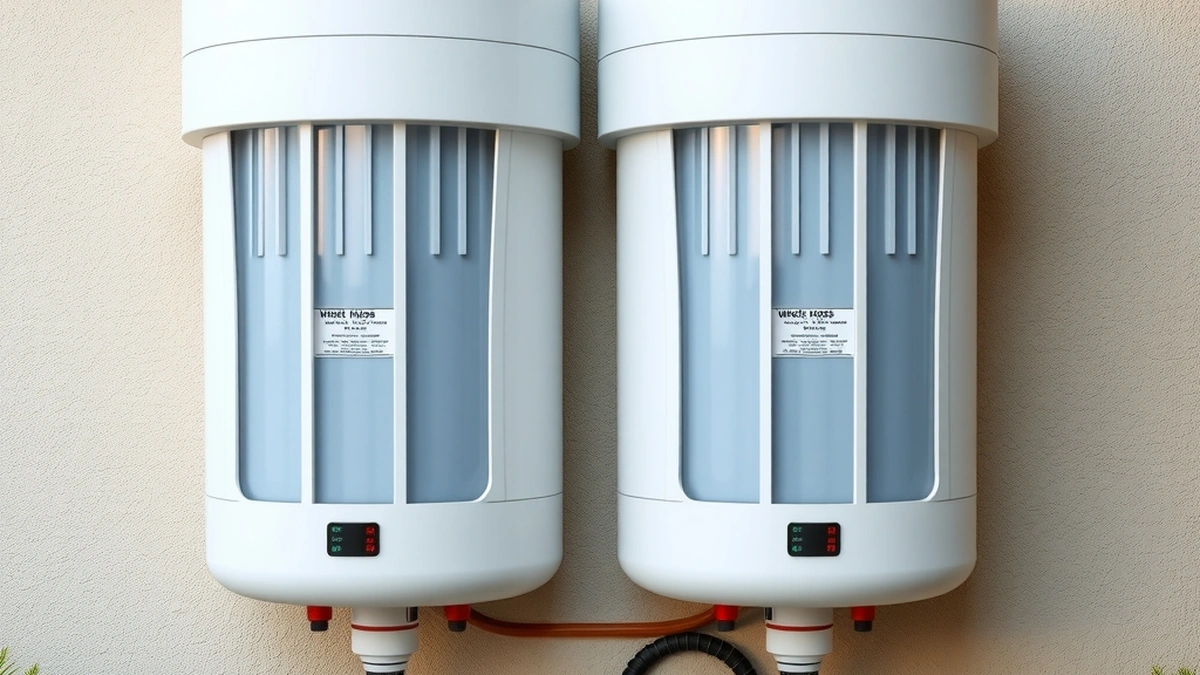
Reverse osmosis uses household water pressure to push feed water through a membrane. Most under-sink units include sediment and carbon pre-filters, the RO membrane, a storage tank, and a dedicated faucet. Water that does not pass through the membrane flows to the drain as waste. Because RO connects to plumbing, it usually requires a drain saddle and a feed-water valve under the sink.
Upfront and Installed Cost
Countertop distillers are sold as appliances. Equipment typically ranges from $100 to $500 depending on capacity, materials, and features. Because they plug into a standard outlet, installation cost is effectively zero.
Under-sink RO equipment generally costs $200 to $600. Professional installation adds roughly $100 to $300, bringing the installed range to $300 to $900. Whole-house RO is a separate category and typically runs $3,000 to $8,000 installed, but it is rarely chosen for drinking water alone when a point-of-use unit will do.
For context, other whole-home equipment carries different price points. A water softener usually costs $1,200 to $4,500 installed, while a whole-house carbon filter often runs $500 to $1,800 installed. Those systems treat water throughout the house rather than at a single faucet.
Annual Operating Cost
RO operating costs come from replacement filters and membranes. Carbon and sediment pre-filters typically need replacement every 6 to 12 months, and the membrane usually lasts 2 to 3 years. Combined annual running costs are commonly estimated at $60 to $150.
Distillers have no filters or membranes to replace, but they consume electricity to boil water. If a distiller uses roughly 3 kilowatt-hours per gallon and electricity averages $0.16 per kilowatt-hour, one gallon costs about $0.48 in energy. Producing one gallon per day for a year totals roughly $175. Households using more water or paying higher electric rates will see proportionally higher costs.
Water cost also matters. If municipal water costs about $0.005 per gallon, an RO system producing 1,000 gallons of product water per year might send 3,000 to 4,000 gallons to drain at a 3-4:1 waste ratio. The water and sewer charge on that waste could add $15 to $35 annually, depending on local rates.
Daily Output and Recovery
Countertop distillers typically produce 0.25 to 1 gallon per cycle, with cycle times of 4 to 6 hours. A household using two gallons of drinking and cooking water per day may need to run the unit twice daily and store the output.
Under-sink RO systems produce water more slowly than a faucet flows, which is why they include a pressurized storage tank. A typical system might generate 10 to 50 gallons per day depending on membrane rating, water temperature, and pressure. The tank delivers water quickly at the faucet and refills as it is used.
The RO waste ratio of 3-4:1 means for every gallon stored, three to four gallons go to the drain. In homes with septic systems, that added flow is worth considering. Distillers do not send water to a drain, but they do release warm moisture into the room and require disposal of concentrated residue from the boiling tank.
Contaminant Reduction Profile
Distillers rely on phase change: water turns to steam, leaving most dissolved minerals and heavy metals behind. Volatile compounds with boiling points near or below water can carry over unless the unit includes a vent or carbon post-filter. Distilled water is very low in dissolved solids.
RO rejection rates are commonly estimated at 80 to 95 percent for a broad range of dissolved contaminants, depending on the membrane, water chemistry, and operating pressure. RO does not remove everything, and performance drops as membranes foul or as water temperature and pressure fall. Neither technology is sold here as a treatment for specific health conditions, and neither replaces a laboratory water test.
Before buying either system, test your water. A basic lab test typically costs $40 to $150 and tells you what you are actually reducing. If hardness is the primary concern, a softener may be more appropriate; softeners use 8 to 12 pounds of salt per regeneration and cost $120 to $400 per year in salt. If iron or sulfur is present, dedicated iron or sulfur filtration may be required before RO or distillation.
Maintenance and Lifespan
Distiller maintenance is mostly cleaning. The boiling tank collects scale and residue, especially on hard water, and needs periodic descaling with vinegar or a citric acid solution. The collection container should be washed regularly. With routine care, a distiller can last many years; heating elements are the most common failure point.
RO maintenance is scheduled. Sediment and carbon cartridges usually need replacement every 6 to 12 months. The membrane typically lasts 2 to 3 years. Storage tanks can lose their air charge over time and may need repressurization or replacement. Leaks at the drain saddle or feed valve are the most common installation issues.
If you are already comparing whole-home options, remember that carbon filters and softeners serve different purposes than distillers or RO. A whole-house filter usually delivers 8 to 15 gallons per minute and costs $500 to $1,800 installed, but it does not produce distilled-quality water at a single tap.
Which One Fits Your Budget
For a household drinking one gallon per day:
- Distiller energy: 365 gallons × $0.48 = approximately $175 per year in electricity.
- RO consumables: approximately $60 to $150 per year.
- RO water/sewer waste: roughly $15 to $35 per year at a 3-4:1 ratio.
Over five years, a $300 distiller plus $875 in energy totals about $1,175. A $600 RO system installed plus $1,050 in consumables and waste water totals about $1,650. The distiller wins on five-year cost in this example, but the RO system produces water on demand without waiting for boil cycles.
If you need large volumes for cooking, coffee makers, or ice makers, RO output and storage capacity usually fit better. If you rent, move frequently, or cannot modify plumbing, a distiller requires no installation. If you already pay high electricity rates, RO operating costs may look more attractive.
Start with a water test, then match the technology to your water chemistry and daily volume. Neither system treats the whole house unless specifically configured to do so, and both require regular maintenance to perform as rated.
Next, compare how much does a water softener cost, water softener installation cost, whole house water filter cost before you commit.
Frequently asked questions
What is the main difference?
A distiller boils water and condenses the steam; reverse osmosis pushes water through a semi-permeable membrane under pressure.
Which costs more to install?
RO under-sink systems typically run $300–$900 installed; countertop distillers usually require no installation beyond plugging in.
How much water does RO waste?
Standard under-sink RO systems send roughly 3–4 gallons to drain for every gallon of product water.
How much electricity does a distiller use?
Distillers boil water, so they consume more electricity per gallon than RO, which uses only line pressure and a small pump.
How often do RO membranes need replacement?
RO membranes typically last 2–3 years, while carbon and sediment pre-filters usually need changes every 6–12 months.
Can either system treat whole-house water?
Whole-house RO exists but costs $3,000–$8,000 installed; distillers are almost exclusively point-of-use devices for drinking water.
Sources
Some links are affiliate links.If you buy through them we may earn a commission at no extra cost to you. We do not accept payment for rankings. Read the full disclosure.