Water Softener vs Descaler: What's the Difference?
Compare salt-based water softeners and salt-free descalers on hardness removal, installed cost, maintenance, and best use cases.
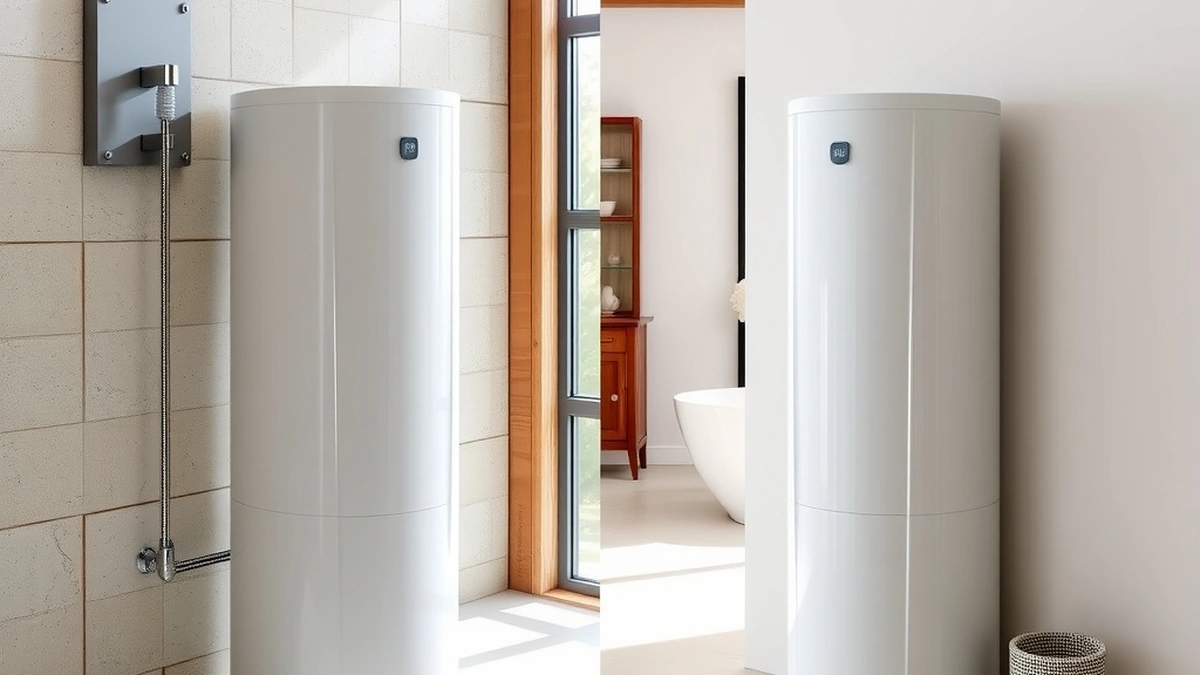
A water softener removes hardness minerals through ion exchange; a descaler conditions water without removing hardness. Choose by water test results and budget.
- Softener installed cost
- $1,200–$4,500
- Descaler installed cost
- $500–$1,800
- Softener salt per year
- $120–$400
- Softener grain capacity
- 24,000–64,000 grains
- Softener lifespan
- 10–15 years
Some links on this page are affiliate links.If you buy through them we may earn a commission at no extra cost to you. We do not accept payment for rankings. Read the full disclosure.
A water softener removes dissolved hardness minerals from water; a descaler does not. Softeners use ion exchange to trade calcium and magnesium for sodium or potassium, while descalers condition water without lowering measured hardness. Start with a lab water test, then match the equipment to your hardness grains per gallon and budget.
What a Water Softener Does
A salt-based water softener passes hard water through a resin bed. The resin holds sodium ions and exchanges them for calcium and magnesium ions in the water. This process removes hardness minerals rather than merely conditioning them.
Capacity is measured in grains. Residential systems commonly range from 24,000 to 64,000 grains. To estimate the load you need, multiply your water hardness in grains per gallon by your daily water use. For example, a household using 300 gallons per day with 10 grains per gallon of hardness generates 3,000 grains of hardness per day. A 32,000-grain system would theoretically handle that load for roughly 10 days before regeneration, though actual scheduling depends on the valve setting and reserve capacity.
Regeneration uses salt water to flush the captured minerals down the drain and recharge the resin. Typical salt use is 8 to 12 pounds per regeneration. Installed cost runs from $1,200 to $4,500, and annual salt cost is typically $120 to $400. Resin life is about 8 to 12 years, with a rebed costing $300 to $600. Total system life is usually 10 to 15 years.
Softeners are generally effective up to about 2 to 3 parts per million of dissolved iron. Higher iron levels can foul resin and may require an iron filter ahead of the softener.
What a Descaler Does
A descaler, often marketed as a salt-free conditioner, treats water without removing hardness minerals. Technologies vary, but the goal is to change how calcium and magnesium behave so they are less likely to form scale on pipes and water heater elements. The minerals remain in the water, so a hardness test after installation will show approximately the same grains per gallon as before.
Because no ion exchange occurs, there is no salt to buy and no regeneration cycle to manage. Installed cost is typically $500 to $1,800. Maintenance usually involves periodic media or cartridge replacement rather than salt hauling.
Descalers are best suited to scale prevention in moderately hard water. They are not a substitute for a softener if your goal is to remove hardness or reduce soap scum and spotting on glassware. If your water test shows very hard water (10+ grains per gallon) or high iron, a descaler alone is unlikely to deliver the same measurable results as a softener.
Head-to-Head Comparison
| Factor | Water Softener | Salt-Free Descaler |
|---|---|---|
| Removes hardness minerals | Yes | No |
| Installed cost | $1,200–$4,500 | $500–$1,800 |
| Annual consumables | $120–$400 salt | Media/cartridge replacement varies |
| Grain capacity | 24,000–64,000 grains | Not applicable |
| Typical lifespan | 10–15 years | Varies by media |
| Best for | Hard to very hard water | Moderate hardness, scale prevention |
| Iron handling | Up to 2–3 ppm typically | Not an iron removal device |
Installed Cost and Ongoing Costs
Equipment alone for a softener typically costs $600 to $2,500. Installation adds $500 to $1,500, bringing the full installed range to $1,200 to $4,500. Salt runs $120 to $400 per year. Over 10 years, salt alone can add $1,200 to $4,000 to ownership cost.
A salt-free descaler installed costs $500 to $1,800. There is no salt expense, but replacement media or cartridges are an ongoing cost. Over a 10-year horizon, the descaler usually costs less to operate, though it does not remove hardness.
If you also need drinking water treatment, a reverse osmosis system costs $300 to $900 installed under the sink, with $60 to $150 per year in running costs and membrane replacement every 2 to 3 years. Whole-house RO runs $3,000 to $8,000 installed. These are separate decisions from hardness treatment and should be based on separate water test results.
When to Choose a Softener
Choose a softener when your water test shows moderate to very hard water (above 3 grains per gallon) and you want measurable hardness removal. This is the standard choice for protecting water heaters, reducing scale buildup in plumbing, and improving soap and detergent performance.
Use the grain capacity to size the unit. A family of four using 300 gallons per day at 12 grains per gallon produces 3,600 grains of hardness daily. A 40,000-grain system provides roughly 11 days of capacity before regeneration. Larger capacity does not mean better water; it means longer intervals between regeneration cycles.
Iron above 2 to 3 ppm may require an iron filter before the softener, adding $800 to $2,500 installed. Sulfur issues may add $1,000 to $3,000 for a sulfur filter. Test first so you do not buy a softener that your water chemistry will overwhelm.
When to Choose a Descaler
Choose a descaler when your primary goal is scale prevention and your water is only moderately hard. It is also an option where salt discharge is restricted or where you do not want to handle salt bags.
Keep in mind that because hardness minerals stay in the water, you may still see spots on dishes and glassware, and soaps may not lather as readily as with softened water. A descaler does not change the grains per gallon reading on a follow-up water test.
Maintenance Reality Check
Softeners require salt refills, occasional brine tank cleaning, and resin monitoring. Resin replacement every 8 to 12 years costs $300 to $600. Descalers require no salt but may need media replacement on a manufacturer’s schedule. Whole-house carbon filters, if used as pretreatment, cost $500 to $1,800 installed with cartridges at $80 to $300 per year and replacement every 6 to 12 months. Sediment cartridges typically need replacement every 3 to 6 months.
If your water source is a private well, a lab test at $40 to $150 is the first step. Well water can combine hardness with iron, sulfur, or sediment, and each condition changes the equipment priority. For well-specific guidance, see our well water treatment overview.
Bottom Line
A softener removes hardness; a descaler conditions water without removing it. Match the equipment to your water test, not to marketing language. If hardness is your main problem and you want measured grain removal, buy a softener sized to your daily grain load. If you only want to reduce scale and your water is moderately hard, a descaler may fit at a lower installed cost.
For more on pricing, see our water softener cost guide, water softener installation cost breakdown, and whole house water filter cost article.
Next, compare how much does a water softener cost, water softener installation cost, whole house water filter cost before you commit.
Frequently asked questions
What is the main difference?
A softener removes calcium and magnesium through ion exchange; a descaler alters mineral behavior without removing them from the water.
Does a descaler soften water?
No. Descalers condition water but do not lower measured hardness grains per gallon.
How much does softener salt cost yearly?
Expect $120–$400 per year for salt, depending on household size and water hardness.
How long does softener resin last?
Resin typically lasts 8–12 years before a rebed costing $300–$600 may be needed.
Can a softener handle iron?
Softeners are generally limited to 2–3 ppm of iron; higher levels may need a dedicated iron filter.
Should I test water before buying?
Yes. A lab water test costs $40–$150 and tells you hardness, iron, and other contaminants first.
Sources
Some links are affiliate links.If you buy through them we may earn a commission at no extra cost to you. We do not accept payment for rankings. Read the full disclosure.