
Water softeners near me
Where to buy a water softener locally, how dealer, plumbing, and retail channels compare, and what the installed price should include.
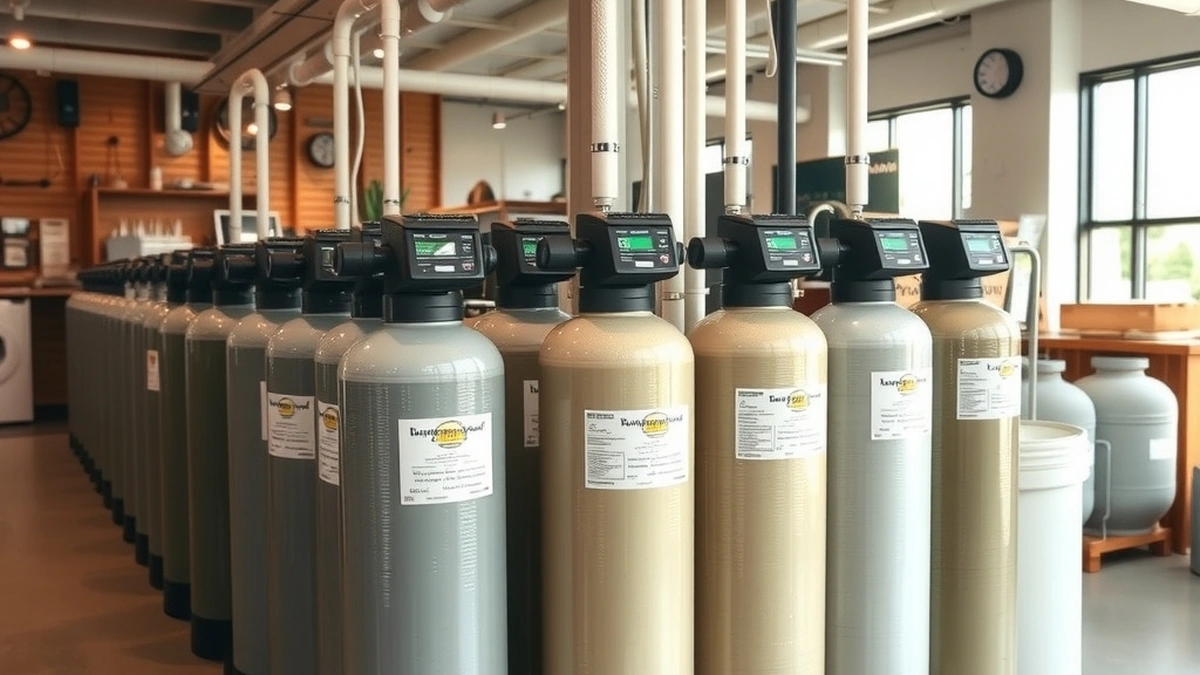
Water softeners are sold through local dealers, plumbing companies, and retail stores, with installed prices of $1,200 to $4,500. Compare the all-in figure, the warranty support, and who services the valve in year five rather than the sticker on the box.
- Installed total
- $1,200 - $4,500
- Equipment only
- $600 - $2,500
- Labour
- $500 - $1,500
- Salt per year
- $120 - $400
- Capacity
- 24,000 - 64,000 grains
Some links on this page are affiliate links.If you buy through them we may earn a commission at no extra cost to you. We do not accept payment for rankings. Read the full disclosure.
Water softeners near you are sold through three channels: local water treatment dealers, plumbing contractors, and retail stores. Installed prices land between $1,200 and $4,500 regardless of channel, so the deciding factors are the measured hardness, what the quote includes, and who services the valve in year five.
The three channels
A water treatment dealer sells and installs its own line, usually with a service department and a warranty tied to annual visits. The quote is an installed package, and the equipment is often proprietary.
A plumbing contractor supplies a brand it trusts and installs it as part of a larger relationship. This is a good route if you already have a plumber you call for other work, because the same firm sees the system during unrelated service visits.
A retail store sells the box, and you arrange installation separately. The equipment price is visible, but the labour, bypass, drain, and permit are yours to organise, and the store will not send a technician when the valve sticks.
Each channel can produce a fair result. The failure mode is comparing a retail box price with a dealer installed price and concluding one is cheaper.
What the installed price should include
| Line | Typical range | Included by |
|---|---|---|
| Softener unit | $600 - $2,500 | All channels |
| Bypass valve | $100 - $300 | Usually dealer and plumber |
| Drain line and air gap | $100 - $300 | Usually dealer and plumber |
| Labour | $500 - $1,500 | Dealer and plumber |
| Permit | Varies | Ask explicitly |
| Startup and hardness test | Included | Dealer usually, retail rarely |
A retail unit at $800 plus a plumber at $900 plus $200 in fittings is $1,900, which sits inside the installed band. A dealer package at $2,400 all-in is also inside it. The difference is what happens when the valve fails, which is a question about service rather than about equipment.
Sizing before shopping
Test the water first. A lab test costs $40 to $150 and gives hardness in grains per gallon.
Estimate daily use at 75 gallons per person. Four people use about 300 gallons per day.
Multiply gallons by hardness. At 10 gpg, 300 x 10 = 3,000 grains per day. A 32,000-grain unit with a reserve regenerates about every nine days.
At 20 gpg, the same household needs 6,000 grains per day, which points to a 48,000 or 64,000-grain unit. Buying a 24,000-grain box because it is on sale is how a household ends up with hard water between regenerations.
Comparing the channels
| Factor | Dealer | Plumber | Retail plus installer |
|---|---|---|---|
| Equipment choice | Limited to brand | Several brands | Wide |
| Installed price clarity | Package | Itemised | Split |
| Service after sale | In-house | In-house | Third party |
| Warranty support | Strong | Variable | Manufacturer only |
| Best for | Full-service buyers | Existing plumbing relationship | Hands-on homeowners |
A dealer’s advantage is that one company owns the whole outcome. A retailer’s advantage is price transparency. A plumber sits between and depends on the individual firm.
Questions to ask locally
- What hardness did you measure, and what capacity does that require?
- Is the bypass included, and is the drain line run to an air gap?
- Is the permit included, and who pulls it?
- What does the warranty cover, and does it require annual service?
- Who performs warranty repairs, and how far away are they?
- What is the all-in price, including startup and the first bag of salt?
The first and last questions do most of the work. A quote without a measured hardness is a guess, and an all-in price that excludes startup is not all-in.
Local water conditions
Hardness varies by source and by municipality, and it can change when a water system switches wells or blends supplies. That is why a test is more useful than a neighbour’s experience.
Private wells can also carry iron, manganese, or sulfur, which change the equipment selection. Iron above 2 to 3 ppm needs an iron filter at $800 to $2,500 before the softener, regardless of which channel sells it.
If the water is very hard, ask whether the local dealer sizes on compensated hardness, which accounts for iron and manganese. A unit sized on hardness alone will underperform, and the shortfall shows up as hard water a day after each regeneration.
After the sale
Keep the manual, the warranty, and the water test. Register the product if the manufacturer requires it.
Check salt monthly and clean the brine tank yearly. Test hardness a week after installation and then monthly for the first few months.
A softener that is serviced locally is easier to keep alive for its 10 to 15 year life. A rebed at $300 to $600 is the main mid-life expense.
For the cost breakdown, see water softener installation cost and how much does a water softener cost. For the sizing arithmetic, water softener sizing walks through the numbers.
Bottom line
Local softener shopping is a comparison of installed packages, not box prices. Measure the hardness, size the capacity, and ask who services the unit later. A $1,900 retail-and-plumber install and a $2,400 dealer install can both be fair.
One question separates a quote from a package: what happens at year six when the valve needs a seal kit. A dealer answers with a service number and a price. A retail purchase answers with a part number and whether the local supply house stocks it. Both are workable, and knowing which you are buying is the point of the comparison.
Ask for the equipment model on the quote, not just the grain capacity. The model is what a warranty claim and a service call are based on.
Frequently asked questions
Where can I buy a water softener locally?
Local dealers, plumbing contractors, and hardware or building supply stores all sell softeners, and each channel differs in installation and service support.
Is it cheaper to buy a softener and hire a plumber?
Sometimes. Equipment at $600 to $2,500 plus labour at $500 to $1,500 can match a dealer package, but compare warranty and service terms too.
What size softener do I need?
Size from daily gallons times hardness in grains per gallon, aiming for a regeneration interval near a week with a reserve.
Do local dealers include installation?
Many quote an installed package that includes the unit, bypass, drain line, startup, and sometimes a permit, so ask what is excluded.
How long does a softener last?
Most systems last 10 to 15 years, with a resin rebed at $300 to $600 somewhere in that span.
What should I ask before buying locally?
Ask for the measured hardness, the grain capacity, the included parts, the permit responsibility, and who performs warranty service.
Sources
Some links are affiliate links.If you buy through them we may earn a commission at no extra cost to you. We do not accept payment for rankings. Read the full disclosure.


