Water Well Pressure Switch: Settings and Fixes
A well pressure switch turns the pump on and off at set pressures like 30/50. Learn the settings, the common failures, and what a replacement costs.
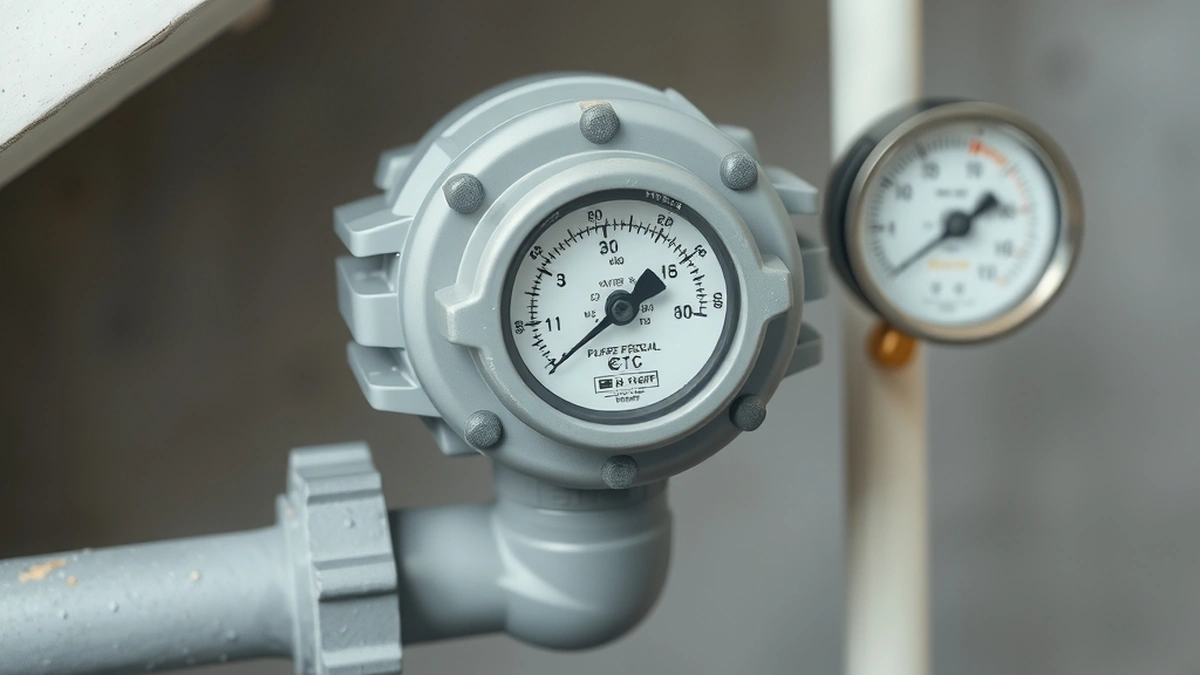
A water well pressure switch is a diaphragm switch that starts the pump at cut-in pressure and stops it at cut-out pressure, commonly 30/50 or 40/60 PSI. The part costs $20 - $60, and a service call to replace it runs $150 - $350.
- Switch price
- $20 - $60
- Common settings
- 30/50 or 40/60 PSI
- Service call
- $150 - $350
- Tank precharge
- 2 PSI below cut-in
- Voltage
- 240 V on most submersible pumps
Some links on this page are affiliate links.If you buy through them we may earn a commission at no extra cost to you. We do not accept payment for rankings. Read the full disclosure.
A water well pressure switch is a small electrical device that turns the pump on when system pressure drops to the cut-in point and off when it reaches the cut-out point. Most homes run 30/50 or 40/60 PSI. The switch costs $20 - $60, and replacement by a contractor runs $150 - $350.
What the Switch Does
The pressure switch is a diaphragm-actuated contactor. Water pressure pushes against a diaphragm, which moves a plunger against a spring. When pressure falls to the cut-in setting, the spring closes the contacts and the pump starts. When pressure rises to the cut-out setting, the diaphragm overcomes the spring and opens the contacts.
The switch sits on a small pipe nipple tapped into the pressure line, usually near the pressure tank and gauge. On a submersible pump system, it switches 240 volts, which is why the breaker must be off before the cover comes off.
The two numbers on the cover are cut-in and cut-out. A 30/50 switch starts the pump at 30 PSI and stops it at 50 PSI. The 20 PSI differential is standard because it gives the tank a usable drawdown without forcing the pump to work against excessive head.
Reading the Settings
| Setting | Cut-in | Cut-out | Typical use |
|---|---|---|---|
| Low | 20 PSI | 40 PSI | Older systems, shallow wells |
| Standard | 30 PSI | 50 PSI | Most homes |
| High | 40 PSI | 60 PSI | Two-story homes, long runs |
| Very high | 50 PSI | 70 PSI | Irrigation, specific fixtures |
Higher pressure feels better at the shower but costs more to maintain. Every 10 PSI of added pressure is roughly 23 feet of extra head the pump must produce, which draws more current and shortens motor life. Do not raise the setting to fix low flow without checking the pump’s rated head.
The tank precharge must match the switch. A bladder tank is charged with air to 2 PSI below the cut-in. At a 30/50 setting, the tank gets 28 PSI of air. A tank with the wrong charge either waterlogs or delivers almost no drawdown.
Common Failures and Symptoms
| Symptom | Likely cause | First check |
|---|---|---|
| Pump cycles rapidly | Waterlogged tank | Tank air charge |
| Pump will not start | Burned contacts, tripped breaker | Voltage at switch |
| Pump will not stop | Stuck contacts, leak, bad switch | Pressure gauge |
| Pressure drifts downward | Leaking check valve or foot valve | Shutoff test |
| No water, pump hums | Failed pump or capacitor | Amp draw |
Short cycling is the most common complaint and the least likely to be the switch. When a bladder tank loses its air charge, the tank holds almost no water and pressure swings through the switch range in seconds. The switch is doing its job; the tank is not.
A clogged nipple is the second most common issue. The switch senses pressure through a small passage, and mineral deposits or sediment can block it. The switch then sees stale pressure and fails to start or stop the pump at the right point. Remove the switch and clean the nipple before condemning the part.
Adjusting the Switch
- Turn off the pump breaker and open a nearby faucet to relieve pressure.
- Remove the cover and identify the two adjustment nuts on the spring post.
- Turn the range nut clockwise to raise both cut-in and cut-out, one full turn for roughly 2 - 3 PSI.
- Turn the differential nut clockwise to raise cut-out only, widening the gap between start and stop.
- Restore power, watch the gauge through a full cycle, and confirm the actual cut-in and cut-out.
- Recheck the tank precharge with the system drained, and set it 2 PSI below the new cut-in.
Adjust in small steps and cycle the pump between changes. A switch set too high can trip the overload on a tired pump, and a differential set too narrow causes rapid cycling that damages the motor.
Replacing the Switch
Replacement is a straightforward job with three cautions: kill the breaker, confirm the circuit is dead with a tester, and match the switch to the system voltage and the pump’s amperage.
The part costs $20 - $60 for a standard 30/50 or 40/60 switch. A contractor charges $150 - $350 for the call, the part, and the adjustment. That price is reasonable given the electrical work and the diagnostic value of watching a full cycle.
Buy a switch with the same pressure rating and the same pole configuration as the original. A 240-volt submersible pump needs a two-pole switch. Installing a single-pole switch on a 240-volt circuit is a code violation and a hazard.
When It Is Not the Switch
Do not replace the switch if the pump is not receiving power, if the pressure gauge never moves, or if the tank is waterlogged. Those failures mimic a switch problem and will survive a new part.
Check the breaker, the control box if the system has one, the tank air charge, and the pump amp draw. A submersible pump that draws locked-rotor current is failing, and no switch setting will fix it. A pump that draws zero current has an open circuit somewhere in the drop cable or the motor.
For the wider system, see water wells and pumps and submersible well water pump. If pressure is low at the fixtures but the gauge reads normal, the problem is downstream: low water pressure causes covers the plumbing side. For tank and treatment interactions, see pressure tank and treatment.
Frequently asked questions
What pressure should a well switch be set to?
Most homes use 30/50 or 40/60 PSI. The cut-in is the low point that starts the pump, and the cut-out is the high point that stops it, with a 20 PSI differential.
Why does my well pump keep turning on and off?
Short cycling usually means the pressure tank has lost its air charge. Check the tank precharge first, because a waterlogged tank makes a healthy switch cycle rapidly.
Can I adjust the pressure switch myself?
Yes, if you are comfortable working near 240-volt wiring. Turn off the breaker, remove the cover, and turn the range nut clockwise to raise both cut-in and cut-out.
How much does a pressure switch replacement cost?
The switch itself is $20-$60. A plumber or well contractor typically charges $150-$350 including the part, the trip, and the adjustment.
Why does the pump run but no water comes out?
A running pump with no flow points to a lost prime, a closed valve, a failed pump, or a broken drop pipe. The pressure switch is rarely the cause of that combination.
Can a pressure switch be repaired instead of replaced?
The contacts can sometimes be cleaned with fine abrasive, but a pitted or burned switch should be replaced. The part is inexpensive enough that repair is rarely worth it.
Sources
Some links are affiliate links.If you buy through them we may earn a commission at no extra cost to you. We do not accept payment for rankings. Read the full disclosure.