
Water well pump
How submersible and jet well pumps work, how to size one by flow and head, and what pressure settings a household needs.
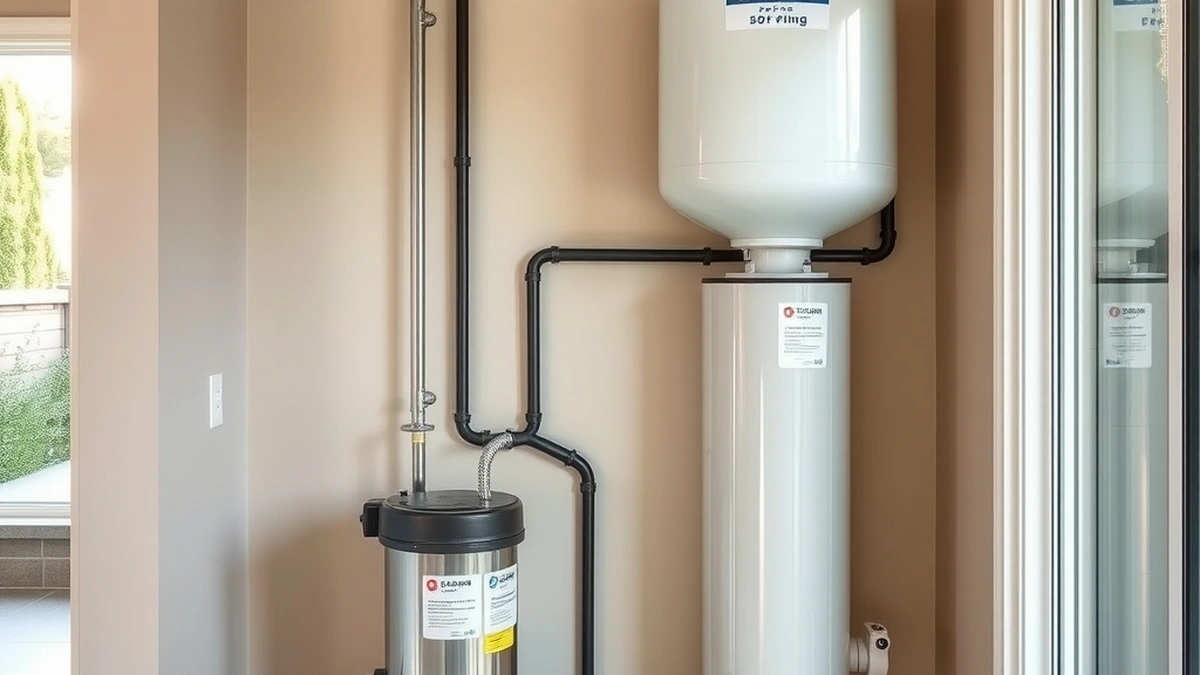
A water well pump moves water from the well to a pressure tank that supplies the house. Submersible pumps suit deep wells, jet pumps suit shallow ones, and a household typically needs 8 to 15 gallons per minute at 40 to 60 psi.
- Household flow
- 8 - 15 gpm
- Pressure setting
- 40 - 60 psi
- Deep well pump
- Submersible
- Shallow well pump
- Jet pump
- Water test
- $40 - $150
Some links on this page are affiliate links.If you buy through them we may earn a commission at no extra cost to you. We do not accept payment for rankings. Read the full disclosure.
A water well pump lifts water from the well into a pressure tank that then pushes it through the house. Submersible pumps sit down the well and suit deep water; jet pumps sit above ground and suit shallow wells. A typical household needs 8 to 15 gallons per minute at 40 to 60 psi, and the pump has to be sized for both flow and lift.
The parts of a well system
A private well system has four main components: the well and casing, the pump, the pressure tank, and the controls.
The pump moves water up the drop pipe. The pressure tank stores a volume of water under air pressure so the pump does not run for every glass of water. The pressure switch turns the pump on and off at set pressures.
A check valve keeps water from draining back down the well when the pump stops. A foot valve serves the same purpose on some jet systems.
When one part fails, the symptom often appears in another. Short cycling is usually a tank problem, not a pump problem. That is why a technician should read the pressure gauge and the tank pre-charge before quoting a new pump.
Submersible versus jet
| Factor | Submersible | Jet pump |
|---|---|---|
| Location | In the well | Above ground |
| Best depth | Deep wells | Shallow wells |
| Priming | Not required | Required |
| Noise | Quiet | Audible |
| Service access | Requires pulling the pump | Easy access |
| Efficiency | Generally higher | Lower at depth |
A submersible pump is the standard for a modern drilled well. It is quieter and more efficient because it pushes water rather than pulling it.
A jet pump is common on shallow wells and cisterns. It needs priming after loss of prime, and its suction limit makes it unsuitable for deep water.
Sizing by flow and head
Flow is the gallons per minute the house needs. Head is the total lift plus the pressure the system must maintain.
A two-bathroom house with a washing machine and dishwasher peaks around 10 to 12 gpm. A three-bathroom house with irrigation can exceed 15 gpm.
Pressure converts to head: roughly 2.31 feet of head per psi. A 40 to 60 psi system therefore needs about 92 to 139 feet of head just for pressure, before the depth of the water table is added.
That is why a pump rated at 15 gpm at zero head may deliver far less at 200 feet of total head. The pump curve matters more than the headline number.
Pressure settings and the tank
A common residential setting is 40 psi cut-in and 60 psi cut-out. The pressure tank is pre-charged to about 38 psi, roughly 2 psi below cut-in.
If the tank is waterlogged, the pump cycles rapidly and the pressure fluctuates. The fix is usually to recharge or replace the tank rather than the pump.
Tank size should match the pump flow so the pump runs for at least a minute per cycle. A tank that is too small shortens pump life and makes the pressure feel uneven.
Water quality affects the pump
Iron, hardness, and grit all affect pump life. Iron can foul the intake and the pressure switch. Grit wears the impellers.
A lab test at $40 to $150 shows what the pump is working with. If iron is above 2 to 3 ppm, a softener alone will not manage it, and an iron filter at $800 to $2,500 installed is the usual treatment upstream.
Hard water also scales the pressure tank bladder and the fixtures. A softener at $1,200 to $4,500 installed protects both the plumbing and the appliances.
Bacteria is a separate issue. A positive coliform test calls for disinfection and a resample, not a pump replacement.
Diagnosing common problems
- No water at all: check the breaker, the pressure switch, and the tank pressure before pulling the pump.
- Low pressure everywhere: check the pressure gauge and the switch setting, then the pump curve against the actual depth.
- Short cycling: check the tank pre-charge and the bladder.
- Dirty or sandy water: check the pump intake depth and the well screen.
- Pump runs continuously: check for a leak in the drop pipe or a stuck switch.
A pump that runs continuously with no demand is usually losing water back down the well through a failed check valve.
When to replace rather than repair
Replace when the motor fails, when the pump no longer meets the household flow at the actual head, or when the well produces sand that wears a new pump quickly.
A repair on a 15-year-old pump is often throwing money at a motor that is near the end of its service life. Ask the technician for the pump’s age and the measured flow before authorising a repair.
Bottom line
A water well pump is sized by flow and head, not by horsepower alone. Match the pump to the household demand of 8 to 15 gpm, set the pressure at 40 to 60 psi, and test the water so iron and hardness do not shorten the equipment’s life.
For the treatment side, see well water treatment system installation and iron filter cost. For pressure problems, low water pressure causes covers the diagnosis.
One number worth recording at installation is the static water level from the driller’s report. A pump set 20 feet above the bottom of a well that has since dropped will begin drawing air during dry seasons, and the symptom looks like a failing pump rather than a falling water table.
Keep the pump model and horsepower on the pressure tank or the control box. A service call starts with that number, and a homeowner who can read it off saves the technician twenty minutes of guessing.
Frequently asked questions
What type of pump does a well need?
A submersible pump sits down the well and suits deep wells, while a jet pump installs above ground and suits shallow wells with a high water table.
How many gallons per minute does a house need?
Most households need 8 to 15 gallons per minute at peak demand, depending on bathrooms, appliances, and irrigation.
What pressure should a well system run?
A common setting is 40 psi cut-in and 60 psi cut-out, with the pressure tank pre-charged to about 2 psi below the cut-in.
How long does a well pump last?
Pump life depends on water quality, cycling, and motor quality; hard water and grit shorten it, and a cycling pump wears faster than one with a proper tank.
Why does my pump cycle on and off?
Short cycling usually means a waterlogged pressure tank, a failing check valve, or a pressure switch set too close together.
Should I test the water before replacing a pump?
Yes. A lab test at $40 to $150 shows iron, hardness, and bacteria, which affect pump choice and downstream treatment.
Sources
Some links are affiliate links.If you buy through them we may earn a commission at no extra cost to you. We do not accept payment for rankings. Read the full disclosure.


