
Water well basics: casing, pump and testing
How a private water well works, from casing and screen to pump and pressure tank, and what a well owner has to test and maintain.
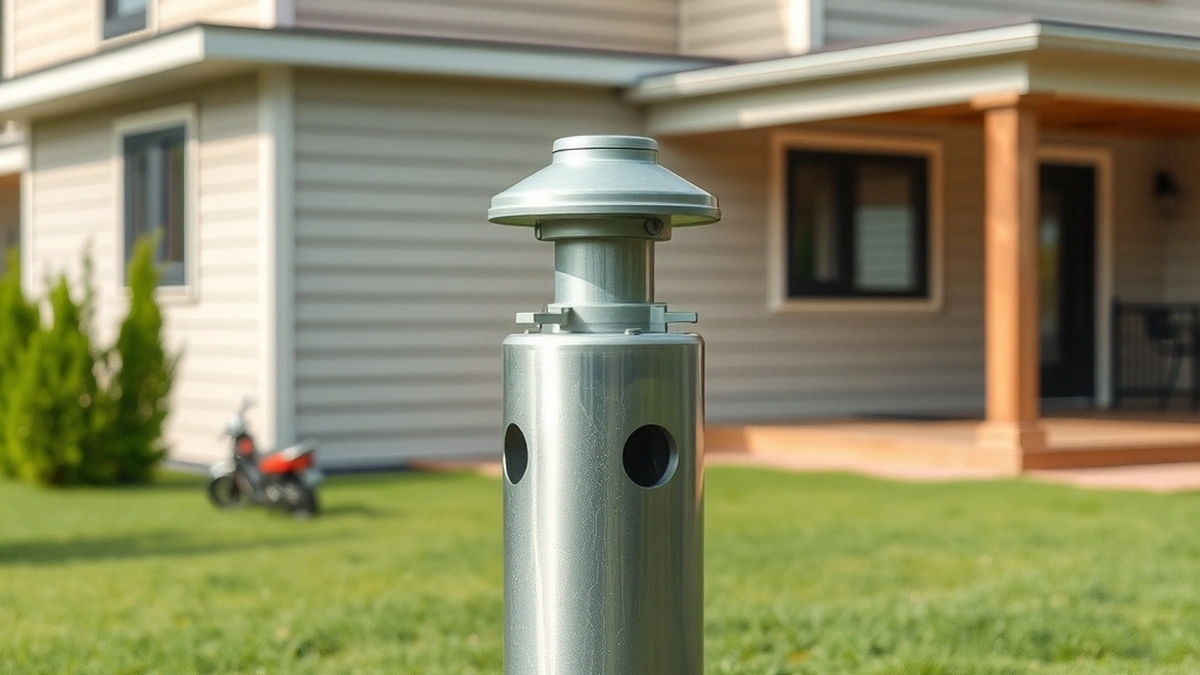
A water well is a drilled hole with a casing, a screen or open bore, and a pump that lifts groundwater to a pressure tank. Private wells are the owner's responsibility to test annually for bacteria and nitrate and to maintain the casing, pump, and treatment.
- Typical depth
- 100 - 500 feet
- Casing diameter
- 4 - 8 inches
- Annual test cost
- $40 - $150
- Pump life
- 10 - 15 years
- Nitrate limit
- 10 mg/L
Some links on this page are affiliate links.If you buy through them we may earn a commission at no extra cost to you. We do not accept payment for rankings. Read the full disclosure.
A water well is a drilled hole into an aquifer, lined with casing, fitted with a pump, and connected to a pressure tank that gives the house a steady supply. Private wells are not regulated, so the testing and maintenance that a utility would do become the owner’s job.
The Parts of a Well
A modern residential well has five main components, and each one can fail in its own way.
The borehole is the drilled hole, typically 6 to 10 inches in diameter and 100 to 500 feet deep. It penetrates the water-bearing formation, which may be sand and gravel, fractured rock, or sandstone.
The casing is a steel or PVC pipe that lines the upper portion of the hole and seals out soil and surface water. The seal at the top, called the grout, is the barrier that keeps runoff from running down the outside of the casing into the aquifer.
The screen or open bore is the intake. In unconsolidated formations, a slotted screen holds back sand while letting water in. In bedrock, the hole may be left open.
The pump is usually submersible, hung on a drop pipe near the bottom of the well. A jet pump sits above ground and is used on shallow wells.
The pressure tank stores water under air pressure so the pump does not run every time a tap opens.
How Water Gets to the Tap
The submersible pump pushes water up a drop pipe to the pressure tank. The tank has a bladder with air on one side and water on the other, and the air cushion maintains pressure between pump cycles.
A pressure switch turns the pump on at a low set point and off at a high one, commonly 30/50 or 40/60 psi. When the switch cuts in, the pump runs until the tank reaches the cut-out pressure, then stops.
That cycle is why the tank matters. A tank that has lost its air charge has no cushion, so pressure swings immediately and the pump short cycles, turning on and off every minute. Short cycling wears the motor and is the most common well fault a homeowner can detect without tools.
What a Well Owner Must Do
Private wells are not covered by the Safe Drinking Water Act. No utility tests the water, no agency issues a report, and no one inspects the casing.
The owner’s minimum schedule is annual bacteria and nitrate testing, a broader panel every three to five years, and a visual check of the wellhead for a cracked cap, a sunken area around the casing, or evidence of surface water ponding.
Testing costs $40 to $150 for a lab panel. That is the cheapest insurance in the whole system, and the results drive every treatment decision that follows.
Keep the results in a folder with the driller’s report and any service invoices. When you sell the house, that folder answers the buyer’s first question about the well, and when something changes in the water, it gives you a baseline to compare against instead of a guess.
Common Water Quality Problems
Well water reflects the geology it passes through, so problems cluster by region.
| Symptom | Likely cause | Treatment |
|---|---|---|
| Orange staining | Iron | Iron filter |
| Rotten egg smell | Hydrogen sulfide | Oxidation plus carbon |
| White scale | Hardness | Softener |
| Blue-green stains | Low pH, corrosive | Neutralizer |
| Cloudy water | Sediment or air | Sediment filter, pump check |
| Yellow tint | Tannins | Anion exchange |
| Nitrate above 10 mg/L | Surface influence | Reverse osmosis at tap |
The staging of those treatments matters as much as the choice. Sediment first, then iron, then softening, then carbon, then UV is the standard order, and moving a stage usually costs more in service calls than it saves in fittings.
Well Maintenance
The pump and tank are the mechanical parts, and they have predictable lives. A submersible pump lasts 10 to 15 years; a pressure tank 8 to 12. Both are replaced rather than repaired once they fail.
The casing and grout are the long-lived parts, and they are the ones that determine whether the water stays clean. A cracked casing lets surface water in, which shows up as bacteria that return after every shock chlorination.
Annual testing is how you notice. A well that was clean for a decade and suddenly shows coliform is telling you something about the casing, the grout, or a change in the water table, and the trend is only visible if you have the older results.
Five Steps for a New Well Owner
- Get the driller’s report with depth, yield, and pump setting.
- Test the water with a full lab panel before moving in.
- Inspect the wellhead for a sealed cap and proper grading.
- Record the pressure switch settings and tank air charge.
- Set an annual test reminder for bacteria and nitrate.
When to Call a Professional
Call a well contractor if the pump short cycles, pressure at the tank is low with fixtures running, the pump runs continuously, or the water suddenly turns cloudy or sandy. Those point at the pump, the tank, or the screen rather than at treatment.
Call a treatment contractor after the test results are in, not before. Buying a softener for water that turns out to be iron-heavy wastes money, and buying an iron filter for water that is merely hard does the same.
The diagnostic split between supply and treatment is covered in well pump versus treatment, the test schedule in well water testing, and the treatment chain in well water system layout.
Frequently asked questions
How deep is a typical water well?
Most residential wells are 100 to 500 feet deep, though depth varies widely with geology; the driller's report for your well states the actual depth and static water level.
How often should a private well be tested?
At least annually for bacteria and nitrate, and every three to five years for a broader panel covering hardness, iron, manganese, pH, and arsenic.
What is well casing?
The steel or PVC pipe that lines the drilled hole and keeps soil and surface water out of the well; a cracked or unsealed casing is a common pathway for contamination.
How long does a well pump last?
Ten to fifteen years for a submersible pump, with the pressure tank often needing replacement sooner, around eight to twelve years.
Can I drink water from a private well?
Yes if testing shows it is safe; private wells are not regulated, so testing and any needed treatment are the owner's responsibility.
What causes a well to run dry?
A falling water table, seasonal drought, or a pump set too shallow for the current level; a well that recovers overnight is usually a yield problem rather than a dry well.
Sources
Some links are affiliate links.If you buy through them we may earn a commission at no extra cost to you. We do not accept payment for rankings. Read the full disclosure.


