Culligan Water Softener Review: Dealer Model Maths
Dealer-model Culligan softener pricing, grain capacity, salt use, and installed cost compared against retail alternatives.
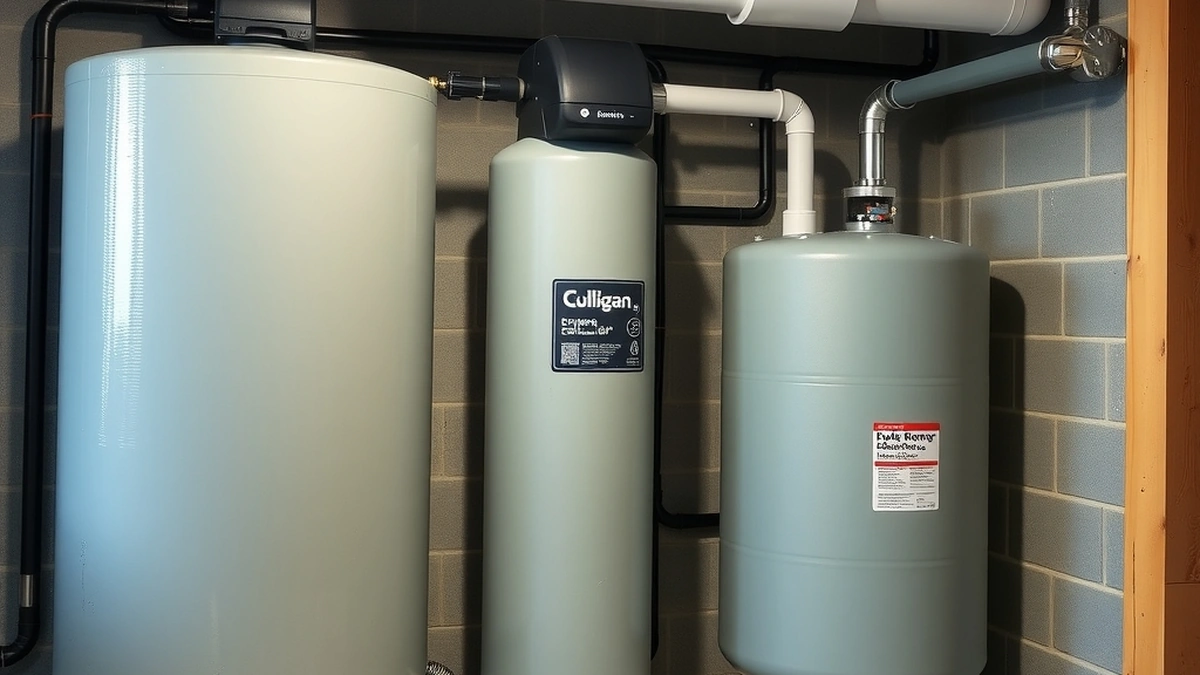
Culligan softeners are sold through dealers with installed prices typically ranging from $1,200 to $4,500, depending on capacity and installation scope.
- Equipment range
- $600–$2,500
- Installed range
- $1,200–$4,500
- Grain capacity
- 24,000–64,000 grains
- Salt per regeneration
- 8–12 lbs
- Resin life
- 8–12 years
Some links on this page are affiliate links.If you buy through them we may earn a commission at no extra cost to you. We do not accept payment for rankings. Read the full disclosure.
Culligan water softeners are dealer-sold systems with installed prices that typically run higher than comparable retail units. Equipment alone usually falls between $600 and $2,500, while fully installed systems commonly land between $1,200 and $4,500. Whether that premium is justified depends on your water test results, grain capacity needs, and long-term salt and resin costs.
How Dealer Model Pricing Works
Culligan does not publish a single price list because systems are configured by local dealers after an in-home consultation. The equipment portion of a Culligan softener generally ranges from $600 to $2,500. Installation adds another $500 to $1,500, bringing the typical installed range to $1,200 to $4,500. For context, retail softener equipment often sits at the lower end of that spectrum, with installation priced separately. The dealer model bundles the unit, installation, and service visits into one contract, which simplifies buying but makes direct price comparisons harder.
If you are comparing dealers, ask for the equipment-only price and the installation price separately. That separation lets you compare against other retailers and installation quotes. More detail on installed pricing is available in our guide to water softener installation cost.
Grain Capacity and Sizing Math
Culligan dealer models are commonly offered in capacities from 24,000 to 64,000 grains. Capacity tells you how much hardness the resin can remove before it must regenerate. To size a system, multiply household size by daily water use per person, then multiply by water hardness in grains per gallon (GPG).
Example for a four-person household using 75 gallons per person per day with 10 GPG hardness:
- Daily demand: 4 people × 75 gallons = 300 gallons
- Daily grain load: 300 gallons × 10 GPG = 3,000 grains per day
- A 32,000-grain system would theoretically regenerate every 10.7 days at 100% capacity
In practice, softeners are not run to zero capacity. Dealers typically program regeneration at 70–80% of rated capacity to protect resin life and maintain flow rate. Using 75% usable capacity on a 32,000-grain unit gives roughly 24,000 usable grains, meaning regeneration about every 8 days under the example above.
Hardness categories help frame the need:
- Soft: 0–3 GPG
- Moderate: 3–7 GPG
- Hard: 7–10 GPG
- Very hard: 10+ GPG
If your water test shows hardness above 10 GPG, a larger grain capacity or more frequent regeneration may be warranted. Iron above 2–3 PPM can exceed what many softeners handle effectively and may require separate treatment before the softener.
Salt Use and Annual Operating Cost
Salt consumption depends on regeneration frequency and the salt dose per regeneration. Culligan dealer systems commonly use 8–12 pounds of salt per regeneration. Using the example household above regenerating every 8 days:
- Regenerations per year: 365 ÷ 8 ≈ 46
- Salt per year at 8 pounds: 46 × 8 = 368 pounds
- Salt per year at 12 pounds: 46 × 12 = 552 pounds
At typical retail salt prices, that translates to roughly $120 to $400 per year in salt costs. Over a 10- to 15-year equipment life, salt can add $1,200 to $6,000 to ownership costs. High-efficiency demand-initiated regeneration can reduce salt use compared to timer-based models, but actual savings depend on your water use patterns.
More detail on salt pricing is available in our water softener salt cost article.
Resin Life and Long-Term Replacement
Resin beds in water softeners typically last 8 to 12 years. When resin capacity declines, a professional rebed generally costs $300 to $600. Over a 15-year ownership horizon, you should budget for at least one rebed, possibly two if the resin is exposed to high iron or chlorine levels.
Total 15-year cost estimate for a mid-range installed Culligan system:
- Installed equipment: $2,800 (midpoint of $1,200–$4,500)
- Salt over 15 years at $260 per year: $3,900
- One resin rebed at year 10: $450
- Estimated 15-year total: $7,150
This is an estimate, not a quote. Your actual cost will vary with local water conditions, salt prices, and service rates.
What a Water Test Should Confirm
Before signing a dealer contract, test for hardness, iron, and total dissolved solids. A lab water test typically costs $40 to $150. Iron levels matter because many softeners are rated for only 2–3 PPM of iron; higher concentrations can foul resin and reduce efficiency. If your water contains sulfur, nitrate, or bacteria, a softener alone will not address those issues.
Testing first protects you from oversizing or buying equipment that does not match your water chemistry. For homes on private wells, additional contaminants may be present, which is covered in our well water treatment cost overview.
Comparing Dealer Models to Alternatives
If your primary concern is hardness and scale buildup, a salt-free conditioner installed for $500 to $1,800 may be an option, though it does not remove hardness minerals the way ion-exchange softeners do. Carbon filtration installed for $500 to $1,800 addresses chlorine and taste issues but does not soften water. Whole-house reverse osmosis systems run $3,000 to $8,000 installed and are usually unnecessary solely for hardness treatment.
For drinking water at the kitchen sink, an under-sink RO system costs $300 to $900 installed with $60 to $150 in annual running costs. That may be a useful complement to a softener if you want low-TDS water for drinking and cooking while using softened water throughout the house. More on RO pricing is in our reverse osmosis system cost guide.
If your water test shows iron above the softener limit or sulfur odor, you may need an iron filter ($800–$2,500 installed) or sulfur filter ($1,000–$3,000 installed) ahead of the softener. Those costs are separate from the softener itself and should be included in any total treatment budget.
Questions to Ask a Culligan Dealer
Before committing, request the following in writing:
- Equipment model number and grain capacity rating
- Itemized installation cost
- Salt dose per regeneration and estimated annual salt use
- Warranty terms for control valve, tank, and resin
- Service call policy and response time
- Total price including tax, permits, and plumbing modifications
Dealer models often include service visits and salt delivery, which can justify part of the price gap versus retail units. The value depends on whether you prefer bundled service or sourcing components independently.
Bottom Line
Culligan dealer softeners offer installed convenience and local service support, but the installed price range of $1,200 to $4,500 is wide. Start with a lab water test, size the grain capacity to your actual hardness and water use, and calculate 10- to 15-year salt and resin costs before comparing dealers. If your water contains iron, sulfur, or other contaminants, add those treatment costs to the total before making a decision.
Frequently asked questions
What is a dealer model softener?
A dealer model is sold and installed by a local water treatment dealer rather than purchased off the shelf at a retail store or online.
How much does Culligan equipment cost?
Culligan softener equipment typically ranges from $600 to $2,500 before installation, depending on capacity and features.
What is the installed price range?
Installed Culligan softener systems generally fall between $1,200 and $4,500, including labor and basic plumbing connections.
How much salt does a softener use per year?
Annual salt costs typically run from $120 to $400, depending on water hardness, household size, and regeneration settings.
How often does resin need replacement?
Resin beds usually last 8 to 12 years, and a professional rebed typically costs $300 to $600.
Should I test water before buying?
Yes. A lab water test usually costs $40 to $150 and confirms hardness and iron levels before sizing equipment.
Sources
Some links are affiliate links.If you buy through them we may earn a commission at no extra cost to you. We do not accept payment for rankings. Read the full disclosure.