
Drilling a Water Well: Depth, Cost, and Sequence
Well drilling runs $25 - $65 per foot, plus casing, pump, and testing. See how depth, yield, and permits set the final bill before you sign a contract.
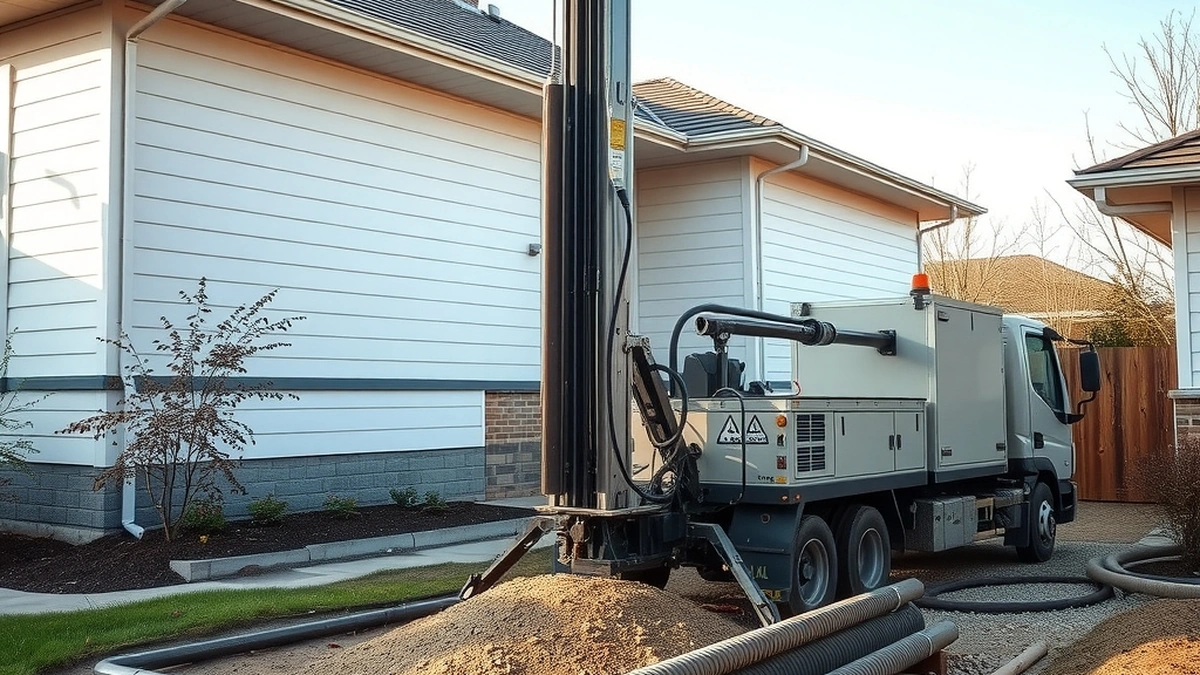
Drilling a water well costs roughly $25 - $65 per foot, so a 200-foot well runs $5,000 - $13,000 before the pump, casing, and testing. Total installed cost commonly lands at $8,000 - $20,000, and the yield test decides whether the hole is usable.
- Drilling cost per foot
- $25 - $65
- Typical depth
- 100 - 500 feet
- Pump installed
- $1,000 - $3,000
- Yield test
- $300 - $800
- Lab water test
- $40 - $150
Some links on this page are affiliate links.If you buy through them we may earn a commission at no extra cost to you. We do not accept payment for rankings. Read the full disclosure.
Drilling a water well means boring a hole to the aquifer, installing casing and a screen, developing the well, and testing its yield. Drilling alone costs roughly $25 - $65 per foot, so a 200-foot well runs $5,000 - $13,000. The completed system, with pump and testing, commonly lands at $8,000 - $20,000.
What Happens on Drilling Day
A drilling rig arrives with a support truck, water tank, and casing. The crew drills a borehole through soil and rock until it reaches a water-bearing formation, then logs the depth and the strata it passed.
The hole is slightly larger than the casing that will line it. After drilling, the crew lowers a steel or PVC casing, centers it, and pumps grout into the annulus between casing and borehole wall. Grout seals the well from surface runoff and from shallow contaminated layers, and most states require it.
Below the casing sits the screen or open rock interval where water enters. The crew develops the well by surging or jetting to clear drilling fines, then runs a pump test. Only after the yield is known does the pump get sized and installed.
Depth, Yield, and What They Cost
Depth is the biggest cost driver and the one nobody can quote in advance. Local drillers know the typical range for an area, but the actual number comes from the hole.
| Component | Typical range | Notes |
|---|---|---|
| Drilling | $25 - $65 per foot | Varies with rock hardness and diameter |
| Casing | $8 - $20 per foot | Steel costs more than PVC |
| Grout and seal | $300 - $900 | Often required by code |
| Pump and drop pipe | $1,000 - $3,000 | Sized to depth and yield |
| Pressure tank | $300 - $800 | Sized to pump output |
| Yield test | $300 - $800 | Confirms sustainable flow |
| Permit | $50 - $500 | Set by state or county |
A 200-foot well at $45 per foot is $9,000 for drilling. Add 200 feet of casing at $12, $300 of grout, a $1,800 pump, a $500 tank, a $500 yield test, and a $200 permit. Total: $9,000 + $2,400 + $300 + $1,800 + $500 + $500 + $200 = $14,700. That is a realistic mid-range figure, and it is an estimate, not a quote.
Depth also drives pump choice. A pump set at 300 feet needs more head pressure than one at 80 feet, and the pump price rises with it. A deep well with a low yield may need a storage tank and a booster pump, which adds $1,500 - $4,000.
Reading a Drilling Contract
Well contracts are usually priced per foot, with extras for casing, grout, and development. Read four clauses before signing.
The first is the depth guarantee. Some contracts quote a price to a stated depth and bill per foot beyond it. Others quote an all-in estimate that is not binding. Know which one you have.
The second is the dry-hole clause. If the first hole produces nothing, who pays for the second? A fair contract states the terms in writing.
The third is the yield standard. A well that produces 1 gallon per minute is marginal for a family of four. Ask what yield the driller considers acceptable and what happens if the well falls short.
The fourth is the abandonment clause. An unsuccessful hole must be properly sealed, and that costs money.
Testing the Water After Completion
A new well needs a lab panel before anyone drinks from it. Test for bacteria, nitrate, arsenic, lead, iron, manganese, hardness, and pH at minimum. A lab panel costs $40 - $150, and a broader suite for arsenic, uranium, or PFAS costs more.
Bacteria and nitrate are the annual tests. Arsenic and other metals can be tested every three to five years unless the first result shows a problem. Hardness and iron matter for treatment sizing, not just safety.
Take the sample from a tap that has run for several minutes, using a sterile bottle from the lab. Do not sample through a filter or a softener, because those devices change the result. For the full panel, see water tests for wells.
Sequence From Permit to Tap
- Confirm the permit and driller licensing requirements with the county health department.
- Have the driller log the borehole and report the depth and strata in writing.
- Verify casing depth, grout placement, and the sanitary seal before the pump goes in.
- Run the yield test and record the pumping rate and drawdown.
- Install the pump, drop pipe, pressure tank, and pitless adapter.
- Shock chlorinate the well, flush it, then take the lab sample after the chlorine clears.
- Test again in six months to establish a baseline for the first year.
Shock chlorination is standard after completion. The chlorine sanitizes the casing and pump, and the well must be flushed until the residual drops before sampling. Sampling too soon gives a false positive for bacteria or a false reading for chlorine.
Treatment After the Well Is In
Most new wells need some treatment, and the test result decides which. Hardness above 7 GPG points to a softener at $1,200 - $4,500 installed. Iron above 2 - 3 PPM exceeds what softener resin handles comfortably, so an iron filter at $800 - $2,500 installed comes first.
Sulfur odor calls for a sulfur filter at $1,000 - $3,000 installed. Sediment needs a cartridge or backwashing filter. Bacteria need shock chlorination and, if it recurs, a UV unit with a lamp changed every 12 months at $30 - $90.
Do not buy treatment before the lab report. A package sold before testing is a guess, and the guess is usually wrong in at least one component. For the treatment decision path, see well water treatment and well water treatment cost.
Frequently asked questions
How deep does a water well need to be?
Depth depends on the local aquifer, typically 100-500 feet in most of the US. A driller cannot promise depth before drilling, which is why contracts price per foot.
How much does it cost to drill a well?
Drilling alone runs about $25-$65 per foot. A 200-foot well is $5,000-$13,000, and the completed system with pump, casing, and testing is often $8,000-$20,000.
How long does drilling take?
Most residential wells are drilled in one to three days. Completion, including casing, pump installation, and development, adds several more days.
Do I need a permit to drill a well?
Most states and counties require a permit, and some require a licensed driller. Fees vary widely, so check with the local health department before scheduling.
What is a yield test?
A yield test pumps the well at a controlled rate for a set period and measures drawdown, which shows how many gallons per minute the well can sustain.
What if the well does not produce enough water?
Options include drilling deeper, hydrofracturing, or adding a storage tank. Each adds cost, and the contract should state who pays if the first hole is dry.
Sources
Some links are affiliate links.If you buy through them we may earn a commission at no extra cost to you. We do not accept payment for rankings. Read the full disclosure.


