
Well Water Treatment: Match the System to the Test
Well water treatment follows the lab report: hardness, iron, sulfur, sediment, bacteria, nitrate. See which stage fixes which symptom and what it costs.
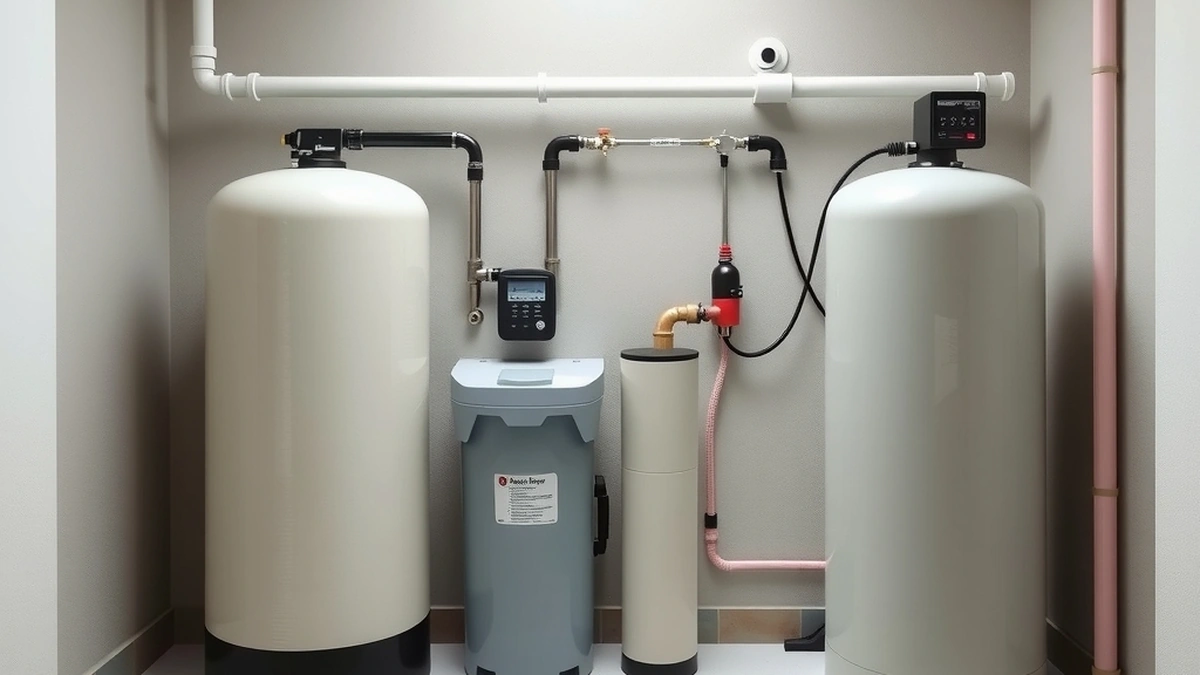
Well water treatment depends on what the lab report shows. Hardness needs a softener, iron above 2 - 3 PPM needs an iron filter, sulfur odor needs oxidation, sediment needs a prefilter, bacteria need disinfection and UV, and nitrate needs reverse osmosis.
- Lab panel
- $40 - $150
- Softener installed
- $1,200 - $4,500
- Iron filter
- $800 - $2,500
- Sulfur filter
- $1,000 - $3,000
- UV lamp
- $30 - $90 yearly
Some links on this page are affiliate links.If you buy through them we may earn a commission at no extra cost to you. We do not accept payment for rankings. Read the full disclosure.
Well water treatment is selected from a lab report, not from a product catalog. Hardness, iron, sulfur, sediment, bacteria, nitrate, and acidity each call for a different stage, and the order of those stages matters as much as the choice. A basic panel costs $40 - $150 and prevents most bad purchases.
Start With the Symptoms and the Numbers
Symptoms point to a test, and the test points to equipment. Orange stains mean iron. Black stains mean manganese. Rotten egg odor means hydrogen sulfide. White crust means hardness. Cloudy water means sediment or air. Blue-green stains mean corrosive water.
None of those symptoms give you a number. The lab does. Hardness is reported in grains per gallon, iron and manganese in parts per million, nitrate in milligrams per liter, and pH on a 0 - 14 scale. Treatment sizing depends on those figures, and a system bought on symptoms alone is usually oversized in one stage and missing another.
Test bacteria and nitrate every year. Test the full chemistry panel every three to five years, or after any change in taste, odor, or color.
Matching Each Problem to a Stage
| Problem | Test result | Treatment | Installed cost |
|---|---|---|---|
| Hardness | 7+ GPG | Ion-exchange softener | $1,200 - $4,500 |
| Iron | Above 2 - 3 PPM | Air-injection or greensand filter | $800 - $2,500 |
| Manganese | Above 0.05 PPM | Oxidizing filter | $800 - $2,500 |
| Sulfur odor | Detectable H2S | Aeration plus backwashing filter | $1,000 - $3,000 |
| Sediment | Visible turbidity | Cartridge or backwashing filter | $150 - $900 |
| Bacteria | Positive coliform | Shock chlorination, then UV | $400 - $1,200 plus $30 - $90 per lamp |
| Nitrate | Above 10 mg/L | Point-of-use RO | $300 - $900 |
| Acidic water | pH below 6.5 | Calcite neutralizer | $800 - $2,000 |
These figures are typical installed ranges, not quotes. The pattern is consistent: the more contaminants, the more stages, and the higher the total.
Why Order Matters
Sediment goes first. Grit and rust will clog carbon blocks, scratch resin, and foul membranes, so a $5 - $20 cartridge protects equipment worth thousands.
Iron and sulfur go before the softener. Softener resin tolerates only about 2 - 3 PPM of dissolved iron before fouling accelerates, and hydrogen sulfide damages resin outright. An iron filter ahead of the softener is the standard arrangement when both problems exist.
Carbon goes after the backwashing stages and before UV. Carbon removes the chlorine or oxidant residual that would otherwise sit in the distribution lines, and it clears the water so UV can penetrate.
UV goes last. Ultraviolet disinfection only works in clear water, because turbidity shields bacteria from the light. A UV unit installed ahead of a sediment filter is a decorative lamp.
Hardness and Iron: The Common Pair
Hardness above 7 GPG is the most frequent well problem, and a softener at $1,200 - $4,500 installed is the direct answer. Equipment runs $600 - $2,500, installation adds $500 - $1,500, salt runs $120 - $400 a year, and resin lasts 8 - 12 years with a rebed at $300 - $600.
Iron often appears alongside hardness. At 1 - 2 PPM, a softener with an iron-cleaning salt can keep up. Above 2 - 3 PPM, the resin fouls faster than salt can clean it, and an iron filter at $800 - $2,500 installed belongs in front.
The arithmetic on a combined system: $1,800 iron filter plus $2,200 softener equals $4,000 installed, plus $200 a year in salt and media. That is inside the $4,000 - $8,000 range for a full train, and it addresses the two problems that cause most of the visible symptoms.
Sulfur, Sediment, and Bacteria
Hydrogen sulfide is the rotten egg odor. It corrodes plumbing, tarnishes silver, and cannot be removed by carbon alone at typical concentrations. The fix is oxidation — aeration, ozone, or chemical injection — followed by a backwashing filter. Installed cost is $1,000 - $3,000.
Sediment is mechanical. A cartridge filter at $150 - $600 handles light loads with cartridges every 3 - 6 months. Heavy sand or grit needs a backwashing filter that flushes itself.
Bacteria need a two-part response. Shock chlorination disinfects the well and casing, and UV at $400 - $1,200 installed keeps the water treated as it enters the house. A UV lamp is $30 - $90 and must be replaced every 12 months, because the output falls before the lamp visibly fails.
Nitrate, Arsenic, and Corrosion
Nitrate above 10 mg/L does not respond to softening, carbon, or UV. Reverse osmosis at the kitchen tap removes it, at $300 - $900 installed and $60 - $150 a year in filters.
Arsenic needs either an adsorptive media or RO, depending on the species and the level. A point-of-use RO is the common residential answer for drinking water.
Corrosive water at pH below 6.5 eats copper and brass. A calcite neutralizer at $800 - $2,000 installed raises pH and adds hardness, which may then require softening. Test after the neutralizer to see what changed.
Commissioning the System
- Test the raw water and keep the report.
- Install the sediment prefilter first and add a sample tap after it.
- Add iron or sulfur treatment and retest downstream.
- Install the softener, sized by GPG and daily gallons.
- Add carbon and UV, and confirm the water is clear before the lamp.
- Add point-of-use RO for nitrate, arsenic, or TDS.
- Retest at the tap after each stage and log the results.
For the staged version of this plan, see well water purification system. For budgeting, see well water treatment cost. If iron is the driver, iron in well water and iron filter cost go deeper, and sulfur removal options covers the odor problem.
Frequently asked questions
What is the most common well water problem?
Hardness is the most common, followed by iron and manganese. Both are usually visible as scale or staining rather than taste, which is why testing comes first.
Do I need a softener and an iron filter?
Often both. An iron filter removes iron, and a softener removes hardness. If iron exceeds 2-3 PPM, the iron filter goes ahead of the softener to protect the resin.
How do I remove sulfur smell from well water?
Hydrogen sulfide needs oxidation before filtration. Aeration or chemical oxidation followed by a backwashing filter is the usual approach, and carbon alone is not enough.
Can I drink well water without treatment?
Only if testing confirms it is free of bacteria, nitrate, arsenic, and other contaminants. Test annually, and treat anything that exceeds a drinking water standard.
How much does a complete well water system cost?
A full train with sediment, iron, softening, carbon, and UV typically runs $4,000-$8,000 installed, depending on the contaminants and the flow required.
Why does my well water stain fixtures orange?
Orange staining usually means dissolved iron. It oxidizes when exposed to air and deposits as rust, which is a treatment problem rather than a plumbing defect.
Sources
Some links are affiliate links.If you buy through them we may earn a commission at no extra cost to you. We do not accept payment for rankings. Read the full disclosure.


