
Well Water Purification System: Building the Right Train
A well water purification system is a stack of filters matched to your lab report. See the order of stages, what each costs, and how to size the flow.
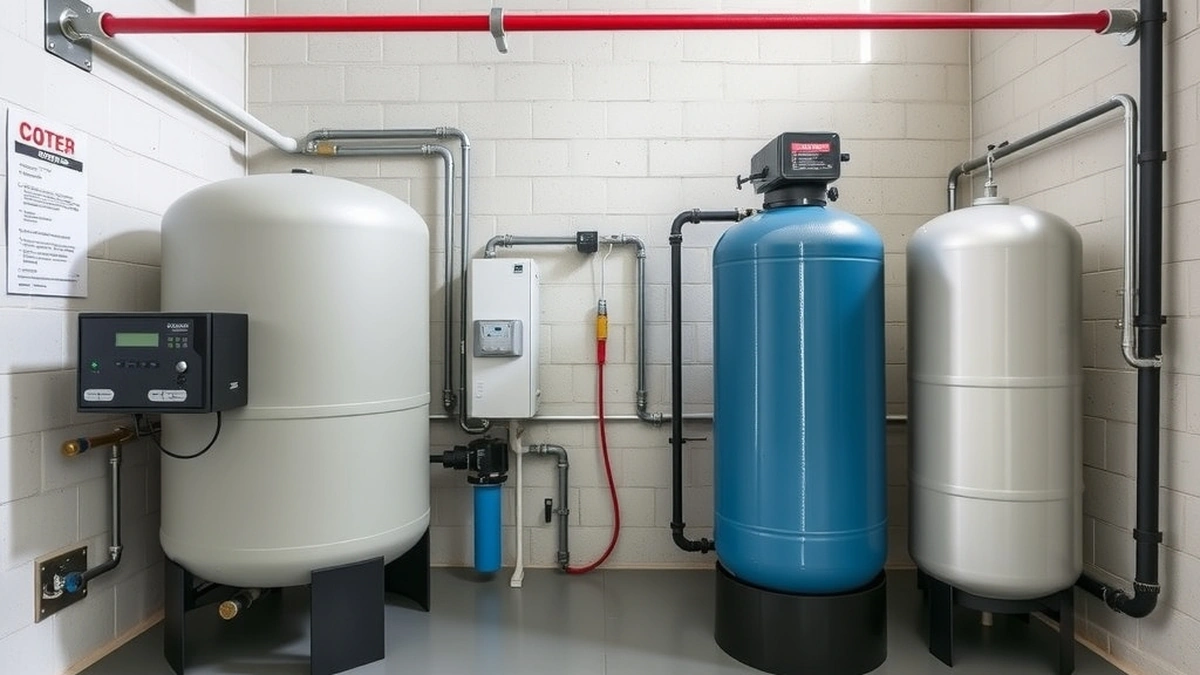
A well water purification system is a sequence of treatment stages chosen from a lab report: sediment, iron or sulfur removal, softening, carbon, UV, and point-of-use RO.
- Sediment and carbon
- $500 - $1,800 installed
- Iron filter
- $800 - $2,500 installed
- Sulfur filter
- $1,000 - $3,000 installed
- Softener
- $1,200 - $4,500 installed
- UV lamp
- $30 - $90 every 12 months
Some links on this page are affiliate links.If you buy through them we may earn a commission at no extra cost to you. We do not accept payment for rankings. Read the full disclosure.
A well water purification system is a treatment train built from a lab report, not a boxed product. Stages are added in a set order: sediment first, then iron or sulfur removal, then softening, then carbon, then UV, with reverse osmosis at the kitchen tap. A simple train costs $1,500 - $3,000 installed; a full one runs $4,000 - $8,000.
Start With the Lab Report
The report decides the equipment. Hardness, iron, manganese, sulfur, pH, bacteria, nitrate, arsenic, and sediment each map to a different stage, and buying a package before testing usually means paying for at least one component you do not need.
The key numbers are hardness in grains per gallon, iron and manganese in parts per million, pH, and the bacteria result. Hardness bands run 0 - 3 GPG soft, 3 - 7 moderately hard, 7 - 10 hard, and 10+ very hard. Iron above 2 - 3 PPM exceeds what softener resin handles comfortably. pH below 6.5 is corrosive. Nitrate above 10 mg/L needs a dedicated treatment.
A basic panel costs $40 - $150. Order it before requesting quotes, and ask the dealer to design from the report rather than from a description of the symptoms.
The Order of Stages
Order matters because each stage protects the next. Putting carbon before sediment clogs the carbon. Putting UV before sediment lets cloudy water shield bacteria from the lamp.
| Position | Stage | Removes | Installed cost |
|---|---|---|---|
| 1 | Sediment filter | Sand, rust, grit | $150 - $600 |
| 2 | Iron or sulfur filter | Iron, manganese, hydrogen sulfide | $800 - $3,000 |
| 3 | Water softener | Calcium, magnesium | $1,200 - $4,500 |
| 4 | Carbon filter | Chlorine, taste, odor, organics | $500 - $1,800 |
| 5 | UV purifier | Bacteria, viruses | $400 - $1,200 |
| 6 | Point-of-use RO | Dissolved solids, nitrate, metals | $300 - $900 |
Sediment is non-negotiable. A 5-micron cartridge ahead of everything else catches the grit that would otherwise scratch resin and foul membranes. Replace it every 3 - 6 months; it is the cheapest cartridge in the train and the one that protects the rest.
Matching Treatment to the Problem
Hardness alone calls for a softener, nothing more. Iron above 2 - 3 PPM calls for an iron filter ahead of the softener, because resin fouling accelerates above that limit. Sulfur odor calls for an oxidizer and a backwashing filter. Sediment calls for a cartridge or a backwashing filter. Bacteria call for shock chlorination first and UV for ongoing control.
Corrosive water at pH below 6.5 needs a neutralizer, usually a calcite bed, before the water runs through copper. Nitrate needs RO at the point of use or a selective resin. Arsenic needs an adsorptive media or RO, depending on the species.
Turbidity deserves special mention. UV only works in clear water, and a system that installs UV ahead of sediment is a system that will fail. Clarify first, disinfect last.
Sizing the Flow
Whole-house stages are rated in gallons per minute. A typical home needs 8 - 15 GPM at peak, and a backwashing filter must pass that flow without excessive pressure drop.
Size the filter to the pump, not to the average tap. A 10 GPM pump feeding a filter rated at 8 GPM creates a bottleneck that shows up as weak showers when the washing machine runs. The same logic applies to the softener: a unit sized for 12 GPM service flow will not keep up with a 15 GPM demand.
Ask for the pressure drop at the rated flow, not just the flow number. Two filters rated at 12 GPM can behave very differently at 10 GPM, and the one with the lower drop keeps shower pressure intact.
Pressure drop adds up across stages. Each cartridge, filter, and softener takes a few PSI, and a long train can cost 10 - 15 PSI. If the house pressure is marginal, plan a booster pump or reduce the number of stages.
Building the Train in Sequence
- Test the raw water and record the results.
- Install a sediment prefilter and a sample tap after it.
- Add iron or sulfur treatment if the report calls for it, and retest after it.
- Add the softener, sized by grains per gallon and daily use.
- Add carbon for taste and odor, then UV if bacteria are a concern.
- Add point-of-use RO for drinking water if nitrate, arsenic, or TDS run high.
- Retest at the tap after each stage to confirm the train is working.
Running Costs
A well system has consumables. Sediment cartridges run $5 - $20 every 3 - 6 months. Carbon cartridges run $80 - $300 a year. Softener salt runs $120 - $400 a year. A UV lamp is $30 - $90 every 12 months. RO filters run $60 - $150 a year, plus a membrane every 2 - 3 years at $40 - $120.
Total consumables for a full train land near $300 - $800 a year. That is the number to compare against the equipment price, because the equipment is a one-time cost and the consumables never stop.
Budget for service as well. Backwashing valves need periodic rebuilds, injectors on sulfur systems clog, and UV sleeves cloud over and need wiping. None of those are annual costs, but over ten years they add $500 - $1,500 to the ownership picture.
For the cost breakdown by component, see well water treatment cost. For the symptom-driven version, see well water treatment. If iron is the main problem, iron in well water covers the media choices, and best well water filter compares whole-house packages.
Frequently asked questions
What is the first stage in a well water system?
Sediment filtration. Sand, rust, and grit must be removed before carbon, resin, or a membrane, or the later stages clog and fail early.
Do I need a softener if I have an iron filter?
Often yes. An iron filter removes iron; it does not remove hardness. If the lab report shows both iron and high hardness, the iron filter goes first and the softener follows.
Where does UV go in the treatment train?
UV goes last, after sediment and carbon, because cloudy water shields bacteria from the lamp. The water must be clear for UV to work.
How much does a full well water system cost?
A simple sediment and carbon setup runs $1,500-$3,000 installed. A full train with iron, softening, UV, and RO commonly lands at $4,000-$8,000.
Can I install a well water system myself?
Cartridge filters and some softeners are DIY-friendly. Backwashing filters, UV units, and anything that changes plumbing require a plumber or treatment dealer.
How often should well water be retested?
Bacteria and nitrate every year, and the full chemistry panel every three to five years or after any change in taste, odor, or color.
Sources
Some links are affiliate links.If you buy through them we may earn a commission at no extra cost to you. We do not accept payment for rankings. Read the full disclosure.


