
Sulfur Removal Options: Aeration, Catalytic Carbon.
Compare aeration, catalytic carbon, and peroxide systems for hydrogen sulfide removal, including installed cost, maintenance, and when to test first.
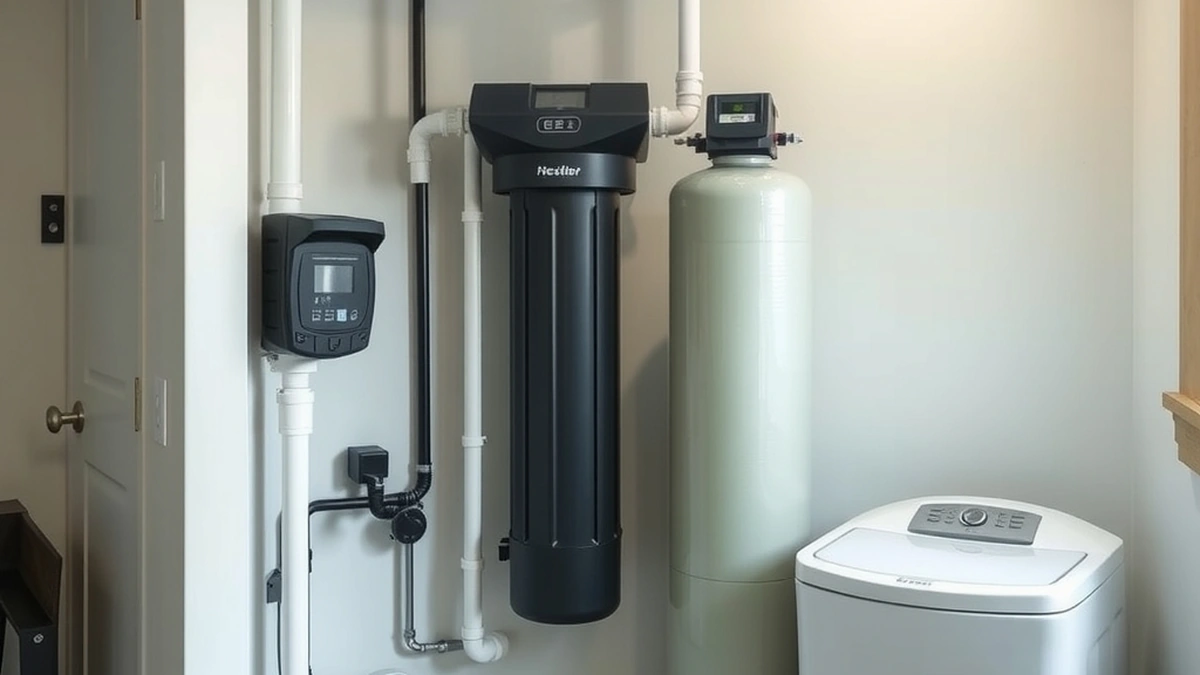
Test for hydrogen sulfide first, then match the removal method to concentration: aeration for low to moderate levels, catalytic carbon for trace amounts, and peroxide injection for higher levels or when iron is present.
- Common cause
- Hydrogen sulfide gas in well water
- Aeration installed cost
- Estimate $1,000–$3,000
- Catalytic carbon installed cost
- Estimate $500–$1,800
- Peroxide injection installed cost
- Estimate $1,000–$3,000
- Recommended first step
- Lab water test ($40–$150)
Some links on this page are affiliate links.If you buy through them we may earn a commission at no extra cost to you. We do not accept payment for rankings. Read the full disclosure.
Sulfur removal options depend on the concentration of hydrogen sulfide in the water and whether other contaminants are present. The first step is a lab water test, not equipment selection. Aeration, catalytic carbon, and peroxide injection each treat hydrogen sulfide differently, and installed cost varies by method and whole-house flow rate.
Start With a Water Test
Hydrogen sulfide is measured in milligrams per liter (mg/L), and treatment sizing depends on the result. A lab test typically costs $40–$150 and should confirm concentration, pH, iron, manganese, and total dissolved solids. Without these numbers, equipment may be undersized or mismatched to the water chemistry.
Private well owners are responsible for their own testing schedule. Public water supplies rarely contain hydrogen sulfide because treatment plants oxidize it before distribution, so a sulfur smell usually indicates a private well or a water heater issue.
Aeration Systems
Aeration introduces air into the water to oxidize dissolved hydrogen sulfide into elemental sulfur, which is then filtered out or vented. It is a chemical-free option commonly used for low to moderate hydrogen sulfide levels.
A typical whole-house aeration system installs for an estimated $1,000–$3,000. The system needs an air draw or blower, a contact or storage tank, and a backwashing sediment filter to capture precipitated sulfur. Maintenance includes checking the air injector, cleaning the tank, and replacing filter media on a manufacturer’s schedule.
Flow rate matters. Whole-house filters commonly operate at 8–15 gallons per minute. If a household runs multiple showers and appliances at once, the aeration tank and pump must support that demand without pressure loss.
Aeration does not add chemicals to the water, but it requires space for a tank and may raise pH slightly as carbon dioxide escapes. If iron is also present, aeration can precipitate iron as well, which increases sediment filter loading.
Catalytic Carbon
Catalytic carbon is a modified activated carbon that promotes the breakdown of hydrogen sulfide on the carbon surface. It works without injection chemicals and is often used for trace to moderate sulfur levels.
A catalytic carbon whole-house filter typically installs for an estimated $500–$1,800. Cartridge replacement runs about $80–$300 per year, with replacement intervals of 6–12 months depending on water usage and sulfur concentration. A sediment pre-filter is usually recommended and its cartridge may need replacement every 3–6 months.
This option is compact compared with aeration tanks and does not require a drain for backwashing in many cartridge-style designs. However, catalytic carbon has a finite capacity. Once the carbon surface is exhausted, sulfur odor returns. High flow rates reduce contact time, so system size must match peak household demand.
Catalytic carbon is generally not the first choice for high hydrogen sulfide concentrations or for water that also contains elevated iron and manganese, because those compounds can foul the carbon bed faster.
Peroxide Injection
Peroxide injection feeds hydrogen peroxide into the water stream ahead of a contact tank and carbon filter. Peroxide oxidizes hydrogen sulfide rapidly and is often selected for higher sulfur concentrations or when sulfur occurs with iron.
Installed cost for a peroxide injection system is typically estimated at $1,000–$3,000. Ongoing cost includes peroxide solution, which varies by concentration and usage. The system also requires a contact tank to allow oxidation time and a carbon filter to remove residual peroxide and precipitated particles.
Maintenance includes refilling the peroxide tank, checking the injection pump, and replacing carbon media. Because peroxide is a strong oxidizer, installation must follow manufacturer safety guidance for storage and handling.
Peroxide injection can handle higher loads than aeration or catalytic carbon alone, but it adds chemical handling and recurring consumable cost. It is usually justified when test results show hydrogen sulfide above the effective range of non-chemical methods.
Cost Comparison Table
The table below shows estimated installed costs and maintenance ranges. Actual prices depend on local labor, equipment model, and flow rate.
| Method | Estimated installed cost | Typical annual maintenance | Best fit |
|---|---|---|---|
| Aeration | $1,000–$3,000 | Filter media and tank upkeep | Low to moderate sulfur |
| Catalytic carbon | $500–$1,800 | $80–$300 per year for carbon | Trace to moderate sulfur |
| Peroxide injection | $1,000–$3,000 | Peroxide plus carbon replacement | Higher sulfur or sulfur with iron |
For comparison, a standard water softener costs $600–$2,500 for equipment and $500–$1,500 for installation, or $1,200–$4,500 installed. Salt runs $120–$400 per year, and resin rebed costs $300–$600. A softener is not a sulfur removal system, though it may reduce very low levels of dissolved iron that accompany sulfur odor. More detail is available at /how-much-does-a-water-softener-cost/ and /water-softener-installation-cost/.
A salt-free conditioner installs for an estimated $500–$1,800 but does not remove hardness or hydrogen sulfide. Whole-house reverse osmosis installs for $3,000–$8,000 and is usually unnecessary for sulfur alone. Under-sink RO costs $300–$900 installed with $60–$150 per year in running costs, but it treats drinking water at one tap, not the whole house. See /whole-house-water-filter-cost/ and /reverse-osmosis-system-cost/ for those comparisons.
Water Heater Sulfur Smell
If the sulfur odor appears only in hot water, the source may be the water heater anode rod rather than the well. Magnesium or aluminum anodes can react with sulfate-reducing bacteria in the tank to produce hydrogen sulfide. Replacing the anode with an aluminum-zinc or powered anode may resolve the odor without whole-house treatment.
Flushing the water heater and raising the temperature temporarily can reduce bacteria, but this is a maintenance task, not a permanent treatment system. If cold water also smells, the issue is in the source water and requires well treatment.
Choosing a System
Match the method to the test result:
- Trace to moderate hydrogen sulfide: catalytic carbon is often the simplest installed option.
- Moderate hydrogen sulfide without iron: aeration avoids chemical handling.
- Higher hydrogen sulfide or sulfur with iron and manganese: peroxide injection provides stronger oxidation.
- Odor only in hot water: inspect the water heater anode before buying whole-house equipment.
Installed cost is only part of the comparison. A $500–$1,800 catalytic carbon system with $80–$300 in annual cartridge cost may cost less over five years than a peroxide system with ongoing chemical expense, even if peroxide handles a wider range of water quality.
Whole-house equipment must support the home’s peak flow rate, commonly 8–15 gallons per minute for standard filters. Undersized systems cause pressure drops when multiple fixtures run. A treatment professional should confirm flow rate and contact time during sizing.
Well owners should retest after installation to confirm the system reduces hydrogen sulfide to the target level. Equipment performance changes as media ages, so maintenance schedules matter as much as the initial purchase decision. For broader well treatment cost context, see /well-water-treatment-cost/.
Next, compare how much does a water softener cost, water softener installation cost, whole house water filter cost before you commit.
Frequently asked questions
What causes sulfur smell in water?
Hydrogen sulfide gas dissolved in groundwater, common in private wells, produces a rotten egg odor at low concentrations.
Does aeration remove sulfur?
Yes, aeration oxidizes hydrogen sulfide so it can be vented or filtered, typically effective at low to moderate levels.
How does catalytic carbon work?
Catalytic carbon accelerates the breakdown of hydrogen sulfide without chemicals, best suited for trace to moderate sulfur levels.
When is peroxide injection used?
Peroxide injection is used for higher hydrogen sulfide concentrations or when sulfur occurs with iron and manganese.
Should I test before buying equipment?
Yes, a lab test confirms concentration and rules out co-contaminants that change equipment sizing.
What does a sulfur filter cost installed?
Whole-house sulfur filter systems typically install for an estimated $1,000–$3,000 depending on flow rate and method.
Sources
Some links are affiliate links.If you buy through them we may earn a commission at no extra cost to you. We do not accept payment for rankings. Read the full disclosure.


