dual tank water softener troubleshooting
One tank working and the other not? Check the switch, brine draw, and resin per vessel. See the twin-specific diagnosis and $0-$1,000 fixes.
Twin tank softener problems are usually a failed tank switch, a shared brine draw fault, or resin that has failed in one vessel. Test hardness right before and after a switch to see whether both tanks are working.
- Brine valve
- $60 - $150
- Valve rebuild
- $80 - $300
- Resin rebed
- $500 - $1,000
- Salt per year
- $120 - $400
- Typical fix
- $0 - $300
Some links on this page are affiliate links.If you buy through them we may earn a commission at no extra cost to you. We do not accept payment for rankings. Read the full disclosure.
Twin tank softener problems are usually a failed tank switch, a shared brine draw fault, or resin that has failed in one vessel. Test hardness right before and after a switch to see whether both tanks are working. That one test separates a vessel problem from a system problem.
What is different about a twin
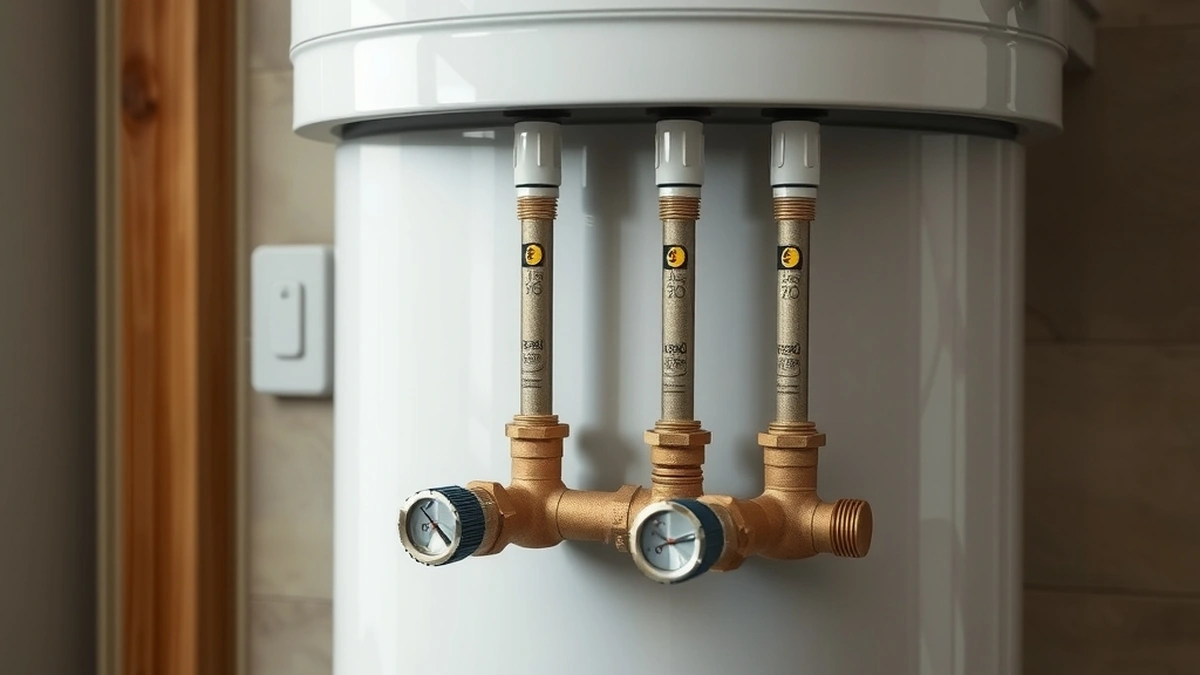
A dual tank softener has two resin vessels, one brine tank, and either one alternating valve or two valves with a shared meter.
Both tanks use the same brine, so a brine fault affects both equally. A failure in one tank only points to that vessel, its valve port, or its distributor.
That distinction is the whole diagnosis: is the problem shared or isolated?
The symptom table
| Symptom | Likely cause | Fix |
|---|---|---|
| Hard water all the time | Brine draw or programming | $0 - $300 |
| Hard before each switch | Capacity per tank too low | $0 |
| Hard only on one tank | Vessel, valve port, distributor | $100 - $1,000 |
| No switching at all | Controller or meter | $150 - $500 |
| Salt use doubled | Regeneration frequency | $0 |
| Water leaking at manifold | Union or O-ring | $5 - $60 |
A leak at the manifold is easy to miss because it runs down the back of the tanks and pools under the base.
Diagnose in this order
- Test hardness at a cold tap twice a day for a week.
- Note when the system switches tanks.
- Watch a full regeneration and confirm the switch.
- Check salt level and break any bridge.
- Watch the brine line during the draw phase.
- Test the hardness setting against a lab result.
Two tests a day for a week is the cheapest way to catch an intermittent failure, and it costs nothing beyond discipline.
Watching the switch
A working alternating valve changes position at the end of a regeneration. You can hear it, and the flow through the manifold changes.
If the valve never changes position, the controller or the piston is stuck. A controller fault is a $150-$500 part; a stuck piston is a rebuild at $80-$300. Watch the valve body during the switch; on most designs a piston that does not move is visible from outside.
If it switches but the house stays hard, the second tank is not receiving brine. Check the valve port for that tank and the distributor tube.
Brine and salt
Both tanks draw from the same brine tank, so salt problems show up as system-wide hardness.
Check the salt level, break bridges, and watch the brine line during the draw phase. A draw that never starts points at the injector screen.
Clean the injector screen annually. It is the same part and the same fix as on a single-tank unit, and it accounts for a large share of failures.
Programming
Each tank must carry a full day of household demand plus reserve. Sizing each tank to half the load is the most common twin-specific error.
For 4 people at 10 gpg, daily removal is 3,000 grains. Each tank needs about 32,000 grains, not 16,000.
Check the hardness number against a lab test, then check capacity, reserve, and regeneration time.
One tank failing
Hardness that appears only on one tank’s shift points to that vessel.
Causes include a failed distributor, resin loss, a stuck valve port, or a fouled bed from iron.
Test the tank by isolating it and running a manual regeneration. If hardness does not improve, the vessel needs service.
A single-vessel rebed costs $300-$600; a full twin rebed costs $500-$1,000.
The two readings that settle it
Test hardness immediately after a regeneration on each tank, not at random times.
A tank that is soft right after regeneration and hard by the next evening is undersized or misprogrammed.
A tank that is hard right after regeneration is not drawing brine, or its resin is exhausted.
Repeat on the other tank. If both behave the same way, the fault is shared: brine, programming, or the meter. If they differ, the fault is in one vessel or one valve port.
Write both readings beside the tank labels. A technician can diagnose from that page faster than from an hour of description, and the numbers prevent the “replace the whole unit” recommendation that follows an unclear complaint. Water softener grain capacity covers the sizing math if the reading suggests an undersized pair.
When to call a technician
Call for valve internals, controller replacement, or any work that requires draining a tank you cannot lift.
Call if the manifold has no isolation valves and a vessel needs service. The plumber will need to add them.
Call if both tanks fail at once after years of service. That is usually resin exhaustion and a planned rebed rather than a fault, and the pair costs $500-$1,000.
Prevention
Test hardness quarterly and after any salt event. Watch one full regeneration every six months. Clean the brine tank annually, and check both tanks for leaks at the unions while the tank is empty.
Exercise the isolation valves twice a year so they still turn when a vessel needs service.
Write the install date and the resin date on the manifold. A twin is a fifteen-year purchase, and the second rebed is the one people forget to budget. Dual tank water softener maintenance covers the schedule, and dual tank versus single tank softener covers whether the second vessel was worth buying. “”
Frequently asked questions
How do I tell if one tank has failed?
Test hardness right before and right after the system switches tanks. A reading that climbs only on one tank's shift points to that vessel or its valve port.
Why is my twin tank softener not switching?
A failed controller, a stuck piston in the valve, or a meter that is not counting. Watch a regeneration to see whether the valve changes position.
Why does hardness return between regenerations?
Insufficient capacity per tank, a brine draw problem, or a hardness setting that is too low. Check the programming before suspecting resin.
Does one brine tank serve both vessels?
On alternating systems, yes. A shared brine tank and valve body serve both, so a brine fault affects both tanks equally.
How much does a twin resin rebed cost?
Five hundred to one thousand dollars installed, because there are two vessels. A single-tank rebed runs $300-$600.
Can a twin run on one tank while the other is serviced?
Yes, if the manifold has isolation valves. Without them, servicing one tank shuts the whole system down.
Sources
Some links are affiliate links.If you buy through them we may earn a commission at no extra cost to you. We do not accept payment for rankings. Read the full disclosure.