Filtered Shower Head for Hard Water: Media and Limits
Filtered shower heads use carbon, KDF, or vitamin C media, none of which remove hardness. Compare media types, costs, and what actually stops scale.
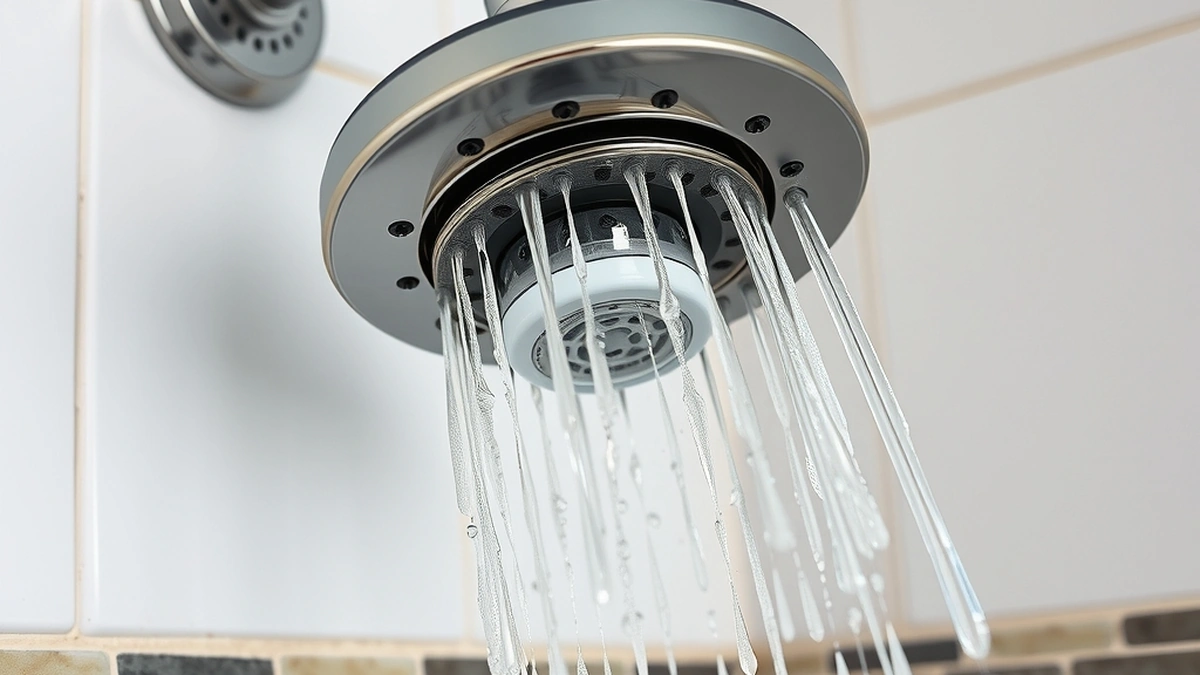
A filtered shower head reduces chlorine, sediment, and some metals through carbon, KDF, or vitamin C media. None of those media remove calcium or magnesium, so a filtered head improves taste and odor but does not stop hardness scale or soap scum.
- Head price
- $25 - $120
- Cartridge
- $15 - $45 every 3 - 6 months
- Removes hardness
- No
- Flow rate
- 1.8 - 2.5 GPM
- Softener installed
- $1,200 - $4,500
Some links on this page are affiliate links.If you buy through them we may earn a commission at no extra cost to you. We do not accept payment for rankings. Read the full disclosure.
A filtered shower head is a shower head with a replaceable cartridge that reduces chlorine, sediment, and some metals. It does not remove calcium or magnesium, so it does not soften water. If scale and soap scum are the complaint, the filter changes the smell and leaves the mineral problem intact.
The Media Inside
Most shower filters use one of four media, and each targets something different.
Granular activated carbon adsorbs chlorine, chloramine byproducts, and organic compounds. It is the cheapest medium and the most common in budget heads.
KDF is a copper-zinc alloy that reduces free chlorine and some dissolved metals through oxidation-reduction. It lasts longer than carbon in hot water and is often blended with carbon for a two-stage effect.
Calcium sulfite is a reducing agent used specifically for chloramine, which carbon handles poorly. It is found in municipal systems that switched from chlorine to chloramine for disinfection.
Vitamin C, usually sodium ascorbate, neutralizes chlorine on contact. It works fast and is popular for sensitive skin, but it is consumed quickly in hot water and the cartridge life is short.
None of these media exchange ions. None remove hardness.
What the Filter Can and Cannot Fix
| Complaint | Filtered head | Softener |
|---|---|---|
| Chlorine smell | Yes | No |
| Rust grit in spray | Yes | No |
| Metallic taste at shower | Partial | No |
| White scale on glass | No | Yes |
| Soap scum | No | Yes |
| Stiff laundry | No | Yes |
| Filmy hair | No | Yes |
| Spotty dishes | No | Yes |
The table is the whole buying decision. A filter is a point-of-use aesthetic device. A softener is a whole-house mineral removal system. They solve different problems and are priced accordingly.
Cost and Cartridge Life
A filtered head costs $25 - $120. Cartridges run $15 - $45 and last 3 - 6 months, so annual media costs $60 - $180.
Over five years: $60 head plus $400 in cartridges equals $460. A softener at $2,000 installed plus $200 a year in salt equals $3,000. The filter is cheaper by an order of magnitude, and it does a fraction of the work.
Vitamin C cartridges deserve a closer look on cost. Some are rated for 10,000 - 20,000 gallons, which sounds generous until you calculate a 2.5 GPM shower at 10 minutes a day: 25 gallons a day, 9,125 gallons a year. A 10,000-gallon cartridge lasts about 13 months, and a cheaper one rated at 5,000 gallons lasts seven months.
Flow Rate and Pressure
A shower filter adds resistance. Media beds, screens, and housings all reduce flow, and a head rated below the shower’s supply can turn a strong spray into a weak one.
Standard shower heads are limited to 2.5 GPM, and modern low-flow heads run 1.8 - 2.0 GPM. Look for a filter rated at or above the head’s flow, and check whether the unit is listed to NSF/ANSI 177, the standard for shower filtration systems.
Pressure loss is more noticeable on a second-floor shower with marginal supply pressure. If the shower already feels weak, a restrictive filter will make it worse, and the fix is the plumbing or the pressure, not a different cartridge.
Housing design matters too. A slim inline filter hides behind the head and adds little bulk; a large canister hangs below the arm and can interfere with a shower caddy or a low ceiling. Measure the clearance between the shower arm and the tub spout before ordering.
There is also a maintenance cost that does not appear on the box. Every cartridge change is a moment when the housing O-ring can be pinched or the threads cross-threaded, and a slow drip inside a wall is expensive. Hand-tighten, inspect the O-ring, and replace it if it is flattened or cracked. A $3 O-ring is cheaper than a drywall repair.
Buy the replacement cartridges before you need them. A filter that runs a month past its interval has already stopped doing much, and the chlorine it lets through is what makes people conclude the filter never worked.
Installation and Maintenance
- Remove the old shower head and clean the threads of old tape and mineral grit.
- Hand-tighten the filter housing, then snug a quarter turn with a cloth-wrapped wrench.
- Flush for two to three minutes before showering to clear carbon dust.
- Write the install date on the cartridge or the housing.
- Replace every 3 - 6 months, or sooner if flow drops or the chlorine smell returns.
- Soak the shower head face in vinegar monthly to remove scale that the filter cannot prevent.
The last step is the irony of the category: a filter that does not stop scale still needs descaling. Vinegar dissolves the calcium carbonate that the cartridge let through.
When a Filter Is the Right Purchase
Buy one if the complaint is chlorine smell, rust grit, or a metallic note at the shower, and if the water tests at 3 GPG or below. In soft water, the filter handles the only remaining aesthetic issue.
Buy one as a complement to a softener if the municipal supply is heavily chlorinated. Softening does not remove chlorine, and some households want both.
Do not buy one expecting softer water, less scale, or better lather. Those outcomes require ion exchange, and no shower-mounted cartridge has the resin volume or the regeneration cycle to deliver them.
For the wider category, see shower head filter for hard water. For the treatment that does remove hardness, see how to treat hard water and water softener cost. For shower-specific filtration costs, see shower water filter cost.
Frequently asked questions
Will a filtered shower head fix hard water?
No. It filters chlorine and sediment, but calcium and magnesium pass through. Scale, soap scum, and mineral film on hair continue unless the water is softened.
What is KDF media in a shower filter?
KDF is a copper-zinc alloy that reduces free chlorine and some dissolved metals through an oxidation-reduction reaction. It does not remove hardness minerals.
Do vitamin C shower filters work?
They neutralize chlorine effectively and are popular for that purpose. They do not soften water, and the cartridge is consumed quickly by hot water.
How often should a shower filter cartridge be changed?
Every 3-6 months for most media, or sooner if flow drops. Vitamin C media can be exhausted in weeks in a hot shower, so check the rated capacity.
Does a filtered shower head reduce pressure?
It can. Media and sediment screens add resistance, so choose a unit rated at or above your shower head's flow rate to avoid a weak spray.
What actually removes hardness at the shower?
Only a whole-house softener, or a point-of-use softener dedicated to the shower. Both use ion exchange and need salt, a drain, and regeneration.
Sources
Some links are affiliate links.If you buy through them we may earn a commission at no extra cost to you. We do not accept payment for rankings. Read the full disclosure.