Hard water stain remover
How to remove hard water stains from glass, tile, and fixtures, which products work on which surface, and how to stop them returning.
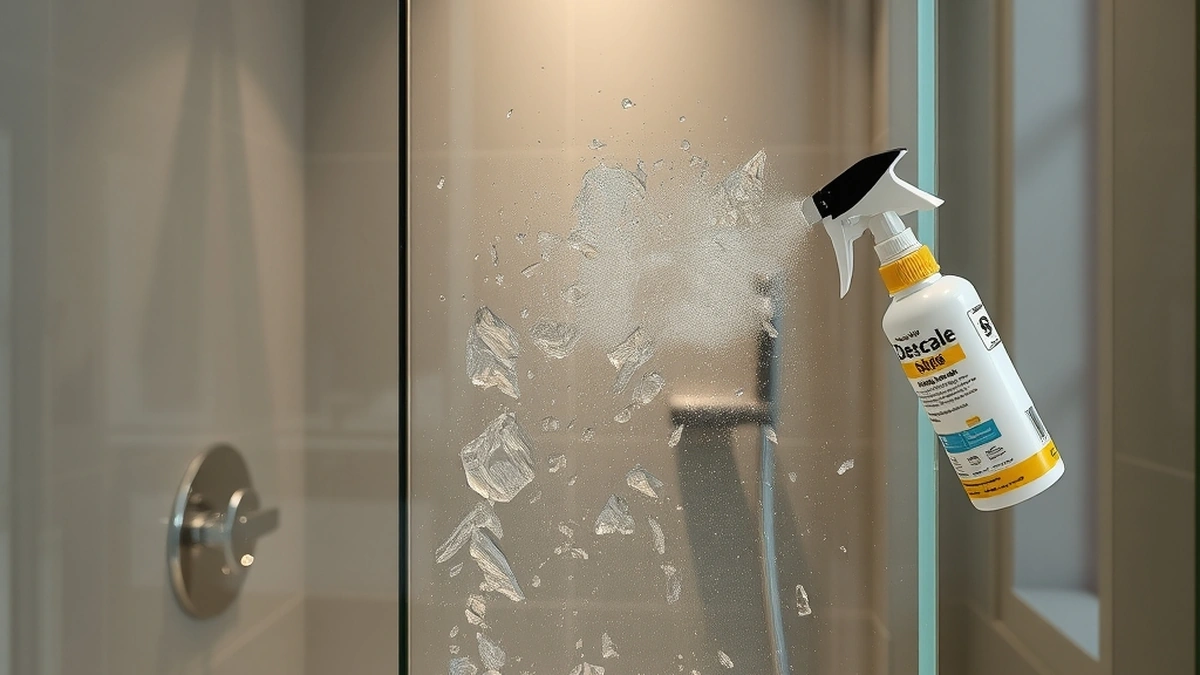
A hard water stain remover is an acidic or chelating cleaner that dissolves calcium and magnesium deposits. Match it to the surface: mild acid for glass and tile, a fine abrasive for porcelain, and no acid on natural stone.
- Stain cause
- Calcium and magnesium
- Hard water
- Above 7 gpg
- Best on glass
- Mild acid cleaner
- Avoid on stone
- Acidic products
- Softener installed
- $1,200 - $4,500
Some links on this page are affiliate links.If you buy through them we may earn a commission at no extra cost to you. We do not accept payment for rankings. Read the full disclosure.
A hard water stain remover is an acidic or chelating cleaner that dissolves the calcium and magnesium left behind when water evaporates. The product has to match the surface: mild acid on glass and tile, a fine abrasive on porcelain, and nothing acidic on marble or limestone. Cleaning fixes the mark; softening the water at $1,200 to $4,500 installed stops it coming back.
What the stain actually is
Hard water carries dissolved calcium and magnesium. When a droplet evaporates on a shower door or a faucet, the minerals stay behind as a thin film.
Repeated wetting and drying builds that film into scale, which etches glass over time and traps soap scum.
The stain is therefore a mineral deposit, not dirt. Soap and general-purpose cleaner do not dissolve it, which is why the spots survive a normal bathroom clean and why scrubbing harder only dulls the surface.
Match the cleaner to the surface
| Surface | Suitable remover | Avoid |
|---|---|---|
| Glass shower door | Mild acid descaler, chelating gel | Abrasive pads |
| Ceramic tile | Acid descaler, vinegar for light film | Nothing specific |
| Chrome and stainless | Mild acid, then rinse and dry | Chlorine bleach on chrome |
| Porcelain toilet or sink | Pumice stick, fine abrasive | Coarse grit |
| Marble, limestone, travertine | pH-neutral chelating cleaner | Any acid |
| Sealed stone | Stone-safe descaler | Vinegar, citrus |
The stone row is the one that causes expensive mistakes. Acid etches calcium-based stone, and the etch is a permanent dull patch that no cleaner reverses.
Removing scale from glass
- Wet the glass and remove loose soap scum with a non-abrasive pad.
- Apply the descaler to a small section and let it dwell per the label.
- Work in sections rather than the whole door at once.
- Agitate with a non-scratch pad, keeping the surface wet.
- Rinse thoroughly and squeegee dry.
- Repeat for heavy scale rather than using a stronger product.
Dwell time matters more than scrubbing. A mild acid left for the stated minutes dissolves more scale than a strong acid scrubbed for thirty seconds and rinsed too soon. Keep the surface wet while it works, because a drying cleaner stops dissolving and starts leaving a residue.
Removing stains from fixtures
Chrome faucets respond to a mild acid followed by a rinse and a dry cloth. Leaving the acid on chrome too long can dull the finish.
Porcelain sinks and toilets tolerate a pumice stick, which physically lifts the deposit without scratching the glaze when used wet.
Do not mix cleaners. Acid and chlorine bleach produce chlorine gas, and bathrooms are small rooms with poor ventilation. Read the label on any product that claims to do both jobs in one bottle.
What not to do
Do not use a razor blade on glass at an angle that gouges the surface. A plastic scraper is safer, and a glass scraper used flat with lubrication is the only blade method that belongs near a shower door.
Do not use steel wool on fixtures or glass. It leaves scratches that trap more minerals.
Do not apply acid to natural stone, grout with a high lime content, or any surface where the label says acid-sensitive.
Do not assume a stronger product is faster. Concentration increases the risk to the surface without necessarily shortening the dwell time.
Stopping the return
Cleaning is the short-term fix, and a hardness test tells you whether it will be a monthly habit. Three habits reduce the frequency.
Squeegee the shower door after every use. Removing water before it evaporates prevents the deposit.
Dry fixtures with a cloth. A ten-second wipe keeps the film from forming.
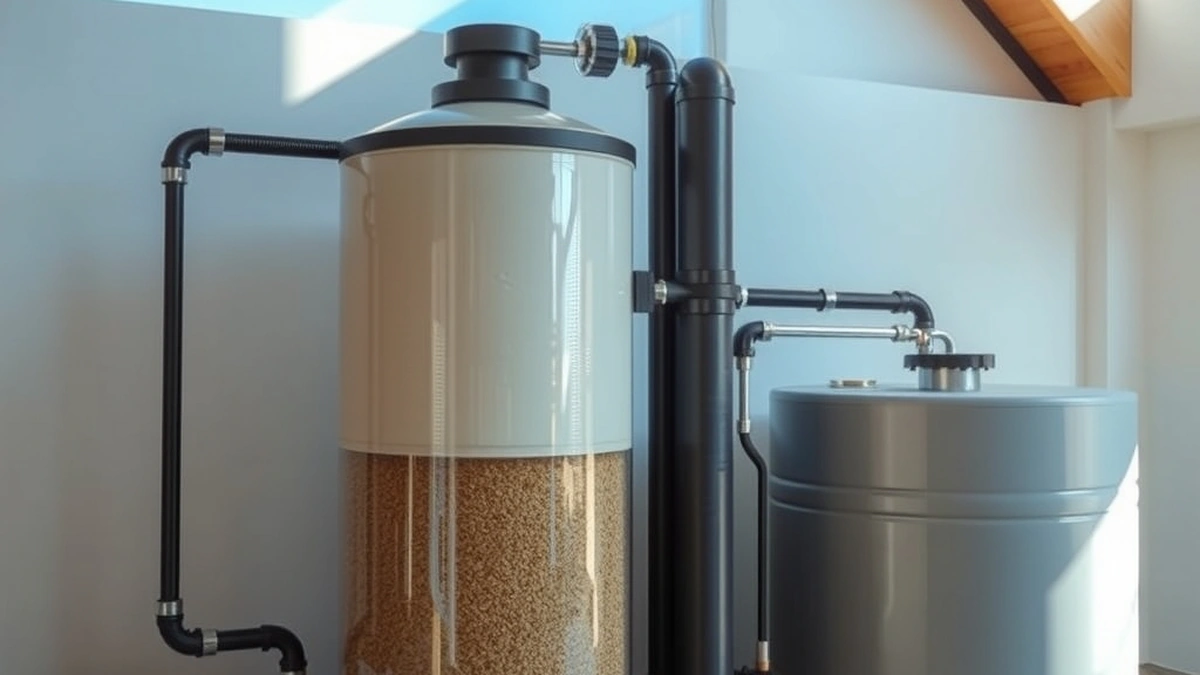
Address the water. A softener removes hardness at the source, and a shower filter does not, because it does not remove calcium and magnesium.
A whole-house softener at $1,200 to $4,500 installed is the durable fix for a household above 7 gpg. For a renter or a single fixture, a handheld descaler and a squeegee are the practical compromise.
A hardness test kit gives the number in grains per gallon. Soft is 0 to 3, moderate 3 to 7, hard 7 to 10, and very hard above 10.
If the test says 4 gpg and the stains are heavy, the issue may be a slow drip or a surface that stays wet rather than extreme hardness. Fixing the drip is cheaper than treating the water.
If the test says 16 gpg, cleaning will be a weekly routine until the water is treated.
Call a professional when the glass is etched rather than scaled. Etching is physical damage to the glass surface, and no cleaner restores it; the options are polishing or replacement.
Call when the deposit is inside a fixture, such as a shower valve or a water heater, where descaling needs dismantling or a pumped circulation.
Call when the stains appear on walls or ceilings, which points to moisture movement rather than hardness.
For the cleaning options by surface, see how to remove hard water stains from glass and remove hard water stains. For the water-side fix, water softener installation cost covers the equipment.
Bottom line
A hard water stain remover dissolves mineral deposits, and the right product depends on the surface. Clean with the mildest effective option, keep stone away from acid, and treat the water if the stains keep returning.
Two habits reduce the cleaning to a few minutes a month. Squeegee the shower glass after every use, and wipe the faucet spout dry before you leave the sink. Water that does not sit on a surface does not evaporate there, and evaporation is what leaves the mineral behind.
If the stains return within weeks of a thorough clean, the water is the problem rather than the technique. A hardness test at $15 to $40 settles it, and a softener at $1,200 to $4,500 removes the cause for good.
Frequently asked questions
What removes hard water stains?
An acidic descaler or a chelating cleaner dissolves the mineral deposit; the right choice depends on whether the surface is glass, tile, porcelain, or stone.
Can vinegar remove hard water stains?
White vinegar works on light deposits on glass and tile, but it is slow on heavy scale and should not be used on natural stone.
What should I not use on hard water stains?
Avoid acid on marble, limestone, and travertine, and avoid abrasive pads on polished glass or chrome.
Why do the stains come back?
Because the water still carries hardness minerals; cleaning removes the deposit but does not change the supply.
Does a water softener stop stains?
Yes for the whole house, because it removes calcium and magnesium before the water reaches fixtures, at $1,200 to $4,500 installed.
How hard does water need to be to stain?
Staining becomes common above 7 gpg, and heavy scale is typical above 10 gpg, especially where water evaporates on a surface.
Sources
Some links are affiliate links.If you buy through them we may earn a commission at no extra cost to you. We do not accept payment for rankings. Read the full disclosure.