
High efficiency water softener
What makes a softener high efficiency, how salt dose and regeneration control affect running costs, and whether the premium pays back.
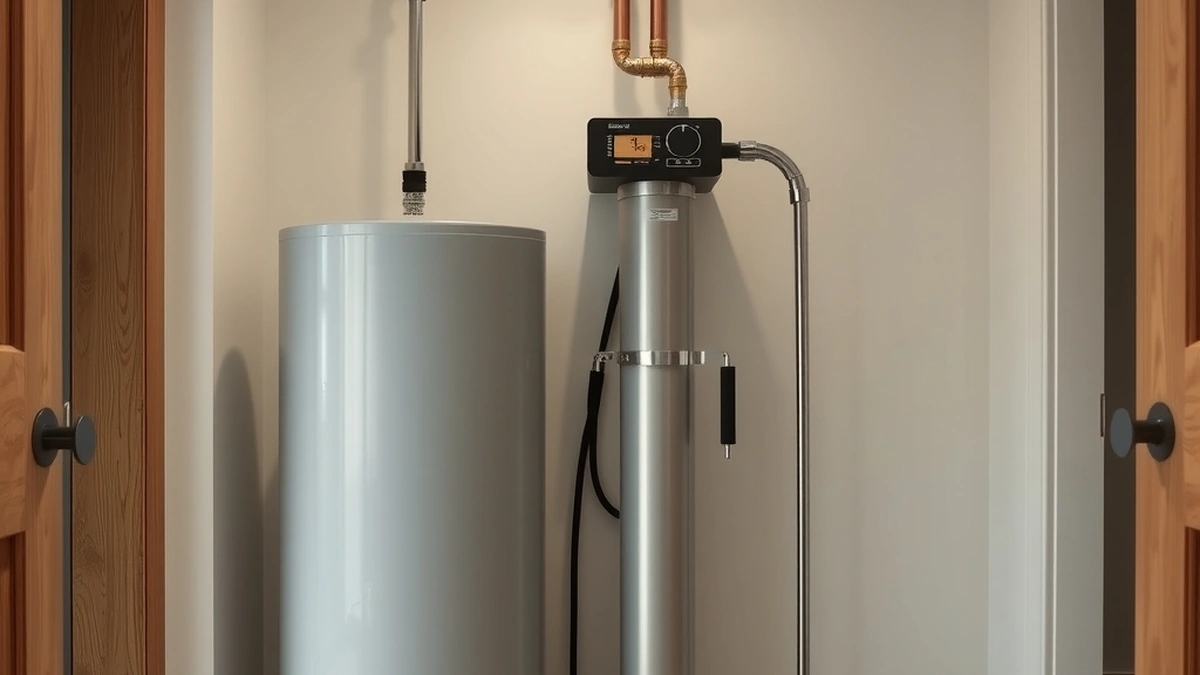
A high efficiency water softener uses demand-initiated regeneration and a tuned salt dose to cut salt and water use. Installed cost stays in the $1,200 to $4,500 band, and the savings show up in the $120 to $400 annual salt bill.
- Installed cost
- $1,200 - $4,500
- Salt per year
- $120 - $400
- Salt per regen
- 8 - 12 lb
- Capacity
- 24,000 - 64,000 grains
- System life
- 10 - 15 years
Some links on this page are affiliate links.If you buy through them we may earn a commission at no extra cost to you. We do not accept payment for rankings. Read the full disclosure.
A high efficiency water softener uses a metered valve and a tuned salt dose to regenerate only when the resin is actually exhausted. Installed cost stays in the $1,200 to $4,500 band, and the difference shows up in salt and water use rather than in softening performance. On a household with variable occupancy, that can be a meaningful annual saving.
Where efficiency comes from
Three design choices drive softener efficiency.
Demand-initiated regeneration. The valve counts gallons or grains used and regenerates when capacity is reached, rather than on a fixed calendar.
A metered valve. The meter is what makes demand initiation possible. A timer valve regenerates weekly whether the house used 200 gallons or 2,000.
Salt dose control. Resin has a diminishing return on salt. Raising the dose from 8 to 15 pounds adds capacity but not in proportion, so the extra salt buys less softening per dollar.
Efficiency is therefore a control strategy, not a special resin or a badge on the tank. Two units with identical tanks can have very different salt bills depending on how the valve decides to regenerate.
The salt arithmetic
A softener’s capacity is rated at a given salt dose. A 32,000-grain unit might reach that rating at 12 pounds per regeneration, while the same tank at 8 pounds is rated lower.
The practical question is grains per pound of salt. A unit that delivers 32,000 grains on 12 pounds gives about 2,667 grains per pound. A unit that delivers 24,000 grains on 8 pounds gives 3,000 grains per pound.
| Setting | Salt per regen | Capacity | Grains per lb |
|---|---|---|---|
| High dose | 15 lb | 40,000 | 2,667 |
| Standard | 12 lb | 32,000 | 2,667 |
| Efficient | 8 lb | 24,000 | 3,000 |
The efficient setting regenerates more often but uses less salt each time. Whether it wins depends on the resin and the valve, which is why the spec sheet matters more than the label.
What it costs and what it saves
Equipment runs $600 to $2,500, and installation runs $500 to $1,500, for an installed total of $1,200 to $4,500.
Salt runs $120 to $400 per year. A household that cuts salt use by a quarter might save $30 to $100 annually, which does not justify a large price premium on its own.
The larger savings often come from water. Each regeneration uses water for the brine draw and rinse. A timer unit regenerating weekly uses that water 52 times a year regardless of demand; a metered unit in a two-person house may regenerate half as often.
When the premium pays
It pays in a house with variable occupancy: a vacation home, a rental, or a household whose water use swings with the season.
It pays where salt is expensive or difficult to carry, such as a rural property or an upstairs utility room.
It pays where the water is very hard and the alternative is a larger tank running a high salt dose. Efficient settings can let a smaller unit do the same work.
It does not pay when the household is large and steady, the water is moderately hard, and the basic unit is already correctly sized. In that case the extra features add cost without changing the salt bill much.
Efficiency versus capacity
| Factor | High efficiency | Basic timer unit |
|---|---|---|
| Regeneration trigger | Metered demand | Calendar |
| Salt use | Lower in variable use | Fixed by schedule |
| Water use | Lower | Fixed by schedule |
| Upfront cost | Often higher | Lower |
| Best fit | Variable occupancy, very hard water | Steady occupancy, moderate hardness |
Capacity still has to be right. An efficient valve on an undersized tank will regenerate constantly and erase the savings.
Choosing and setting up
- Test the water and record hardness and iron.
- Size the capacity from daily gallons times hardness.
- Choose a metered, demand-initiated valve.
- Set the salt dose to the resin manufacturer’s efficient point, usually 8 to 12 pounds.
- Confirm the brine tank and bypass are included in the installed price.
- Check the hardness at a tap after a month and adjust if needed.
The last step catches programming errors. A valve set to the wrong hardness will either over-regenerate or let hard water through, and both look like equipment failure. Write the hardness number on a label inside the valve cover so the next service technician does not have to test again.
Maintenance that preserves efficiency
Keep the brine tank clean and free of salt bridges. A bridge leaves the valve drawing water instead of brine, which wastes a cycle and leaves the resin exhausted.
Use clean salt and avoid mixing types that dissolve at different rates. Check the resin every few years; after 8 to 12 years a rebed at $300 to $600 restores capacity.
For the sizing step, see water softener sizing and water softener capacity versus flow rate. For the running costs, water softener running cost covers salt and electricity, and salt dose and efficiency explains the dose curve.
Bottom line
A high efficiency softener is a metered unit with a sensible salt dose, not a different technology. It is worth the premium where water use varies or salt is costly, and the savings appear on the salt bill rather than in the shower.
The settings matter more than the badge. A metered valve left on its factory hardness assumption will regenerate on the wrong schedule, and an efficient unit programmed badly can use more salt than an old timer unit programmed well. Enter the lab result, check the capacity against the tank label, and revisit both after any change in the household.
If the unit has a salt-efficiency setting with two or three options, the middle one is usually the sensible compromise: it keeps regeneration frequency reasonable without chasing the last few percent of salt savings.
Frequently asked questions
What makes a water softener high efficiency?
Demand-initiated regeneration, a metered valve, and a salt dose matched to the resin capacity reduce salt and water use per gallon softened.
Does a high efficiency softener cost more?
The equipment may cost more than a basic timer unit, but the installed total usually stays within the $1,200 to $4,500 band.
How much salt does it save?
Savings depend on the old unit's settings, but a metered unit that regenerates only when needed typically uses less salt than a timer unit on the same water.
What is the right salt dose?
Most residential resin is efficient at 8 to 12 pounds per regeneration, and a higher dose adds capacity at a disproportionate salt cost.
Is a high efficiency softener worth it?
It is worth it where water use is variable or salt is expensive, because metered regeneration avoids unnecessary cycles.
Does efficiency affect softening performance?
No. A properly sized efficient unit softens as well as a standard unit; the difference is how often and how hard it regenerates.
Sources
Some links are affiliate links.If you buy through them we may earn a commission at no extra cost to you. We do not accept payment for rankings. Read the full disclosure.


