
High Purity Water Softener Salt: When It Matters
High-purity salt runs 99.9 percent sodium chloride against 99.5 for standard pellets. See where the extra purity pays off and where it is wasted money.
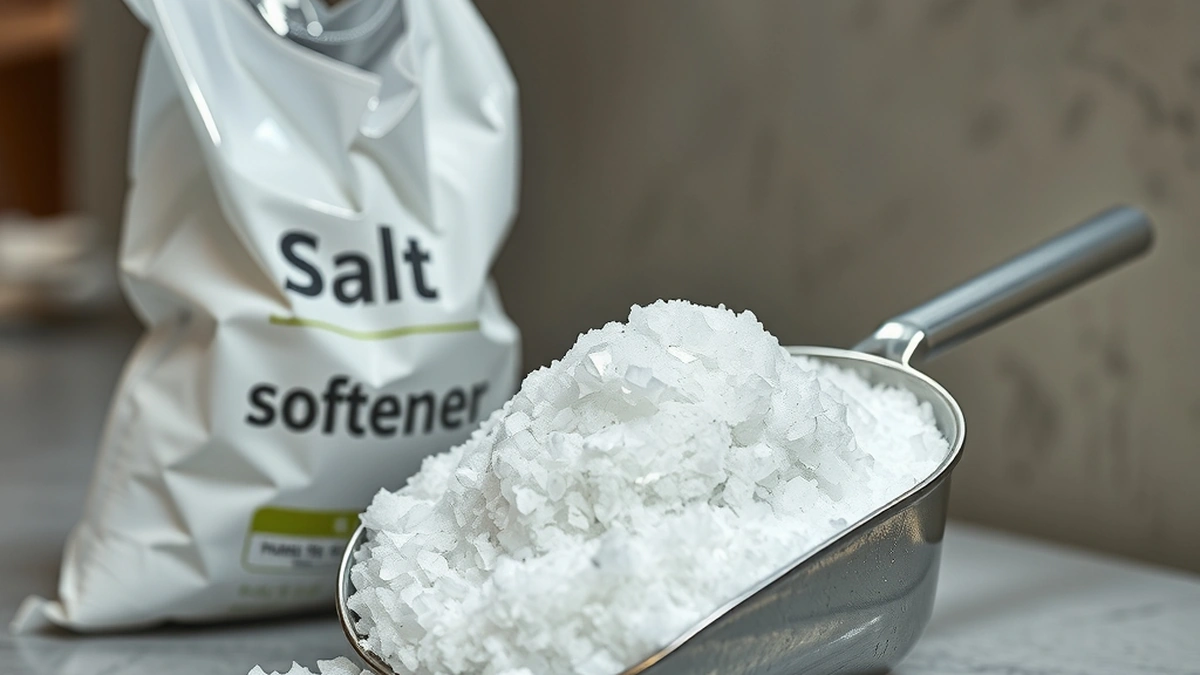
High purity water softener salt is 99.9 percent or more sodium chloride, against about 99.5 percent for standard pellets. It costs $10 - $20 per 40-pound bag and matters for steam appliances and lab use, but a residential softener sees little difference.
- Standard pellets
- $7 - $12 per 40 lb
- High purity salt
- $10 - $20 per 40 lb
- Purity, standard
- About 99.5 percent
- Purity, high grade
- 99.9 percent and up
- Annual salt cost
- $120 - $400
Some links on this page are affiliate links.If you buy through them we may earn a commission at no extra cost to you. We do not accept payment for rankings. Read the full disclosure.
High purity water softener salt is 99.9 percent or more sodium chloride, against roughly 99.5 percent for standard pellets. It costs $10 - $20 per 40-pound bag. In a residential softener the difference is small; in a steam humidifier or a lab system it can matter a great deal.
What Purity Means on a Bag
The percentage on the bag is sodium chloride by weight. The remainder is moisture, calcium sulfate, magnesium salts, and insoluble matter.
At 99.5 percent, a 40-pound bag carries about 3.2 ounces of non-salt material. At 99.9 percent, it carries about 0.6 ounces. Over 25 bags a year, that is roughly 5 pounds of residue versus 1 pound.
That is the entire practical difference for a softener: less sludge in the brine tank. The resin does not care, the valve does not care, and the treated water hardness is the same.
Where the Extra Purity Pays
Steam humidifiers are the clearest case. They boil water and release minerals as dust into the air, and high-purity water reduces the white dust that settles on furniture.
Laboratory and medical water systems often specify a grade because trace minerals interfere with reagents or with sterilization equipment. Those specifications come from the application, not from the softener.
Food and beverage production uses high-purity salt where the brine contacts product. Some vehicle and marine applications use it to avoid residue on surfaces.
In each case the requirement is specific and documented. A household without those requirements is buying purity it cannot use.
Standard vs High Purity
| Feature | Standard pellets | High purity salt |
|---|---|---|
| Sodium chloride | 99 - 99.5 percent | 99.9 percent and up |
| Insolubles per bag | About 3 ounces | Under 1 ounce |
| Bag price | $7 - $12 | $10 - $20 |
| Annual cost at 25 bags | $175 - $300 | $250 - $500 |
| Softening result | Same | Same |
| Tank cleaning | Annual | Annual |
The table is the argument. The softening result is identical, and the only measurable benefit is a modest reduction in sludge. For most homes, that is not worth $75 - $200 a year.
When Standard Salt Is the Right Buy
Standard pellets are the right purchase for a household with a softener, no steam humidifier, and no laboratory or food processing requirement. The annual clean-out handles the residue either way.
Crystals are an even cheaper option in a dry utility room, at $6 - $10 per bag. They leave more residue than pellets and cost less, which is a fair trade when the tank is easy to service.
Additive pellets are the exception worth paying for, and only when the water test shows iron. A resin cleaner helps the bed, while extra purity does nothing for iron fouling.
Reading the Claim Carefully
Some bags use “high purity” loosely. Look for a stated percentage rather than a marketing phrase, and check whether the number refers to sodium chloride or to something else.
A bag that says “99.9% pure” without naming the substance is ambiguous. A bag that says “99.9% sodium chloride” is a specific claim.
Check the insoluble matter line if it appears. Purity and insolubles are related but not identical, and a product can be high in sodium chloride while still carrying fine grit that clouds brine.
Cost Arithmetic
Twenty-five bags a year at $9 is $225. The same 25 bags at $15 is $375. The difference is $150 a year, or $1,500 over ten years.
A softener costs $1,200 - $4,500 installed and lasts 10 - 15 years. Spending an extra $1,500 on salt over that life is a 30 - 100 percent increase in total cost for a marginal reduction in tank cleaning.
Unless the household has a steam humidifier or a documented requirement, the money is better spent on a water test or an iron filter.
Buying and Storing
- Confirm the percentage on the bag, not just the marketing line.
- Compare price per pound across bag sizes.
- Buy six to ten bags at a time unless storage is dry.
- Store on a pallet, off concrete and away from damp walls.
- Keep the tank half to two-thirds full and check monthly.
- Clean the tank annually regardless of the salt grade.
Purity in Brine and Resin
The brine tank is a saturated solution, and saturation is self-limiting. Water dissolves salt until it cannot hold more, then leaves the rest as solid. That means the brine strength is roughly the same whether the salt is 99.5 or 99.9 percent pure.
What changes is what else goes into solution. Calcium sulfate and magnesium salts dissolve to a small degree, and insoluble matter stays suspended until it settles. Those are the materials that coat the tank floor and, in extreme cases, reach the resin.
For a residential softener, the volume is trivial. Five pounds of sludge a year sounds like a lot until it is spread across a tank floor and removed with a scoop once a year.
The calculus changes when the brine is used for something other than regeneration. A humidifier, a lab, or a food process sees the trace minerals directly, and that is where the grade requirement comes from.
A household that switches from $9 pellets to $15 high-purity salt spends an extra $150 a year at 25 bags. Over a ten-year softener life, that is $1,500.
The benefit is a modest reduction in tank sludge and no change in water hardness. There is no maintenance interval that improves, no equipment that lasts longer, and no setting that changes.
A better use of $1,500 is a lab test, a sediment prefilter, or an iron filter if the water needs one. Those address problems that actually affect the water.
High purity salt is a real product with real applications. It is not a better softener salt for an ordinary home, and the premium buys cleaner brine rather than softer water.
Buy it if a specific appliance or process requires it. Otherwise buy standard pellets, keep the tank clean, and put the savings toward the test that tells you what the water actually needs.
For the standard product, see water softener salt pellets. For the brand lineup, see Diamond Crystal water softener salt. For annual costs, see water softener salt cost.
Frequently asked questions
Is high purity salt worth it for a home softener?
Usually not. The difference between 99.5 and 99.9 percent is small in a residential tank, and the premium buys little beyond slightly less tank sludge.
What is high purity softener salt used for?
Steam humidifiers, laboratory water systems, some food and beverage processes, and applications where trace minerals in the brine cause problems.
How can I tell if salt is high purity?
The bag states the sodium chloride percentage. Anything at or above 99.9 percent qualifies, and some products list insoluble matter separately.
Does high purity salt reduce tank cleaning?
Slightly. Less insoluble matter means less sludge, but the tank still needs an annual clean-out because dust and dirt enter through the lid.
Can high purity salt damage a softener?
No. It dissolves the same way and regenerates the same resin. It simply carries fewer trace minerals.
Why does high purity salt cost more?
Additional washing, recrystallization, and quality testing raise the processing cost, and the smaller production volume keeps the price higher.
Sources
Some links are affiliate links.If you buy through them we may earn a commission at no extra cost to you. We do not accept payment for rankings. Read the full disclosure.


