
Diamond Crystal Water Softener Salt: Buyer's Guide
Diamond Crystal salt comes in pellets, solar crystals, and potassium chloride. Compare purity, price per pound, and which form suits your brine tank.
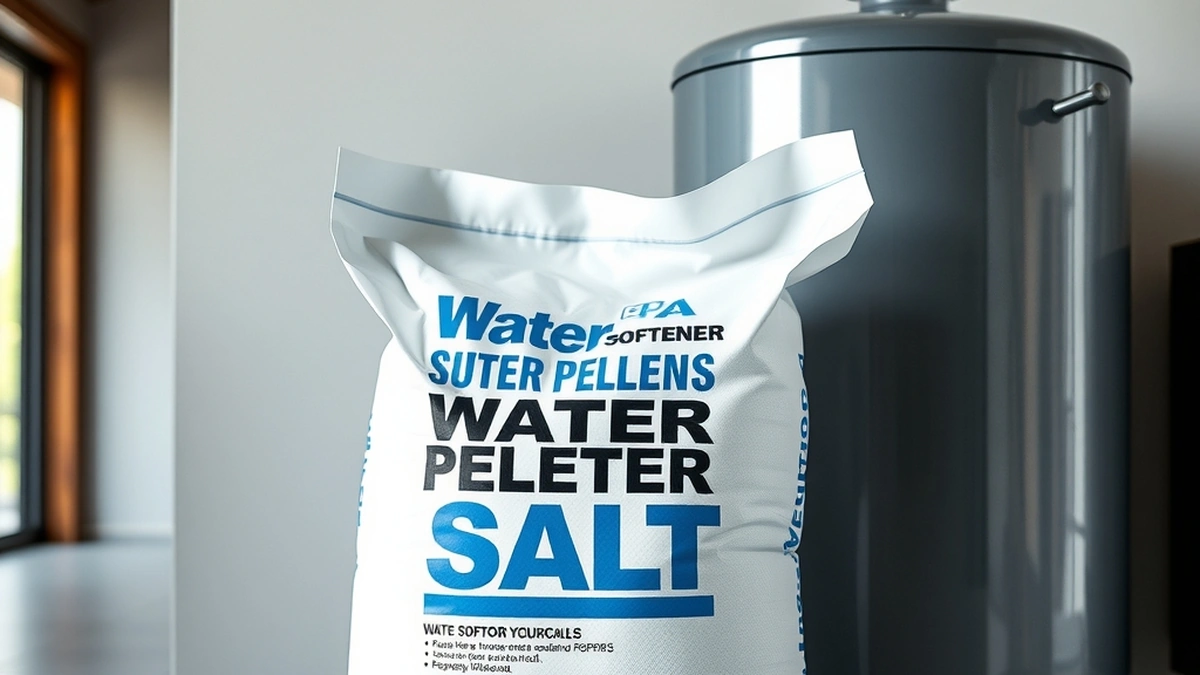
Diamond Crystal water softener salt is sold as pellets, solar crystals, and potassium chloride, priced around $7 - $12 for a 40-pound bag. Pellets are the cleanest choice for most brine tanks, crystals cost less per pound, and potassium chloride suits households avoiding sodium.
- 40 lb bag price
- $7 - $12
- Annual salt cost
- $120 - $400
- Salt per regeneration
- 8 - 12 lb
- Pellet purity
- About 99.5 percent
- Best form for most homes
- Pellets
Some links on this page are affiliate links.If you buy through them we may earn a commission at no extra cost to you. We do not accept payment for rankings. Read the full disclosure.
Diamond Crystal water softener salt is a Cargill brand sold in 40-pound bags as pellets, solar crystals, and potassium chloride. Most households should buy the pellets: they dissolve cleanly, leave little tank residue, and cost $7 - $12 per bag. Crystals save a dollar or two per bag but need more tank cleaning.
What Diamond Crystal Sells
The brand’s lineup covers the three forms that dominate US retail shelves. Solar Naturals pellets are compressed from solar-evaporated salt and rated at roughly 99.5 percent pure sodium chloride. Bright and Soft pellets use the same base with a slightly different screening. The crystal line is coarse solar salt, unprocessed beyond drying and grading. Potassium chloride pellets appear under a separate label and cost considerably more.
Purity is the number that matters. The remaining half percent is calcium sulfate, magnesium salts, and insoluble matter that either dissolves into the brine or settles as sludge in the tank. Lower-purity rock salt can carry two to five percent insolubles, which is why it is cheaper and messier.
A softener does not care about the brand. It cares that the brine is saturated, that the salt does not bridge into a solid shelf, and that the injector and venturi stay clear. Diamond Crystal earns shelf space because it is consistent on all three, not because the resin prefers it.
Pellets, Crystals, and Potassium Compared
| Form | Price per 40 lb | Dissolves | Residue | Best for |
|---|---|---|---|---|
| Pellets | $7 - $12 | Evenly, slow | Low | Most homes, humid climates |
| Solar crystals | $6 - $10 | Fast, uneven | Moderate | Dry climates, budget buyers |
| Potassium chloride | $25 - $40 | Evenly | Low | Sodium-restricted households |
Pellets are compressed under pressure, which removes most of the fines that cloud brine and coat the tank floor. They dissolve more slowly than loose crystals, which is an advantage in a humid basement because the salt surface stays granular instead of turning to mush.
Crystals are the cheaper option by weight. Coarse solar salt dissolves quickly, which can be useful in a high-demand household, but the fines settle and the tank needs more frequent cleaning. In a damp climate, crystals can absorb moisture and form a hard crust above the water line, the condition known as bridging.
Potassium chloride works in the same softener with a simple setting change, and it keeps sodium out of the treated water. The tradeoff is price: roughly $25 - $40 per bag against $7 - $12 for sodium chloride, and the resin needs more potassium per regeneration because the molecule is heavier.
How Much Salt a Year Costs
Salt use tracks hardness and water consumption. A softener typically draws 8 - 12 pounds of salt per regeneration, and a family of four at 10 GPG might regenerate every three to four days.
Do the arithmetic: 100 regenerations per year times 10 pounds equals 1,000 pounds. At 40 pounds per bag, that is 25 bags. At $9 per bag, the annual cost is $225, which sits inside the $120 - $400 range most households report.
A household on soft municipal water at 4 GPG might regenerate half as often and spend $120 - $150. A household at 20 GPG with five occupants can push past $400. The salt line item is small next to the equipment, but it is the cost that never stops, so it belongs in the budget before the softener is purchased.
Reading the Label Before You Buy
Four numbers appear on every bag worth reading. Sodium chloride content tells you purity. Bag weight confirms you are comparing 40 pounds to 40 pounds, since some brands sell 25-pound bags at a similar shelf price. The form description tells you pellet, crystal, or block. The additive line tells you whether the salt contains resin cleaners or rust inhibitors.
Additives are not automatically good. A resin cleaner helps when iron is present, but continuous use is unnecessary in clean water. Rust remover salt costs more and should be reserved for water with measurable iron. Plain pellets are the default, and specialty salt is a response to a specific test result.
Putting Salt Into Service
- Fill the brine tank no more than two-thirds full, leaving room for the salt to shift as it dissolves.
- Pour bags in slowly and break up any clumps with a clean scoop. Do not compact the salt.
- Check the salt level monthly and top off when it drops below halfway.
- Once a year, let the tank run low, then scoop out undissolved residue and rinse the tank before refilling.
- Watch for a salt bridge, a hard hollow crust above the water, if the water stops feeling soft while salt remains in the tank.
Bridging is the most common salt-related failure. The softener regenerates on schedule, but the brine is weak because water cannot reach the salt. Break the crust with a broom handle and stir the salt, then check the humidity and fill level. For the full diagnostic, see salt bridge in softener.
Matching Salt to Your Water and Tank
Buy pellets if your softener sits in a basement or garage where humidity swings, if the tank is a round cabinet model with a narrow opening, or if you want to clean the tank less often. Buy crystals if the tank is in a dry utility room and price per bag is the deciding factor. Buy potassium chloride only if sodium in drinking water is a concern you have already discussed with the equipment dealer, and expect to pay $25 - $40 per bag.
Whichever form you choose, buy in quantity when it is on sale and store bags on a pallet off the concrete. Salt absorbs moisture from the slab and from the air. Stacked bags in a dry corner keep for a year or more.
For salt pricing across brands and retailers, see water softener salt cost. For the forms themselves, see softener salt types. If your unit is running through salt faster than expected, softener not using salt covers the opposite failure and salt dose and efficiency explains the settings that control consumption.
Frequently asked questions
Is Diamond Crystal salt better than other brands?
It is a mainstream brand with consistent purity and wide availability. The form you choose, pellet or crystal, matters more than the brand name for most households.
How many bags of salt does a softener use per year?
A typical household uses 800-1,200 pounds per year, which is 20-30 bags at 40 pounds each, depending on hardness and water use.
Can I mix pellet and crystal salt in the same tank?
Yes, but do not layer them. Mixing forms can slow dissolving and encourage bridging, so finish one bag before opening the next.
Does Diamond Crystal make potassium chloride?
Yes. The brand sells potassium chloride pellets as an alternative for households that want to reduce sodium in softened water, at roughly two to three times the price.
Why is there sludge in the bottom of my brine tank?
Insoluble residue from salt, plus dirt from the supply, collects over time. Pellets leave less residue than coarse crystals, but every tank needs an annual clean-out.
How much salt should be in the brine tank?
Keep the tank at least half full and never let the salt level fall below the brine line. Most tanks hold 200-400 pounds when filled.
Sources
Some links are affiliate links.If you buy through them we may earn a commission at no extra cost to you. We do not accept payment for rankings. Read the full disclosure.


