
How Reverse Osmosis Works, Stage by Stage
A stage-by-stage breakdown of reverse osmosis systems, from prefiltration to membrane rejection and storage.
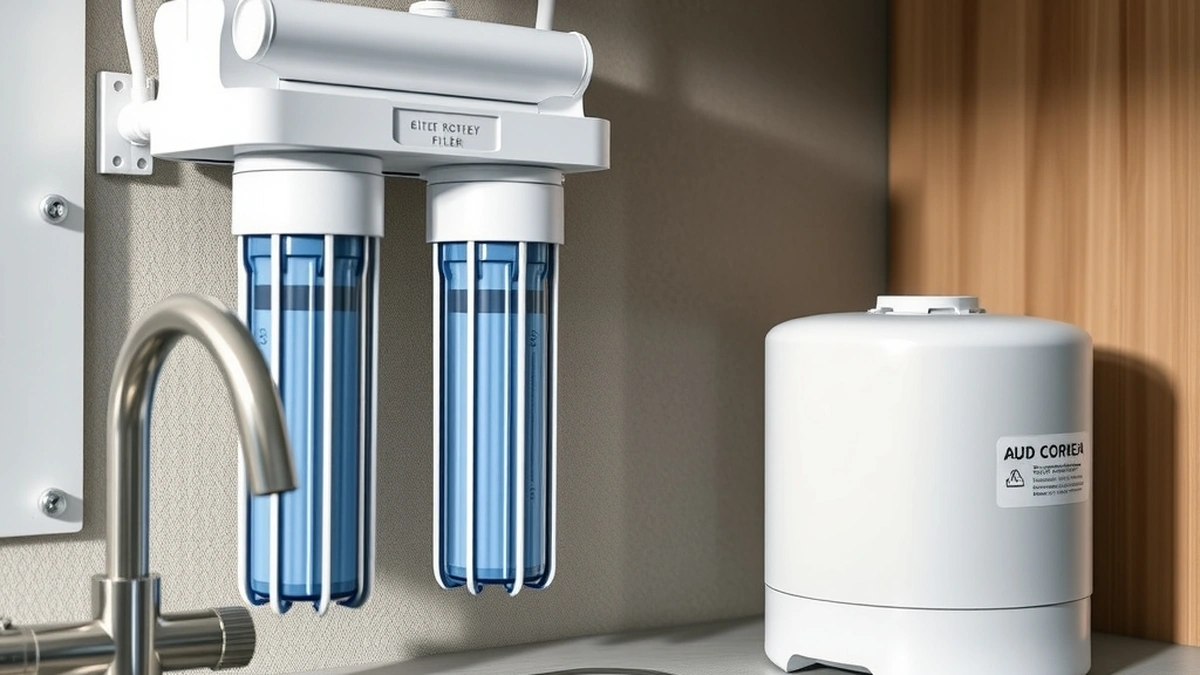
Reverse osmosis uses pressure to push water through a semipermeable membrane, typically in four stages: sediment, carbon, membrane, and post-carbon polishing.
- Typical stages
- 3-5
- Membrane life
- 2-3 years
- Under-sink installed cost
- $300-$900
- Annual running cost
- $60-$150
- Waste ratio
- 3-4:1
Some links on this page are affiliate links.If you buy through them we may earn a commission at no extra cost to you. We do not accept payment for rankings. Read the full disclosure.
Reverse osmosis (RO) is a pressure-driven filtration process that forces water through a semipermeable membrane. The membrane rejects dissolved solids and sends them to the drain while cleaner water flows to a storage tank or faucet. Most residential under-sink systems arrange this process in three to five stages.
How Reverse Osmosis Works
Reverse osmosis works by applying pressure to water on one side of a semipermeable membrane. Water molecules pass through the membrane pores, while larger dissolved ions and particles are blocked and flushed away as waste water. The process does not use chemicals or electricity to separate contaminants; it relies on household water pressure, often boosted by a permeate pump in low-pressure homes.
Membrane rejection is typically rated at 80-95 percent for total dissolved solids, depending on the membrane and the substance in question. The remaining water that does not pass through becomes brine or waste water. Residential RO systems commonly operate at a waste ratio of 3-4:1, meaning three to four gallons go to the drain for every gallon of stored product water.
Stage 1: Sediment Prefiltration
The first stage is usually a sediment cartridge rated at 5 microns or finer. It traps sand, silt, rust, and pipe scale before the water reaches finer filters and the membrane. Without this stage, fine particles can foul the carbon block and clog the RO membrane prematurely.
Sediment cartridges typically need replacement every 3-6 months, depending on water quality and household usage. On a well with high turbidity, changes may be required more often. This is the least expensive consumable in the system, but skipping it raises the cost of later stages by shortening their service life.
Stage 2: Carbon Prefiltration
After sediment removal, water passes through one or two carbon stages. A carbon block reduces chlorine and chloramines, which can damage thin-film composite RO membranes by oxidizing the membrane material. Carbon also reduces some volatile organic compounds and improves taste and odor.
Many under-sink RO systems include two carbon stages: one before the membrane to protect it, and one after the storage tank as a polishing filter. Carbon cartridges generally last 6-12 months and cost $80-$300 per year across all carbon stages, depending on system configuration and local water conditions.
If your water contains high chlorine from a municipal supply, carbon pretreatment is essential for membrane life. If you are on a private well with little or no chlorine, the carbon stage still addresses organic compounds and taste issues identified in a water test.
Stage 3: Reverse Osmosis Membrane
The RO membrane is the core separation stage. Water is pushed across the membrane at household pressure, typically 40-80 psi. Permeate, or product water, flows into a pressurized storage tank. Concentrate, containing the rejected dissolved solids, flows to the drain.
An RO membrane typically lasts 2-3 years before replacement. Membrane life depends on feed water quality, pretreatment effectiveness, and daily volume. Hard water can scale the membrane, and iron above 2-3 ppm can foul it, which is why some homes install a water softener ahead of RO. Softener equipment costs $600-$2,500, with installed costs of $1,200-$4,500. For homes considering both systems, see /how-much-does-a-water-softener-cost/ and /water-softener-installation-cost/.
Membrane rejection rates of 80-95 percent apply to total dissolved solids as a general class, not to every individual contaminant equally. Actual performance varies by contaminant, temperature, pressure, and membrane age.
Stage 4: Storage and Post-Filtration
Product water from the membrane flows into a small pressurized storage tank, usually 2-4 gallons under the sink. Because RO production is slow, the tank provides a reserve so the faucet delivers water at a usable flow rate.
Before reaching the dedicated RO faucet, water passes through a final carbon post-filter. This polishing stage removes any tastes or odors the water may have picked up while sitting in the storage tank or bladder. The post-filter typically follows the same 6-12 month replacement schedule as other carbon cartridges.
Some systems add a remineralization cartridge after the RO membrane to add calcium and magnesium back into the water. This changes taste and mineral content but does not alter the rejection performance of the membrane itself.
Stage 5: Optional Add-Ons
Not every RO system needs a fifth stage, but certain water conditions make one practical. A UV lamp can be installed after the storage tank for additional microbiological treatment. UV lamps last about 12 months and cost $30-$90 per year. For more on UV pricing, see /uv-water-purifier-cost/.
A permeate pump reduces waste water and improves tank fill speed by using the energy of the drain flow rather than electricity. An automatic shut-off valve stops production when the storage tank is full. These components improve efficiency but do not change the membrane’s rejection rating.
Whole-house RO is a separate category from under-sink units. It costs $3,000-$8,000 installed and usually requires pretreatment, a large storage tank, and a repressurization pump. Whole-house RO is uncommon unless water testing shows a specific need for treated water at every fixture. For broader context, see /whole-house-water-filter-cost/.
RO Costs and Maintenance Arithmetic
Under-sink RO equipment costs $200-$600, with installed costs of $300-$900. Annual running costs are estimated at $60-$150 per year for cartridges and membrane replacement amortized over time.
Here is an example maintenance budget over a 3-year period:
- Sediment cartridges: 2 per year at roughly $15-$25 each = $90-$150
- Carbon cartridges: 2-4 per year at roughly $20-$50 each = $120-$600
- RO membrane: 1 replacement at roughly $50-$150 = $50-$150
- Total 3-year consumables: approximately $260-$900, or roughly $60-$150 per year
Waste water adds to sewer or septic load. At a 3-4:1 ratio, a household using 2 gallons of RO drinking and cooking water per day sends 6-8 gallons to the drain daily, or roughly 2,200-2,900 gallons per year. This does not include water used for other household purposes.
A water test before purchase costs $40-$150 from a lab. Testing helps confirm total dissolved solids, hardness, iron, and other parameters that affect RO performance and pretreatment needs. Equipment selection should follow test results, not assumptions.
When RO Fits and When It Does Not
RO is suited for drinking and cooking water at a single point of use. It is not a whole-house hardness solution. If your water measures 7-10 grains per gallon or higher, a water softener may be more appropriate for protecting plumbing and appliances throughout the home. Softener capacity ranges from 24,000-64,000 grains, with salt use of 8-12 pounds per regeneration and salt costs of $120-$400 per year. Resin beds last 8-12 years and cost $300-$600 to rebed.
If your main concern is chlorine, sediment, or general taste at every tap, a carbon whole-house filter costs $500-$1,800 installed with cartridge costs of $80-$300 per year. For more on filter pricing, see /whole-house-water-filter-cost/.
RO makes sense when testing shows elevated dissolved solids or specific contaminants that carbon and softeners do not address. It is one tool among several, and the right sequence is always test first, equipment second.
Next, compare how much does a water softener cost, water softener installation cost, whole house water filter cost before you commit.
Frequently asked questions
What does reverse osmosis remove?
An RO membrane is rated to reject roughly 80-95 percent of dissolved solids, depending on the contaminant and membrane condition.
How many stages does an RO system have?
Most under-sink systems use three to five stages, including sediment, carbon, membrane, and post-filtration.
How often should the RO membrane be replaced?
RO membranes typically last 2-3 years before replacement is recommended.
Does RO waste water?
Yes. RO systems typically send 3-4 gallons to the drain for every gallon of product water.
Can an RO system treat whole-house water?
Whole-house RO is possible but costs $3,000-$8,000 installed and usually requires pretreatment and storage.
Should I test my water before buying RO?
Yes. A lab water test costs $40-$150 and helps confirm whether RO is the right tool for your water.
Sources
Some links are affiliate links.If you buy through them we may earn a commission at no extra cost to you. We do not accept payment for rankings. Read the full disclosure.


