
How Long Do Water Softeners Last? Component by Component
A softener lasts 10-15 years, but the resin, valve, and tanks age at different rates. See each component's life, replacement cost, and the signs to plan.
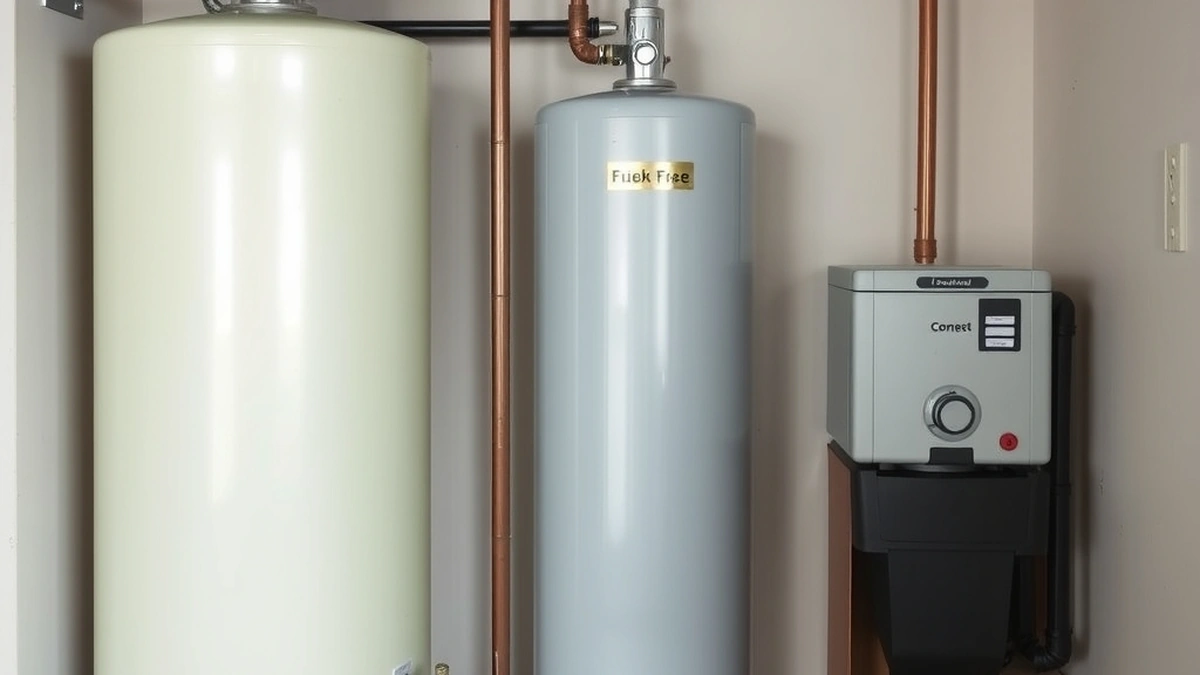
A water softener typically lasts 10 - 15 years. Resin lasts 8 - 12 years before a rebed at $300 - $600, the control valve often outlives the resin, and the tanks usually last the full equipment life with normal water pressure.
- Equipment life
- 10 - 15 years
- Resin life
- 8 - 12 years
- Resin rebed
- $300 - $600
- Valve replacement
- $200 - $500
- Installed cost
- $1,200 - $4,500
Some links on this page are affiliate links.If you buy through them we may earn a commission at no extra cost to you. We do not accept payment for rankings. Read the full disclosure.
A water softener typically lasts 10 - 15 years, but the components do not age at the same rate. Resin is usually the first major replacement at 8 - 12 years, the control valve often lasts the full span, and the tanks usually outlast both unless pressure or water quality damages them.
The Resin Bed
Resin is the working part of the softener. It is a bed of polystyrene beads that exchange sodium for calcium and magnesium, and it is designed to survive thousands of cycles.
Chlorine is the main enemy. Municipal water carries a disinfectant residual, and over years it oxidizes the polymer, reducing capacity and eventually breaking the beads. That is why a carbon filter ahead of the softener extends resin life on chlorinated water.
Iron is the second enemy. Dissolved iron binds tightly to the beads and coats them, and above 2 - 3 PPM the fouling outpaces what salt can clean. A softener on high-iron water without an iron filter may need a rebed in half the normal time.
The replacement interval is 8 - 12 years, and a rebed costs $300 - $600. It restores most of the original capacity and is usually cheaper than a new unit.
The Control Valve
The valve runs the regeneration cycle and meters water use. It has moving parts, seals, and a piston that slides thousands of times over its life.
Most valves last 10 - 15 years with periodic seal and piston replacement. A seal kit costs $30 - $80, and a full valve replacement runs $200 - $500 installed.
The valve often fails before the resin because the seals wear and the piston scores. A valve that sticks mid-cycle, leaks to drain, or fails to draw brine is a valve problem, not a resin problem.
The Tanks
| Component | Typical life | Replacement cost | Failure sign |
|---|---|---|---|
| Resin | 8 - 12 years | $300 - $600 | Falling capacity, hard water |
| Control valve | 10 - 15 years | $200 - $500 | Sticking, leaking, no brine draw |
| Resin tank | 10 - 20 years | $300 - $700 | Crack, leak at the base |
| Brine tank | 15 - 20 years | $150 - $400 | Crack, float failure |
| Bypass valve | 10 - 15 years | $50 - $150 | Leak, stiff handle |
The tanks are simple pressure vessels, and they usually last. A crack at the base is the common failure, and it usually follows years of pressure cycling or a tank that was over-pressurized.
The brine tank is not pressurized, so it lasts longer. Its failure points are the float assembly and the brine well, both of which are serviceable parts.
What Shortens Life
Frequent cycling is a quiet killer. A waterlogged pressure tank, a misprogrammed valve, or an oversized unit regenerating too often wears the valve and the resin faster than necessary.
Sediment is another. Grit in the resin bed causes channeling, where water finds a path through instead of passing evenly. The unit keeps running but stops softening, and the household blames the resin.
High water pressure above 80 PSI stresses the tanks and the valve. A pressure-reducing valve at $100 - $300 protects the whole plumbing system, not just the softener.
Repair or Replace
The decision comes down to arithmetic and age. A resin rebed at $400 on a 10-year-old unit is a clear repair. A cracked tank plus a failed valve on a 14-year-old unit is a replacement.
A simple rule: if the repair is more than half the cost of a new installed unit, and the equipment is past 12 years, replace it. A new softener at $1,200 - $4,500 comes with a warranty and current efficiency.
If the repair is under $600 and the unit is under 12 years, repair it. Most softener problems are valve, salt, or brine issues, and none of those justify a new unit.
Getting the Full Life
- Test the water annually for hardness and iron.
- Install a sediment prefilter if the supply carries grit.
- Add a carbon filter ahead of the softener on chlorinated water.
- Keep the salt level between half and two-thirds and clean the tank yearly.
- Check the pressure tank charge and the valve settings once a year.
- Fix small leaks promptly; a dripping bypass corrodes the fittings.
Planning the Replacement
Budget for a replacement around year 12 rather than waiting for a failure. A softener that dies on a Friday night leaves the house on hard water until a contractor can schedule the swap.
The replacement does not have to be the same unit. Efficiency has improved, and a metered valve sized correctly will use less salt than a 15-year-old timer unit.
The Ten-Year Cost Picture
A softener at $2,000 installed, $250 a year in salt, and a $400 rebed in year ten costs $4,900 over the decade. That is the number to compare against a replacement at year twelve.
A salt-free conditioner at $1,000 installed plus one $300 media change costs $1,300 over ten years, but it does not remove hardness and the scale in the water heater continues.
A household that repairs a softener twice at $300 each still comes out ahead of replacing at year eight, provided the tanks and resin are sound. The repair-versus-replace math favors repair until the equipment is past year twelve.
Write the numbers down when the unit is installed. Ten years later, the memory of what it cost is unreliable, and the decision deserves better than a guess.
For the mechanism, see how does a water softener work. For running costs, see water softener running cost. For repair pricing, see water softener repair cost and water softener resin replacement cost.
Frequently asked questions
How long should a water softener last?
Most softeners last 10-15 years. The resin is usually the first major component to need replacement, at 8-12 years, and the tanks and valve often last the full span.
Can a softener last 20 years?
Some do, especially with soft water, low iron, and regular maintenance. Chlorine, iron, and frequent cycling shorten life, and parts availability becomes the limit.
How do I know when to replace rather than repair?
Compare the repair cost with a new unit. A valve or resin replacement under $600 is usually worth it; a cracked tank plus a failed valve on a 14-year-old unit is not.
Does hard water wear out a softener faster?
No. The softener is designed for hard water. Iron, chlorine, sediment, and frequent regeneration are the factors that shorten component life.
How often should the resin be replaced?
Every 8-12 years, or sooner if the bed is fouled by iron or chlorine. A rebed costs $300-$600 and restores most of the original capacity.
What kills a water softener early?
Iron fouling, chlorine degradation of the resin, sediment channeling, and repeated short cycling from a waterlogged tank or a misprogrammed valve.
Sources
Some links are affiliate links.If you buy through them we may earn a commission at no extra cost to you. We do not accept payment for rankings. Read the full disclosure.


