How to choose a countertop reverse osmosis
Choose a countertop RO by reservoir size, refill effort, and unit cost. See output limits, power needs, and the $200-$600 price band.
Choose a countertop reverse osmosis unit by reservoir size and daily output, not by price alone. Most units hold 1-2.5 gallons, cost $200-$600, and need a 120V outlet within cord reach.
- Unit cost
- $200 - $600
- Reservoir
- 1 - 2.5 gallons
- Daily output
- 1 - 3 gallons
- Power
- 120V outlet
- Annual filters
- $60 - $150
Some links on this page are affiliate links.If you buy through them we may earn a commission at no extra cost to you. We do not accept payment for rankings. Read the full disclosure.
Choose a countertop reverse osmosis unit by reservoir size and daily output, not by the marketing photo. Most hold 1-2.5 gallons, cost $200-$600, and need a 120V outlet. The refill routine, not the price, is what decides whether you keep using it.
What the format can and cannot do
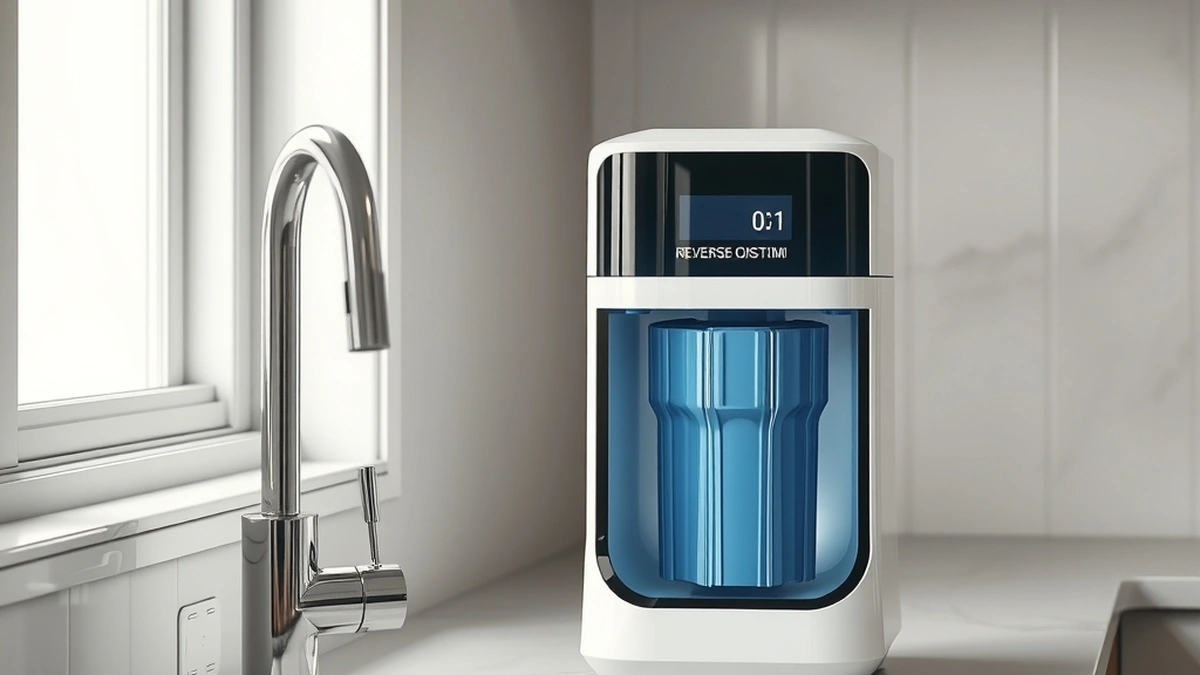
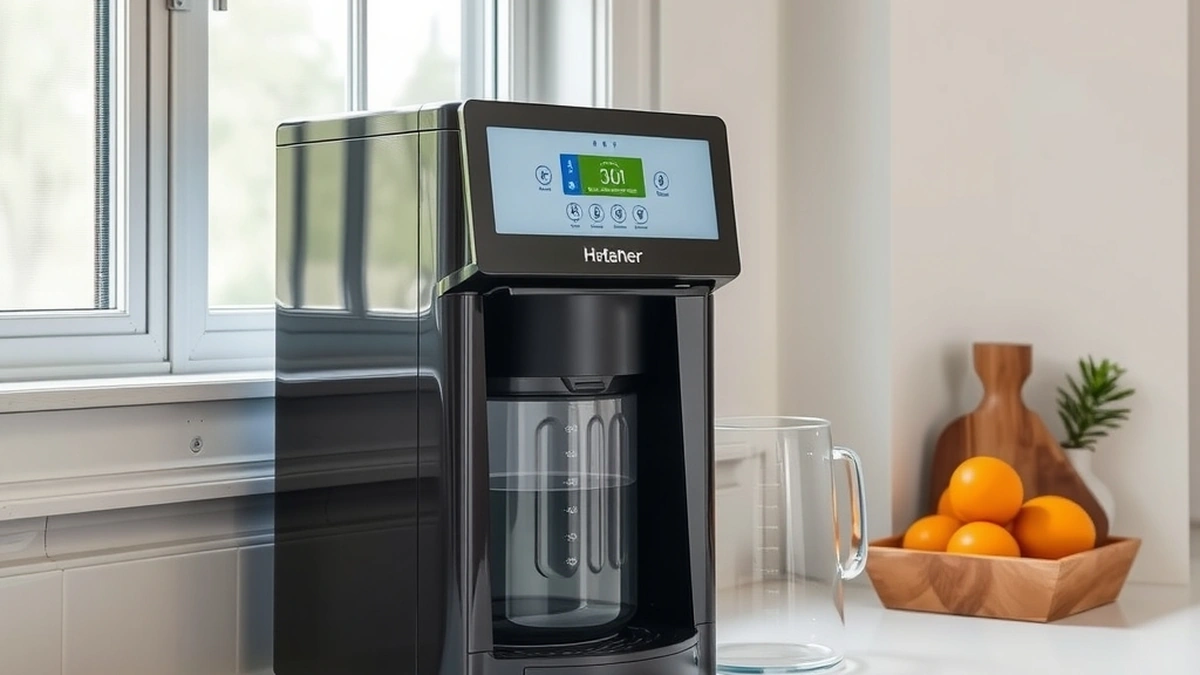
A countertop reverse osmosis system is a self-contained unit that draws from a fill reservoir rather than a plumbed supply. It produces drinking water in batches and stores it in a pitcher or internal tank.
That design removes every plumbing constraint and adds a manual one: somebody has to carry water to it. A gallon reservoir yielding 0.75 gallons of permeate covers one person’s drinking water for a day.
For a household using 3-5 gallons daily, that is three or four refills and three or four waits. The unit does the work; you do the logistics.
Reservoir size is the first spec
| Reservoir | Permeate per fill | Refills for 4 gal/day | Best for |
|---|---|---|---|
| 1 gallon | 0.7 - 0.8 gal | 5 - 6 | One person |
| 1.5 gallons | 1.1 - 1.2 gal | 3 - 4 | Couple |
| 2 gallons | 1.5 - 1.6 gal | 2 - 3 | Family of three |
| 2.5 gallons | 1.8 - 2.0 gal | 2 | Family of four |
The arithmetic assumes a 3-4:1 waste ratio, so a 2-gallon reservoir does not yield 2 gallons of drinking water. It yields about 1.5, because a quarter of the volume leaves as concentrate.
That is the most common expectation gap in the category. Buy based on permeate, not on reservoir capacity.
Power, placement, and noise
Every unit needs a grounded 120V outlet within cord reach. Most draw 100-300 watts during production and almost nothing at idle.
Placement rules are simple: out of direct sunlight, away from the stove, on a stable counter with 2-3 inches of rear clearance. A translucent reservoir in a sunny window grows algae within weeks.
Noise is modest but real. A unit producing water hums like a small fan, which matters in an open-plan kitchen or a studio apartment.
Throughput and wait time
A countertop unit produces about 0.1-0.2 gallons per hour in practice, because the membrane is small and the pump is modest. A 1-gallon batch takes 4-8 hours.
That is fine if you fill the reservoir before bed and use the water the next day. It is frustrating if you are waiting for a glass.
Some units include a chilled tank that holds finished water, which decouples production from dispensing. Those cost $100-$200 more and take more counter space.
Cost of ownership
A $350 unit with $90 per year in filters over five years is $350 + ($90 × 5) = $800, or $160 per year.
An under sink system at $500 installed with $90 per year in filters is $500 + ($90 × 5) = $950 over five years, or $190 per year, and produces water on demand.
The countertop unit is cheaper to buy and nearly the same to run. What it costs is labor and patience, not money.
When the countertop format wins
Rentals where drilling is not allowed. Apartments with no cabinet space. Offices and dorm rooms. Temporary housing. Anywhere a plumbed unit is impossible rather than merely inconvenient.
It also wins for low-volume users: one person drinking a gallon a day does not need a 50 GPD plumbed system.
If any of those conditions change, the plumbed format becomes the better purchase. Countertop reverse osmosis installation covers setup, and tankless reverse osmosis installation covers the smallest plumbed option.
A buying sequence
- Measure daily drinking water use for a week.
- Pick a reservoir that yields at least a full day of permeate.
- Confirm the unit fits under the cabinets with the lid open.
- Check that replacement filters are stocked and priced reasonably.
- Look for NSF/ANSI 58 certification, which covers RO systems specifically.
- Read the noise and batch-time reviews, not just the star rating.
What to ignore
Ignore “unlimited” output claims. Every countertop unit is batch-limited by its reservoir.
Ignore pH and alkaline marketing as a primary decision. It is a post-treatment preference, and it does not change what the membrane rejects.
Ignore units with no certification listing. Standard 58 is the relevant one for RO, and a unit without it has no verified reduction claim. What reverse osmosis removes explains the 80-95 percent rejection figure these units actually deliver. “”
Living with a batch unit
The first month tells you whether the format fits. Most countertop units are returned or abandoned because the refill routine does not match the household’s habits, not because the water is bad.
Fill the reservoir at night. Production runs for hours, and a unit that starts at 7 a.m. will not have a full pitcher by lunch. Starting before bed means water is ready when the coffee maker is.
Keep a second pitcher in the fridge. That turns one reservoir into two, which covers a family’s drinking water without a mid-day refill.
Wipe the reservoir weekly and descale monthly in hard water. A batch unit sits at room temperature with standing water, which is exactly the environment biofilm wants. The reservoir is also the part that touches every glass, so it deserves more attention than the membrane housing.
If the routine holds for a month, the format works. If it does not, an under sink unit at $300-$900 installed removes the manual step entirely and costs about the same per year to run.
Frequently asked questions
How much water does a countertop RO produce per day?
One to three gallons depending on the reservoir and the number of cycles run. A 1-gallon reservoir yielding 0.75 gallons per cycle means two cycles for a typical household's drinking water.
Is a countertop RO worth it?
It is worth it when plumbing is not an option, such as a rental or a small apartment. An under sink unit at $300-$900 produces far more water for a similar annual filter cost.
How much counter space does a countertop RO need?
Roughly 10-14 inches wide and 12-16 inches deep, plus 8-10 inches of clearance for the lid. That is about the footprint of a coffee maker.
Do countertop RO units need a drain?
No. They recirculate or collect concentrate internally, so no drain connection is required. That is why they can sit anywhere with an outlet.
How often do countertop RO filters need changing?
Every 6-12 months for sediment and carbon, and every 2-3 years for the membrane. Costs run $60-$150 per year.
Can a countertop RO run on a battery or USB?
A few small units do, but most need a grounded 120V outlet. Battery units produce very little water per charge and are best treated as travel devices.
Sources
Some links are affiliate links.If you buy through them we may earn a commission at no extra cost to you. We do not accept payment for rankings. Read the full disclosure.