How to choose a reverse osmosis system
Choose an RO system by daily gallons, TDS, and membrane quality. See storage vs tankless, waste ratios, and the $300-$900 installed range.
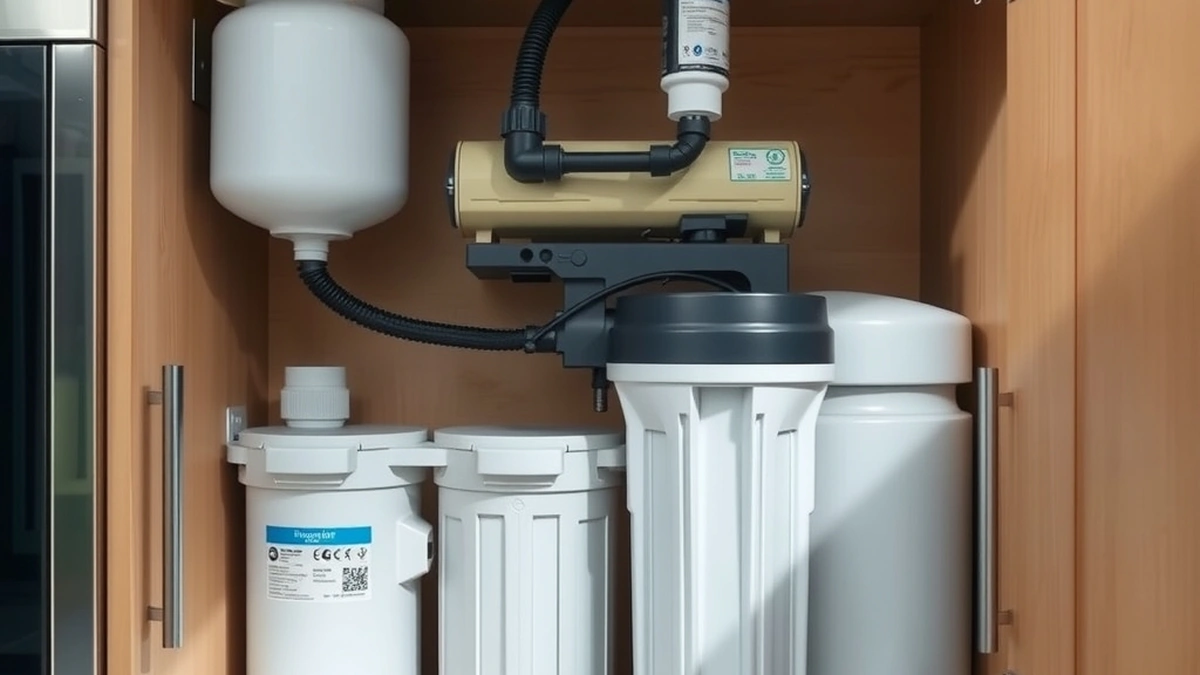
Choose a reverse osmosis system by daily drinking gallons and feed TDS, then decide between tanked and tankless. A 50-75 GPD unit at $300-$900 installed covers most kitchens with 80-95 percent rejection.
- Installed cost
- $300 - $900
- Membrane output
- 50 - 100 GPD
- Rejection
- 80 - 95 percent
- Waste ratio
- 3-4:1
- Annual cost
- $60 - $150
Some links on this page are affiliate links.If you buy through them we may earn a commission at no extra cost to you. We do not accept payment for rankings. Read the full disclosure.
Choose a reverse osmosis system by daily gallons, feed water chemistry, and membrane quality. A 50-75 GPD unit at $300-$900 installed covers most kitchens. The membrane and the carbon ahead of it decide whether the system lasts or becomes a subscription.
Start with gallons, not features
A reverse osmosis system is a point-of-use device that forces water through a semipermeable membrane, rejecting 80-95 percent of dissolved solids. Residential units produce 50-100 gallons per day.
Count actual drinking and cooking use. A couple uses 2-3 gallons per day; a family of four with a pitcher habit uses 3-5; a household that cooks heavily and fills ice trays can reach 6-8.
A 50 GPD membrane running eight hours a day produces about 16 gallons, which is far more than a household drinks. That surplus is why storage tanks exist: they buffer production against demand.
Oversizing wastes money on a membrane that runs less efficiently at low demand. Undersizing shows up as an empty tank at dinner time.
Feed water decides the configuration
Test total dissolved solids, hardness, iron, and chlorine before choosing. Each changes the equipment list.
Hardness above 7 grains per gallon scales the membrane. Iron above 2-3 ppm fouls it permanently. Chlorine destroys thin-film composite membranes in weeks.
That means a softener or iron filter may need to come first, at $800-$4,500 installed. A $350 RO system behind untreated hard water will eat membranes every year and cost more than doing it in the right order.
TDS sets expectations. At 300 ppm feed and 90 percent rejection, product water is about 30 ppm. At 800 ppm feed, the same rejection leaves 80 ppm, which still tastes flat but carries more dissolved material.
Tanked versus tankless
| Factor | Tanked | Tankless |
|---|---|---|
| Cabinet space | 12 - 18 inches vertical | 4 - 6 inches |
| First glass | Immediate | 15 - 60 seconds |
| Power | None | 120V outlet |
| Output | Tank-limited | 0.4 - 0.8 GPM continuous |
| Cost | $300 - $900 | $300 - $900 |
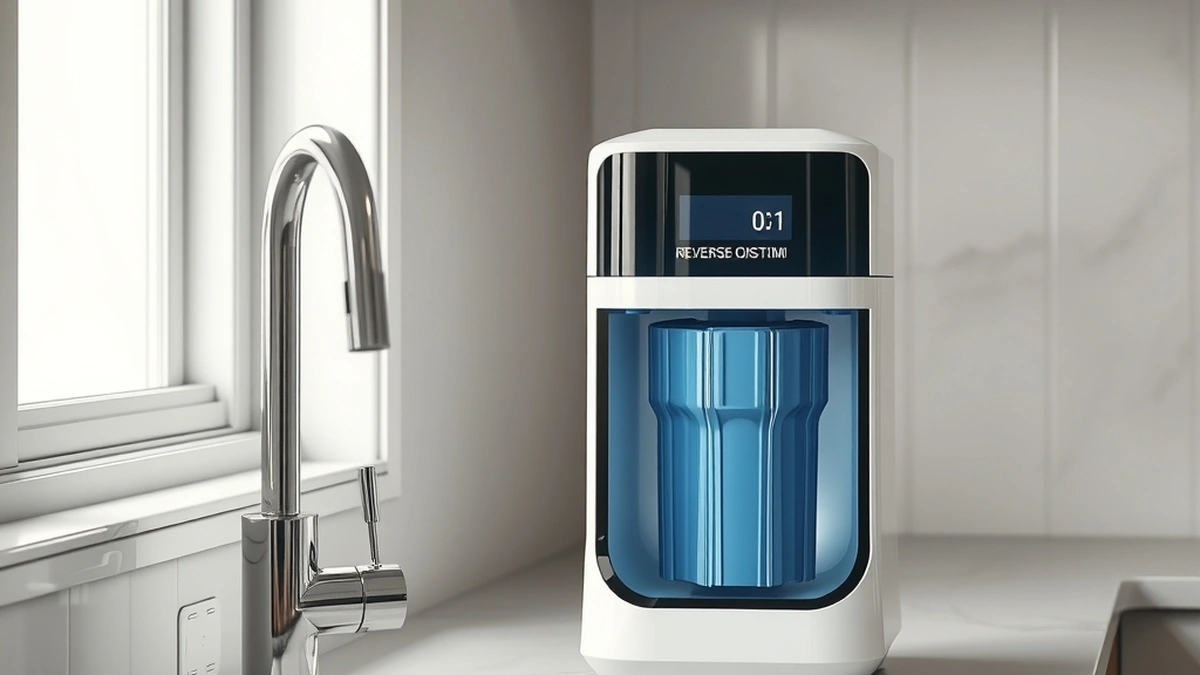
A tanked unit is simpler and needs no outlet. A tankless unit saves space and never runs dry, at the cost of a pump that can fail and a slower first pour.
If the cabinet has no outlet, tanked wins by default. If space is tight and an outlet exists, tankless is the better fit.
Membrane and cartridge quality
The membrane is the engine. A certified element from a known manufacturer delivers its rated rejection; an unbranded one often does not, and the difference shows up as higher TDS in the product water.
Ask for the membrane part number and the manufacturer. A Filmtec or comparable element is a different product from a generic wrap.
Cartridge design matters for cost of ownership. Standard 10-inch cartridges cost $10-$30; proprietary cartridges cost $40-$80 and are only sold by the manufacturer.
Waste, pressure, and extras
Waste ratio is 3-4:1 on most residential units, meaning 3-4 gallons of concentrate per gallon produced. A permeate pump at $100-$200 can cut that substantially and is worth it on metered water.
Feed pressure below 40 psi needs a booster pump at $60-$150. Above 80 psi, add a regulator.
A remineralization stage adds $40-$120 and puts some calcium back in the water. It is a taste preference, not a treatment requirement.
A buying sequence
- Test TDS, hardness, iron, and chlorine.
- Count daily drinking and cooking gallons.
- Fix upstream problems first if hardness or iron is high.
- Choose tanked or tankless based on cabinet space and outlet.
- Confirm the membrane brand and the cartridge standard.
- Check replacement cartridge prices before buying the unit.
What to ignore
Ignore gallon-per-day claims without a pressure and temperature condition. A 100 GPD rating at 60 psi and 77°F is not the same at 40 psi and 50°F.
Ignore systems sold on stage count alone. Four stages with a tiny carbon block are not better than three with real media volume.
Ignore a system that will not publish its membrane part number. The element is the engine, and a unit hiding it is usually hiding a generic part.
Ignore “alkaline” as a primary feature. pH adjustment is a post-treatment preference, not a reason to choose one RO over another. What reverse osmosis removes sets the expectation honestly, and tankless versus tank RO compares the two formats directly. “”
What the water tastes like afterward
Reverse osmosis removes most dissolved minerals, and mineral content is a large part of what gives water its taste. Product water from a well-tuned system tastes flat to most people, and slightly sweet to some.
That is not a defect. It is the predictable result of dropping total dissolved solids from 300 ppm to 30 ppm. If you dislike it, a remineralization cartridge adds calcium and magnesium back at $40-$120, and it lasts 6-12 months.
A post-carbon polisher is more common and more useful. It catches any taste the storage tank picks up and keeps the water from tasting like the bladder. Most systems include one; check that yours does.
Do not judge the water in the first week. New cartridges shed fines, the tank has air in it, and the membrane needs a few gallons to settle. Taste it after the first full tank, then decide whether a mineral stage is worth adding. A $20 TDS pen is the honest way to check the result: 300 ppm feed and 30 ppm product is 90 percent rejection, and anything under 80 percent means a seal or membrane problem rather than a taste preference. Tankless versus tank RO covers how each format delivers that first tank. If the water is hard, the softener belongs ahead of the membrane rather than after it, and RO water and minerals explains what the membrane leaves behind.
Frequently asked questions
What size RO system do I need for a family of four?
A 50-75 gallon per day membrane is enough for drinking and cooking. A family using 3-5 gallons daily has ample margin, and the storage tank buffers peak draws.
Is tankless better than tanked RO?
Tankless saves cabinet space and delivers steady output; tanked delivers a fast first glass and needs no power. Both cost $300-$900 installed and run $60-$150 per year.
How important is the membrane brand?
Very. A certified membrane from a known manufacturer delivers the rated rejection; an unbranded element often does not. Ask for the membrane part number.
Do I need a booster pump?
Only if feed pressure is below 40 psi. A pump at $60-$150 restores production and improves rejection, and it is common on well systems.
How much wastewater does an RO system produce?
Three to four gallons of concentrate per gallon produced at a 3-4:1 ratio. A permeate pump or a higher-efficiency membrane can reduce that.
What maintenance does an RO system need?
Sediment and carbon cartridges every 6-12 months, a membrane every 2-3 years, and a tank pressure check annually. Total cost is $60-$150 per year.
Sources
Some links are affiliate links.If you buy through them we may earn a commission at no extra cost to you. We do not accept payment for rankings. Read the full disclosure.