Tankless RO vs Tank RO: Space, Waste, and Cost
Compare tankless and tank reverse osmosis systems on installed cost, daily output, water waste, and maintenance for under-sink drinking water.
Tankless RO saves under-sink space and makes water on demand, while tank RO stores treated water but costs less upfront and typically wastes less water per gallon delivered.
- Typical under-sink equipment cost
- $200–$600
- Typical installed cost
- $300–$900
- Annual running cost
- $60–$150
- Membrane replacement
- Every 2–3 years
- Waste ratio
- 3–4:1
Some links on this page are affiliate links.If you buy through them we may earn a commission at no extra cost to you. We do not accept payment for rankings. Read the full disclosure.
Tankless RO and tank RO both treat drinking water at the point of use, but they store and deliver it differently. Tankless systems make water on demand without a storage tank, while tank systems fill a pressurized reservoir and draw from it. The right choice depends on cabinet space, daily water use, and how much waste water you are willing to send to the drain.
How Tank and Tankless RO Work
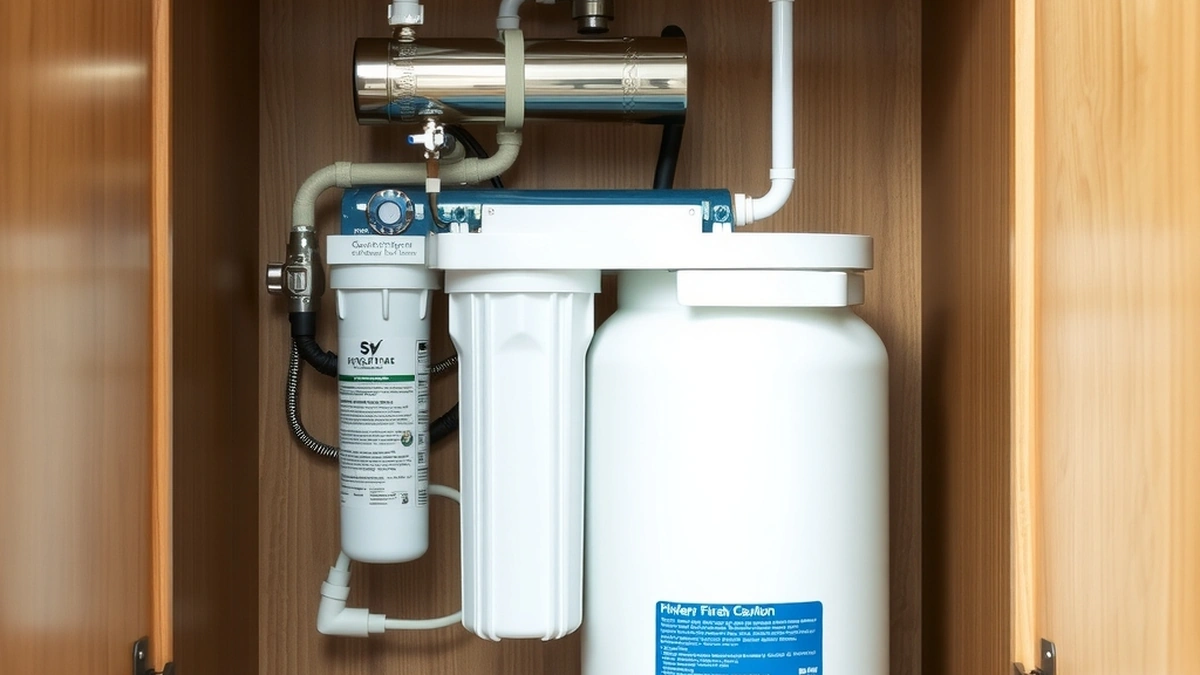
A standard tank RO system includes pre-filters, a membrane, a post-filter, and a pressurized storage tank, usually 2 to 4 gallons. When you open the faucet, water comes from the tank while the membrane refills it in the background. A tankless RO system skips the storage tank. When you open the faucet, the pump or line pressure pushes water through the membrane immediately, and you wait a few seconds for flow to start.
Both styles use the same core membrane technology and carry the same rejection range of 80–95 percent for dissolved solids. Both also produce waste water. The standard waste ratio for under-sink RO is 3–4:1, meaning three to four gallons of waste water for every gallon of treated water. That ratio applies to the membrane itself, but real-world waste can differ based on how you use the system.
Installed Cost Comparison
Under-sink RO equipment typically costs $200–$600. Installed, the range is $300–$900. Tankless models often cost more for the equipment because they may include a booster pump and more compact manifold plumbing. Tank systems add the cost of the pressure tank and its air charge, but the tank itself is a simple, inexpensive part.
Here is an example of installed cost arithmetic for a mid-range tank system:
- Equipment: $400 estimate
- Installation: $400 estimate
- Total installed: $800
For a comparable tankless system:
- Equipment: $550 estimate
- Installation: $450 estimate
- Total installed: $1,000
Those figures are estimates. Actual prices depend on local labor rates, whether you need a new faucet hole, and if the installer must modify drain piping. For broader pricing context, see our guide on reverse osmosis system cost.
Daily Output and Water Waste
Tank RO shines when you need a lot of treated water quickly. Because the tank holds a reserve, you can fill a pitcher or cooking pot without waiting for the membrane to keep up. The membrane refills the tank slowly over an hour or two, so the system is ready for the next burst of use.
Tankless RO makes water only when you draw it. That eliminates the small amount of treated water that can sit in a tank and lose freshness if you do not use the faucet for several days. However, tankless systems may run the membrane more frequently for small draws, such as filling a glass. Each start-up flush can send extra water to the drain, which can push the effective waste ratio higher than the nominal 3–4:1.
If you drink one gallon per day and use the tank system, the membrane might produce 5 gallons to fill the tank, sending 15–20 gallons to waste over that cycle. If you draw water in small amounts from a tankless unit, the membrane may cycle more often, and frequent flushing can add up. Neither design eliminates waste water; both send concentrate to the drain.
Space and Installation
Tankless RO wins on cabinet space. Without a 2- to 4-gallon tank, you gain room under the sink for trash bins, cleaning supplies, or plumbing traps. A tankless manifold and filter cartridges often mount vertically or horizontally in a tight footprint.
A tank RO system needs space for the tank itself, typically 10 to 15 inches in diameter and 12 to 16 inches tall, plus clearance for the tank valve and tubing. If your under-sink cabinet is already crowded with a garbage disposal and P-trap, fitting a tank can be difficult.
Installation for both styles requires a cold-water supply tee, a drain saddle for waste water, and a dedicated faucet. Tankless units sometimes need a booster pump if your line pressure is below the membrane’s rated operating pressure, which adds an electrical outlet near the sink. Tank systems do not need electricity unless they include a pump or UV option, but they do need an air charge check on the tank periodically.
Maintenance and Running Costs
Annual running costs for under-sink RO are estimated at $60–$150. That covers pre-filter cartridges, post-filter cartridges, and membrane replacement on a 2- to 3-year cycle. Tankless and tank systems use similar consumables, so the yearly cost difference is usually small.
Tank systems add one maintenance item: the storage tank. Over years, the tank’s air bladder can lose pressure, reducing flow at the faucet. Re-pressurizing the tank is a simple task with a tire gauge and air pump, but it is an extra step tankless owners do not face. Tanks can also develop a musty taste if water sits unused for weeks, which calls for draining and sanitizing.
Membrane replacement is the same interval for both styles: every 2–3 years, depending on feed water quality and volume. If you run very hard water through an RO without softening, the membrane can scale faster. If your home uses a water softener, RO membranes often last longer because hardness minerals are reduced before they reach the membrane. For cost context on softening equipment, see how much does a water softener cost and water softener installation cost.
Testing Before You Buy
Water treatment should start with a lab test, not a product choice. A water test typically costs $40–$150 and tells you total dissolved solids, hardness, iron, and other parameters that affect RO performance. If your water is very hard, you may need a softener ahead of the RO to protect the membrane. If you have iron above 2–3 ppm, a softener may not be enough, and you might need dedicated iron treatment. For well water systems, see well water treatment cost.
RO is a point-of-use technology. It treats water at one faucet, not the whole house. If you want treated water at every tap, a whole-house RO system costs $3,000–$8,000 installed and requires significant space and waste-water plumbing. For most households, a single under-sink RO unit for drinking and cooking is the practical starting point.
Which One to Choose
Choose tankless RO if cabinet space is tight, you want water on demand without a stored reserve, and you do not mind a potentially higher equipment price. Choose tank RO if you want the lowest upfront cost, you frequently fill large containers, and you have room for a storage tank.
Both systems produce waste water at a 3–4:1 ratio and both require membrane replacement every 2–3 years. Neither removes the need for a water test first. Test your water, compare installed costs for your specific cabinet layout, and pick the system that matches your daily volume and space constraints.
For whole-house filtration options that can work alongside RO, see whole house water filter cost.
Frequently asked questions
What is the main difference between tankless and tank RO?
Tankless RO makes filtered water on demand without a storage tank, while tank RO fills a pressurized tank and dispenses from it when you open the faucet.
Which system takes up less cabinet space?
Tankless RO usually takes up less space because it removes the storage tank, leaving only filter cartridges and the membrane housing under the sink.
Does tankless RO waste more water?
Tankless RO can run the membrane more often for small draws, which may increase the effective waste ratio compared to a tank system that fills in batches.
How often does the RO membrane need replacement?
The membrane typically lasts 2–3 years, depending on feed water quality and how much water the system produces.
Can I install either system myself?
Many under-sink RO kits are designed for DIY installation, but plumbing connections and drain saddle fitting may require a plumber depending on your setup.
Is one system better for well water?
Neither is inherently better for well water; both need pre-treatment if the water contains iron, hardness, or sediment beyond the RO system’s limits.
Sources
Some links are affiliate links.If you buy through them we may earn a commission at no extra cost to you. We do not accept payment for rankings. Read the full disclosure.