How to choose a RV water filter
Choose an RV filter by format, cartridge availability, and flow. See inline vs canister vs under-sink units and the $20-$200 price range.
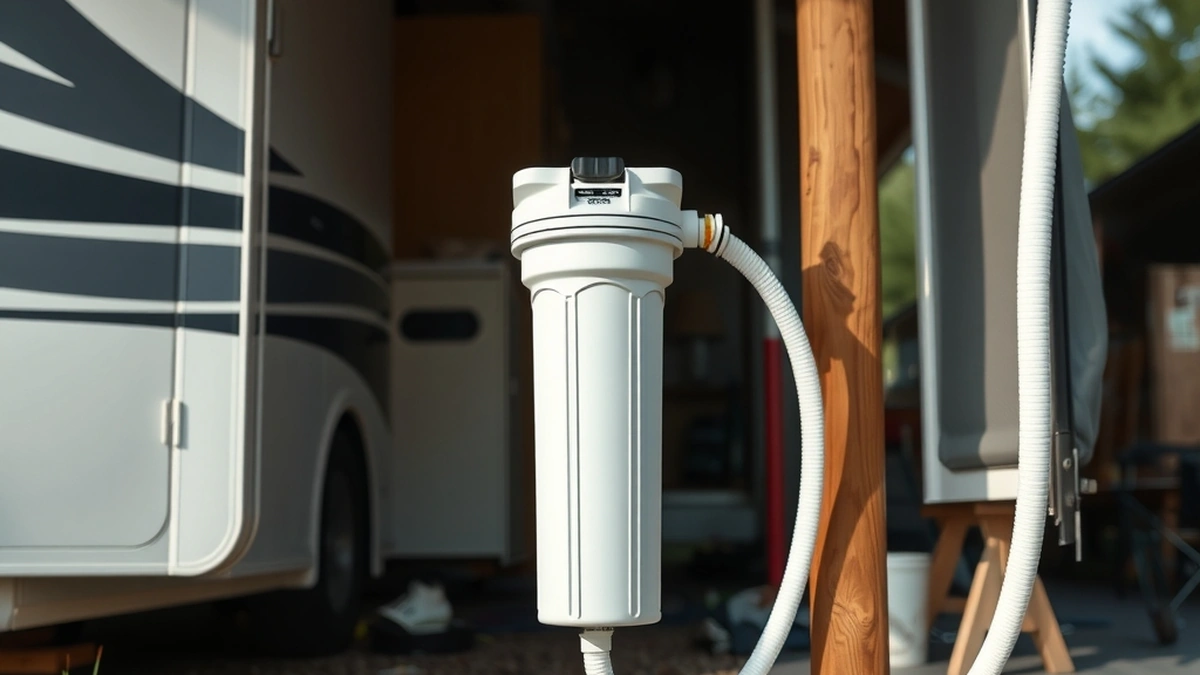
Choose an RV water filter by format and cartridge availability. Inline filters cost $20-$45 and last a season; canister units cost $60-$180 and take commodity cartridges that are cheaper per gallon over time.
- Inline
- $20 - $45
- Canister
- $60 - $180
- Under-sink kit
- $120 - $200
- Cartridge life
- 3 - 6 months
- Regulator
- $12 - $30
Some links on this page are affiliate links.If you buy through them we may earn a commission at no extra cost to you. We do not accept payment for rankings. Read the full disclosure.
Choose an RV water filter by format first, then by cartridge availability. Inline units cost $20-$45 and last a season; canister units cost $60-$180 and take commodity cartridges that cost less per gallon. The cartridge supply chain matters more than the housing brand.
Three formats and who they suit
An inline filter is a disposable body that threads onto a hose or spigot. It is light, cheap, and takes no storage space. It also has a small media volume and clogs fast on sediment.
A canister unit holds a standard 10-inch cartridge in a reusable housing. It costs more up front and less per gallon, and cartridges are sold at any RV store.
An under-sink kit installs inside the galley with its own faucet. It gives the best drinking water and treats nothing else.
Weekenders are well served by inline. Full-timers are better served by a canister, or a split with a coarse inline at the spigot and a canister at the rig.
Flow, pressure, and the regulator
| Setup | Flow | Pressure protection | Best for |
|---|---|---|---|
| Inline only | 1 - 2 GPM | Regulator required | Weekends |
| Canister only | 1.5 - 3 GPM | Regulator required | Full-time |
| Inline + canister | 1.5 - 2.5 GPM | Regulator required | Sediment-heavy parks |
| Under-sink kit | 0.5 - 1 GPM | Regulator required | Drinking water |
Every setup needs a regulator. Campground spigots commonly run 60-100 psi and occasionally exceed that. Most RVs are rated for 40-60 psi, and filter housings are rated for 100 psi or less.
Set the regulator to 45-55 psi. A fixed 40 psi regulator is cheaper, an adjustable one is worth the extra $20 if the rig’s shower is weak.
Cartridge availability
This is the decision that determines five-year cost. A proprietary cartridge at $45 that is only sold by the manufacturer costs more than a $120 canister that takes $18 commodity cartridges.
Check before buying: what cartridge does the housing take, is it a standard size, and can you buy it locally or only online.
A canister that takes a 10-inch by 2.5-inch cartridge is the most flexible choice. Those cartridges are sold at hardware stores, RV dealers, and online, and prices are competitive.
What an RV filter can and cannot do
It reduces sediment, chlorine, and taste. That covers most campground water complaints.
It does not disinfect. A boil-water notice means boiling or bottled water, not filtration.
It does not soften. Hard water still spots dishes and leaves scale in the water heater.
It does not remove iron or sulfur. A park on a well with iron will clog the cartridge in weeks and stain the rig’s fixtures anyway.
Installation and winterizing
Inline: thread onto the spigot after the regulator, run water for a minute, check for leaks.
Canister: mount the bracket, connect the inlet and outlet hoses, and orient the flow arrow correctly.
Under-sink: mount the housing in the cabinet, tee the cold line, and install the faucet.
Winterizing matters for all three. Remove the cartridge, drain the housing, and store it dry. A housing full of water cracks when it freezes, and a wet cartridge grows biofilm over the off season.
Cost over five seasons
Inline at $30 replaced twice a season is $60 per year, or $300 over five seasons.
Canister at $120 with three $20 cartridges a season is $180 in year one and $60 per year after, or $360 over five seasons.
The canister costs $60 more over five seasons and delivers better sediment capacity and cheaper cartridges throughout. That is a small premium for a better result.
Matching the filter to how you travel
A weekend camper and a full-timer need different equipment, and the difference is volume rather than budget.
A weekend camper uses 40-80 gallons per trip. An inline filter at $25 handles a season of that, and the housing never needs cleaning because there is no housing.
A full-timer uses 1,200-2,000 gallons a month. At that volume, cartridge cost dominates, and a canister with commodity cartridges wins within one season.
A snowbird who spends six months in one park and six months traveling has a third pattern: one long hookup followed by short ones. A canister at the rig plus an inline at the spigot covers both without carrying two full setups.
Work out your own gallon count from tank size and fill frequency. Two people using 40 gallons a day for 90 nights is 3,600 gallons, which is two to three canister cartridges or six inline filters. That arithmetic makes the choice obvious.
A buying sequence
- Count nights out per season to estimate gallons.
- Choose inline for weekends, canister for full-time.
- Confirm the cartridge is a standard size sold locally.
- Check the flow rating against the rig’s fixtures.
- Buy a regulator and a drinking-water hose at the same time.
- Store one spare cartridge and two spare washers.
What to ignore
Ignore flow claims without a pressure reference. A filter rated at 3 GPM at 60 psi delivers less at 40.
Ignore “removes bacteria” language on a carbon cartridge. Filtration is not disinfection.
Ignore garden hoses. A white drinking-water hose costs $20-$45 and does not leach lead or plasticizers into the water the filter is trying to clean. RV water filter installation covers the hookup, RV water filter cost covers the seasonal arithmetic, and RV water filter maintenance covers the winterizing routine. “”
Frequently asked questions
Is an inline or canister RV filter better?
A canister is better for full-time use because it takes commodity cartridges and costs less per gallon. An inline filter is lighter, cheaper, and fine for weekends.
What flow rate should an RV filter have?
At least 1.5 GPM, and 2-3 GPM if you want a decent shower. A filter that restricts below 1.5 GPM makes the rig's pump work harder.
Do I need a pressure regulator with an RV filter?
Yes. Campground pressure can exceed 100 psi, and most RVs are rated for 40-60 psi. A regulator at 45-55 psi protects both the filter and the plumbing.
How often should an RV filter be changed?
Every 3-6 months of use, or roughly every 1,000-2,000 gallons. Full-timers change more often than weekenders because the gallon count climbs faster.
Can I use a household filter housing in an RV?
A standard 10-inch housing works if it is mounted securely and protected from freezing. It is bulky, but cartridges are cheap and available anywhere.
Does an RV filter make campground water safe?
No. It reduces sediment, chlorine, and taste. It does not disinfect water, so a boil-water notice still applies.
Sources
Some links are affiliate links.If you buy through them we may earn a commission at no extra cost to you. We do not accept payment for rankings. Read the full disclosure.