How to choose a sediment filter
Choose a sediment filter by micron rating, housing size, and flow. See pleated vs spun cartridges and the $80-$400 equipment range.
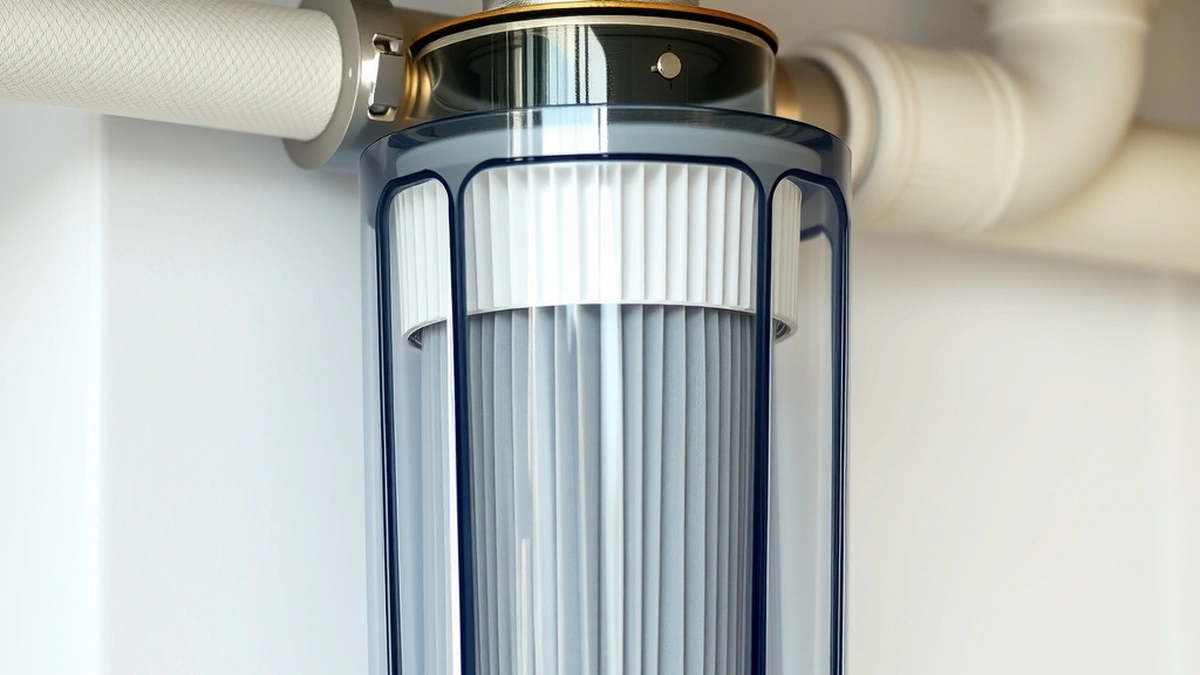
Choose a sediment filter by the particle size you need to catch and the flow it has to pass. Use 20-50 micron ahead of other equipment, 5 micron for general household use, and a 20-inch housing for longer life.
- Equipment cost
- $80 - $400
- Micron range
- 1 - 50 micron
- Cartridge life
- 3 - 6 months
- Typical flow
- 8 - 15 GPM
- Housing sizes
- 10 and 20 inch
Some links on this page are affiliate links.If you buy through them we may earn a commission at no extra cost to you. We do not accept payment for rankings. Read the full disclosure.
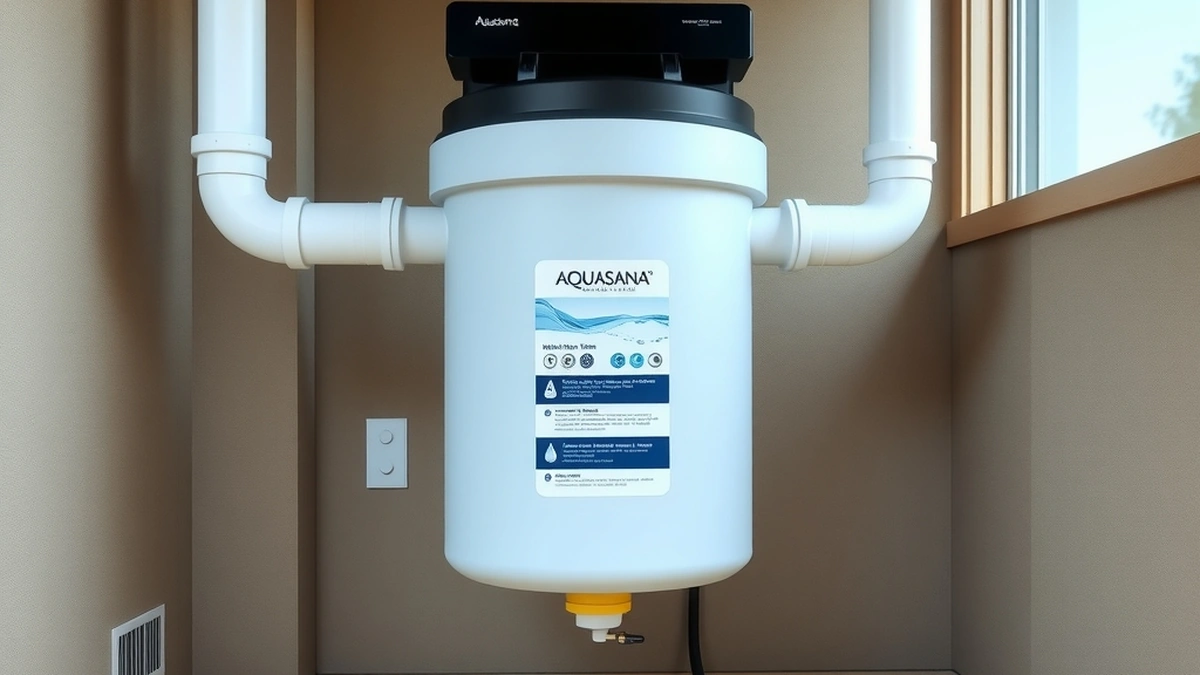
Choose a sediment filter by the particle size you need to catch and the flow it must pass without choking the house. Micron rating and housing size decide both. Equipment runs $80-$400, and the cartridge you choose matters more than the brand on the housing.
What the device is doing
A sediment filter is a mechanical filter that traps particles larger than its rated pore size, measured in microns. Sand, rust flakes, pipe scale, and well fines are the targets.
It does not remove dissolved minerals, chlorine, or metals. Those need carbon, oxidation, or ion exchange, and a sediment filter is usually the first stage that protects them.
That protective role is why placement matters. A sediment cartridge ahead of a carbon block, a softener valve, or a UV sleeve is cheap insurance for equipment that costs 10-20 times more.
Micron rating is the decision
A micron is one millionth of a meter. For context, a human hair is about 70 microns, fine sand is 50-100, and bacteria are 1-5.
A 50-micron cartridge catches sand and large rust but passes silt. A 20-micron cartridge handles most visible turbidity. A 5-micron cartridge is the general-purpose household choice. A 1-micron cartridge is for membrane protection and clogs quickly.
Start coarser than you think you need. A 1-micron cartridge on water with visible grit loads in days, and the resulting pressure drop convinces people that sediment filters are a nuisance rather than a solution.
Pleated versus spun versus bag
| Cartridge type | Cost | Surface area | Cleanable | Best for |
|---|---|---|---|---|
| Pleated | $8 - $25 | High | Rinse once or twice | Wells with grit |
| Spun-bond | $5 - $15 | Medium | No | Municipal, light load |
| String-wound | $6 - $18 | Medium | No | Fine sediment |
| Bag filter | $10 - $30 | High | No | High flow, heavy load |
A pleated cartridge’s folds give it more surface area, so it holds more dirt before the pressure drop becomes noticeable. That is why it is the default on wells.
A spun-bond cartridge is depth-loaded: particles are trapped throughout the media rather than on the surface. It is cheaper and works well on light loads, but it cannot be rinsed.
Housing size and flow
A 10-inch housing is the common residential size and passes 5-10 GPM. A 20-inch housing passes 10-15 GPM and roughly doubles cartridge life.
Whole-house filters commonly support 8-15 GPM. A three-bathroom home peaks near 6-8 GPM, so a 10-inch housing is adequate but a 20-inch housing is more forgiving.
The 20-inch housing costs $30-$70 more and needs 10 inches of clearance below for cartridge removal. In a tight cabinet, the 10-inch is the only option.
A 4.5-inch diameter housing holds a standard cartridge. A slim 2.5-inch housing is for under-sink use and passes much less flow.
Placement in the train
Sediment goes first. Always. It protects everything downstream from the particles that would blind a carbon block or foul a softener valve.
The order is sediment, carbon, softener, UV. Each stage protects the next, and reversing the order shortens the life of the more expensive stages.
If the sediment is iron or manganese rather than sand, a mechanical filter is the wrong tool. It will catch the particles but clog weekly, and the dissolved load stays in the water. Sediment in well water explains how to tell the difference.
A buying sequence
- Look at the water in a clear glass and note color and settling.
- Choose a micron rating based on what you see and what is downstream.
- Pick pleated for wells and spun for municipal supplies.
- Select 10-inch or 20-inch based on space and change frequency.
- Confirm the housing is rated for your line pressure.
- Buy two spare cartridges so a change is never delayed.
What to ignore
Ignore a filter sold only by “stages.” A single 20-inch housing with the right micron rating outperforms three tiny stages in series.
Ignore housings with no pressure rating printed on them. A housing that fails at 80 psi is not a bargain at any price.
Ignore claims that a sediment filter “purifies” water. It removes particles, and that is the whole job. Sediment filter installation covers the cut-in, and sediment filter maintenance covers the change interval and pressure rule. “”
Matching the housing to the plumbing you have
The housing you buy has to fit the pipe, not the other way around. Measure the line at the proposed location before ordering anything.
Most homes have a 3/4-inch main in copper or PEX. A 3/4-inch housing with 3/4-inch ports threads directly with a pair of compression adapters. A 1-inch main needs reducing bushings or a 1-inch housing, and a mismatched port is the reason a filter whistles at high flow.
Thread type matters too. Some housings use NPT threads, some use BSP, and they are not interchangeable. A BSP cap forced onto an NPT port will leak no matter how much tape you use.
Check the pressure rating printed on the housing. Most residential units are rated for 100-125 psi, which is fine on a regulated municipal supply. On a well with a 60 psi cut-out and a failing pressure tank, a spike can exceed that, and a housing failure at pressure is a serious event.
Finally, confirm clearance. A 20-inch housing needs 10 inches below for the sump to drop, plus room to swing a wrench. A housing installed tight to a shelf is a housing that gets changed late, and late changes are how sediment reaches the softener.
Frequently asked questions
What micron rating should I choose?
Twenty to fifty micron for heavy sand and rust ahead of other equipment, five micron for general household filtration, and one micron only to protect a membrane downstream.
Should I choose pleated or spun cartridges?
Pleated cartridges have more surface area and can be rinsed once, which suits wells with grit. Spun-bond cartridges are cheaper and hold more dirt but cannot be cleaned.
Is a 10-inch or 20-inch housing better?
A 20-inch housing costs $30-$70 more and roughly doubles cartridge life, which usually wins on a well. A 10-inch housing fits where space is tight.
How much flow can a sediment filter handle?
A 10-inch housing typically passes 5-10 GPM, a 20-inch housing 10-15 GPM. Match it to peak household demand or the far fixtures lose pressure.
Do I need a sediment filter before a carbon filter?
Yes. Sediment first protects the carbon block from being blinded by particles, which is the most common reason a carbon cartridge fails early.
How often does a sediment cartridge need changing?
Every 3-6 months on municipal water and every 4-8 weeks on a well. A 10 psi drop from the clean pressure reading is the signal to change sooner.
Sources
Some links are affiliate links.If you buy through them we may earn a commission at no extra cost to you. We do not accept payment for rankings. Read the full disclosure.