How to choose a sulfur filter
Choose a sulfur filter by hydrogen sulfide level and whether bacteria are present. See air injection vs chemical feed and the $1,000-$3,000 range.
Choose a sulfur filter by hydrogen sulfide concentration and by whether sulfur bacteria are present. Air injection handles 1-5 ppm; chemical oxidation is for higher loads and bacteria. Installed cost runs $1,000-$3,000.
- Installed cost
- $1,000 - $3,000
- Odor threshold
- About 0.5 ppm
- Typical flow
- 8 - 15 GPM
- Backwash
- Every 3 - 7 days
- Media life
- 2 - 5 years
Some links on this page are affiliate links.If you buy through them we may earn a commission at no extra cost to you. We do not accept payment for rankings. Read the full disclosure.
Choose a sulfur filter by hydrogen sulfide concentration and by whether sulfur bacteria are present. Air injection covers 1-5 ppm without bacteria; chemical oxidation handles higher loads and infected wells. Installed cost runs $1,000-$3,000, and the design decision drives most of that spread.
Identify the problem before the product
Hydrogen sulfide is a gas that smells like rotten eggs at concentrations as low as 0.5 ppm. Sulfur bacteria are organisms that produce the same gas and leave slime in toilet tanks and on fixtures.
The difference decides the equipment. A gas problem is a treatment problem. A bacteria problem is a well problem first and a treatment problem second, because the well reinfects whatever you install.
Test the water for hydrogen sulfide concentration, iron, manganese, and pH. Check the toilet tank for slime. If the slime is there, plan on shock chlorination before or alongside the filter.
Air injection versus chemical oxidation
| Design | Cost | H2S range | Bacteria | Extra hardware |
|---|---|---|---|---|
| Air injection | $1,000 - $2,000 | 1 - 5 ppm | No | Compressor, vent |
| Catalytic carbon | $900 - $1,800 | Under 1 ppm | No | Drain only |
| Chemical oxidation | $1,800 - $3,000 | 5+ ppm | Yes | Pump, solution tank |
| Ozone | $2,000 - $3,000 | High load | Yes | Generator, contact tank |
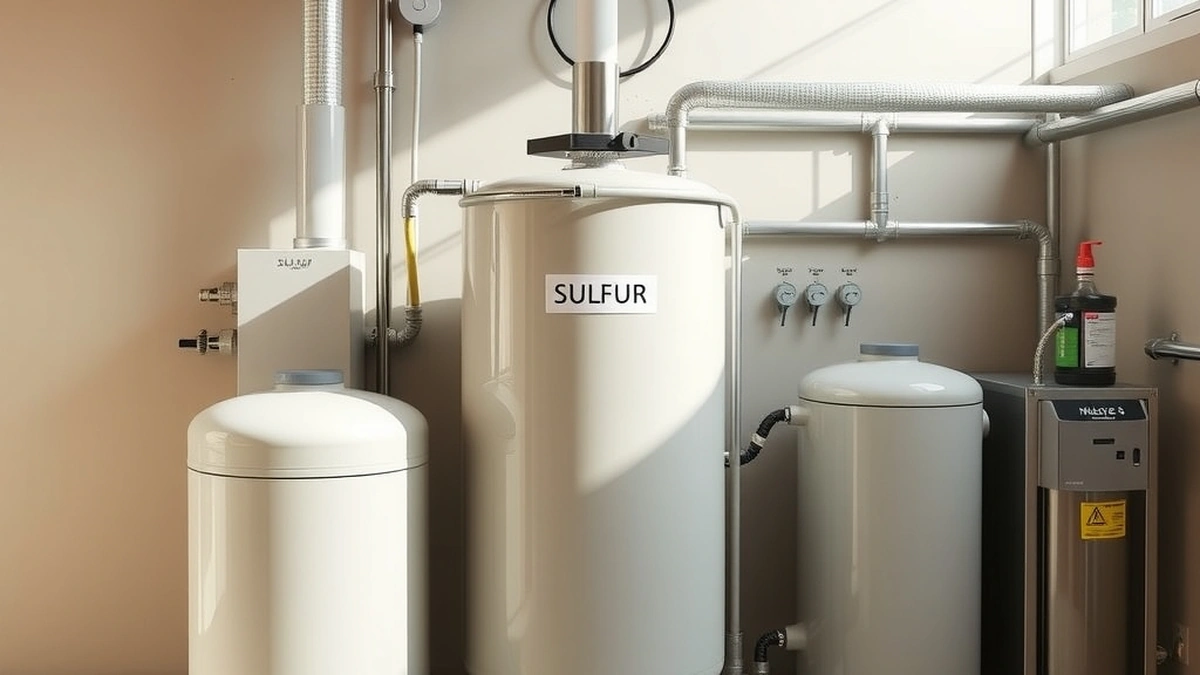
Air injection is the workhorse: no chemicals to store, a compressor that needs occasional attention, and a vent. It handles most residential wells.
Chemical oxidation is what you buy when the load is high or the well is infected. It adds a metering pump and a solution tank, and it needs monthly checks.
Ozone sits at the top. It is effective and has no chemical storage, but the generator is expensive and the contact tank takes floor space.
Sizing by concentration and flow
Concentration sets media volume, flow sets tank diameter. At 2 ppm and 8 GPM, a 1.5-cubic-foot tank is typical. At 5 ppm and 12 GPM, a 2.5-cubic-foot tank with a 12-inch diameter is the starting point.
Backwash is the constraint. A filter that backwashes at 8 GPM needs a well that can supply it for 15 minutes. A 5 GPM well cannot support a large air injection tank without a storage tank or a different design.
If the well is marginal, a smaller tank with more frequent backwash is the compromise. It is not ideal, but it works, and it is better than a filter that never cleans properly.
The vent and the drain
Air injection needs a vent that terminates outdoors or in a ventilated space. A vent that ends in a closed closet moves the smell indoors, which defeats the purpose.
All designs need a drain for backwash: 50-150 gallons per cycle, every 3-7 days. A floor drain, standpipe, or dry well within 10-15 feet.
Chemical systems also need a solution tank location and a power outlet for the pump. That is 3-4 square feet of floor space and a second electrical draw.
What the water will be like afterward
A working sulfur filter removes the odor at the tap. It does not necessarily remove the odor from the hot water heater, which can hold sulfur-laden water for days after the filter is installed.
Flush the water heater after installation. That is a 30-minute job and it prevents a week of “the filter didn’t work” calls.
Iron often arrives with sulfur. If the test shows both, a combined iron and sulfur filter is usually the right purchase, and the media volume is sized to the higher load.
A buying sequence
- Test hydrogen sulfide, iron, manganese, and pH.
- Check for sulfur bacteria with a lab culture or a slime inspection.
- Confirm well yield against backwash demand.
- Choose air injection for gas-only problems under 5 ppm.
- Choose chemical oxidation for high loads or bacteria.
- Confirm vent route, drain, and an outlet before ordering.
Do the well work before the equipment work. Shock chlorination at $100-$300, or a continuous disinfection system at $600-$1,500, comes first when bacteria are present. Installing a filter on an infected well is how people end up replacing media at year two and concluding that sulfur filters do not work.
Get two quotes and compare the tank size, media volume, and design. A quote that says “sulfur filter, installed” without those three numbers is not comparable to anything, and it is usually the low bid that grows after the work starts.
Ask what happens during backwash. A filter that discharges to a dry well needs the well to accept 50-150 gallons every few days, and a dry well that is already marginal will back up in spring. A floor drain or a routed line is more reliable if the grade allows it.
What to ignore
Ignore a filter recommendation based on smell alone. Concentration in ppm is what sizes the tank, and two wells that smell identical can differ by a factor of five.
Ignore “chemical-free” as a virtue when bacteria are present. A well with sulfur bacteria needs disinfection, and a filter that avoids chemicals will not fix it.
Ignore a design recommendation made without a bacteria test. Air injection is the wrong tool for an infected well, and no amount of media volume compensates.
Ignore media life claims without a replacement price. A $900 tank with $600 media every two years costs more than a $1,400 tank with $250 media every four. Sulfur filter cost covers equipment bands, sulfur filter installation covers the vent and drain work, and hydrogen sulfide treatment explains the chemistry behind the design choice. “”
Frequently asked questions
What size sulfur filter do I need?
Size to both concentration and flow. At 3 ppm and 10 GPM, a 2-cubic-foot air injection tank with a 12-inch diameter is typical. Above 5 ppm, most installers move to chemical oxidation.
How do I know if I have sulfur bacteria or just hydrogen sulfide gas?
Bacteria leave slime in toilet tanks and produce odor that returns within days of treatment. Gas alone leaves no slime. A lab culture confirms it.
Is air injection enough for 6 ppm hydrogen sulfide?
Sometimes, with a larger tank and more frequent backwash. Above 5 ppm, chemical oxidation is the more reliable choice, and the cost difference is $500-$1,000.
Does a sulfur filter need a vent?
Air injection designs do, because they draw air into the tank and must vent excess. Catalytic and chemical designs need a drain but not a roof vent.
Can a sulfur filter go before a softener?
Yes, and it should. Sulfur fouls resin, so oxidation and filtration come first, then softening, then carbon polishing.
How much does sulfur filter maintenance cost?
One hundred to two hundred fifty dollars per year in prefilters, testing, and chemical feed supplies, plus media replacement every 2-5 years at $250-$700.
Sources
Some links are affiliate links.If you buy through them we may earn a commission at no extra cost to you. We do not accept payment for rankings. Read the full disclosure.