What a Refrigerator Water Filter Costs: Yearly Math
Fridge filters run $20 - $60 each and need changing every 3 - 6 months. See OEM versus compatible pricing and the five-year total for both.
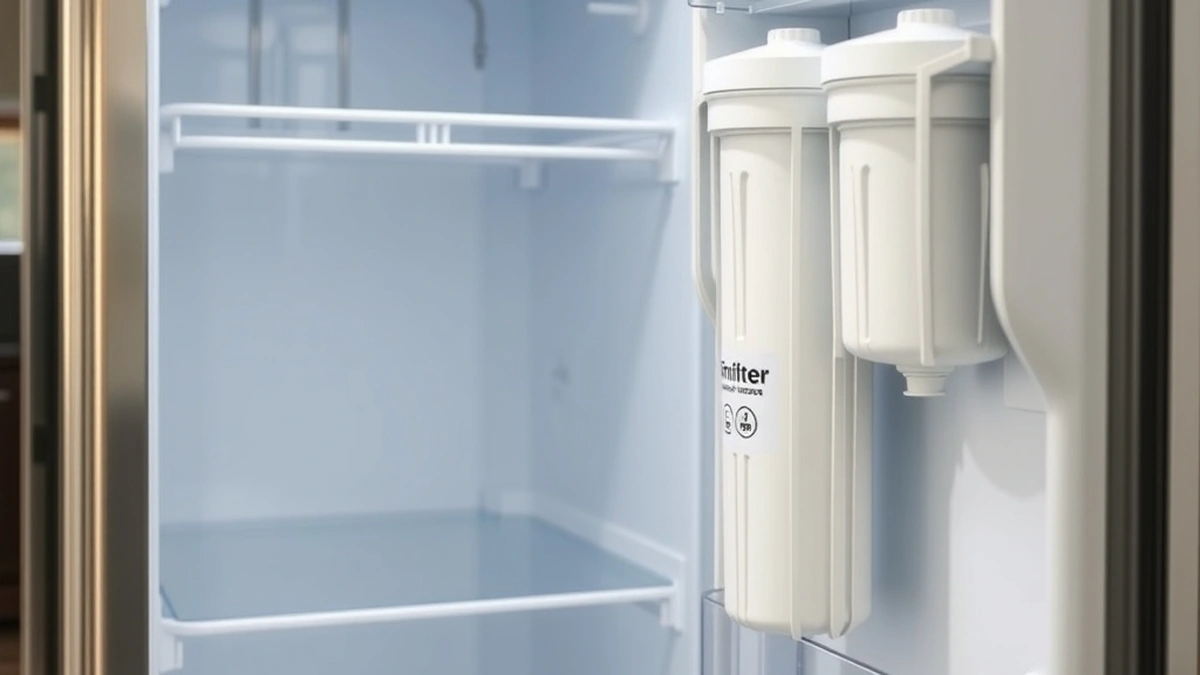
A refrigerator water filter costs $20 - $60 and needs changing every 3 - 6 months, which is $60 - $240 a year. OEM filters cost $35 - $60, compatible replacements $15 - $30, and the housing inside the fridge rarely fails.
- OEM filter
- $35 - $60
- Compatible filter
- $15 - $30
- Change interval
- 3 - 6 months
- Annual cost
- $60 - $240
- Five-year total
- $300 - $1,200
Some links on this page are affiliate links.If you buy through them we may earn a commission at no extra cost to you. We do not accept payment for rankings. Read the full disclosure.
A refrigerator water filter costs $20 - $60 and needs changing every 3 - 6 months, which is $60 - $240 a year. OEM filters run $35 - $60, compatible replacements $15 - $30, and the housing inside the fridge rarely fails.
OEM Filters
The original manufacturer’s filter carries the fridge brand and a part number. It costs $35 - $60 at retail.
The advantage is fit and certification. The filter is designed for the housing and tested for the contaminants the brand claims.
The disadvantage is price. A household changing three a year spends $105 - $180, and the price rarely drops.
Compatible Filters
Third-party replacements cost $15 - $30. Many are made in the same factories and carry their own certifications.
The quality varies. A compatible filter that carries the same NSF listing and fits the housing is a reasonable substitute.
A cheap filter with no listing may fit and may reduce chlorine, and its claims are unverified.
Annual and Five-Year Cost
| Filter type | Price | Changes per year | Annual | Five-year |
|---|---|---|---|---|
| OEM | $35 - $60 | 2 - 4 | $70 - $240 | $350 - $1,200 |
| Compatible, certified | $15 - $30 | 2 - 4 | $30 - $120 | $150 - $600 |
| Compatible, uncertified | $8 - $15 | 2 - 4 | $16 - $60 | $80 - $300 |
Five-year totals include the filters and assume the housing lasts. They do not include a bypass plug or a replacement housing.
What the Filter Removes
Most refrigerator filters are certified to NSF/ANSI 42 for chlorine, taste, and odor. That is the basic claim.
Some carry NSF/ANSI 53 for lead, cysts, or other health-related contaminants. The listing names which ones.
A filter that removes chlorine does not necessarily remove lead, and the price is similar. Check the claim on the box.
OEM vs Compatible
| Factor | OEM | Compatible |
|---|---|---|
| Price | $35 - $60 | $15 - $30 |
| Fit | Guaranteed | Usually, not always |
| Certification | Brand-listed | Varies |
| Warranty impact | None | Can void a fridge warranty if it leaks |
| Availability | Dealer and retail | Online |
A leaking compatible filter can damage the fridge, and some manufacturers exclude water damage caused by non-OEM parts. That risk is small and real.
A household that wants the lowest cost should buy a certified compatible filter from a seller with a return policy. A household that wants certainty should buy OEM.
Steps to Replace
- Locate the filter, usually inside the fridge compartment or in the base grille.
- Twist or pull the old cartridge out, depending on the model.
- Remove the protective cap from the new filter.
- Insert and twist until it locks, or push until it seats.
- Run 2 - 3 gallons through the dispenser to flush carbon fines.
- Reset the filter indicator if the fridge has one.
Skipping the flush leaves black carbon dust in the first glass, which alarms people who have not seen it before.
What the Cost Does Not Include
A replacement housing at $40 - $120 if the housing cracks or the latch breaks.
A service call at $100 - $200 if the dispenser valve fails, which is a different part from the filter.
Skip it if the household already has an under-sink RO or a whole-house carbon filter. The fridge filter duplicates the treatment and adds cost.
Skip it if the water is mainly used for ice and the household does not drink from the dispenser.
Use a bypass plug rather than leaving an old filter in place, because a spent filter can harbor bacteria and restrict flow.
The filter matters if the fridge is the main drinking water source and the supply is chlorinated.
It matters more if the household includes someone who needs lead reduction, and the filter is certified for it.
It matters least if the water is already treated at the kitchen tap.
Buy a multi-pack, which drops the per-filter price by 20 - 30 percent.
Buy certified compatible filters rather than OEM if the savings matter and the seller accepts returns.
Replace on the rated interval rather than early. A filter changed at three months when the rating is six wastes money without improving the water.
One more line for the budget: a fridge filter is not a substitute for a water test. If the household is on a private well, the filter does not remove nitrate, arsenic, or bacteria, and only a lab panel will reveal those.
The same applies to a home with old plumbing. A fridge filter certified for chlorine will not stop lead from a service line, and a lead-certified cartridge costs $10 - $20 more. That is a small premium for a claim that matches the actual risk.
Skip the fridge filter if the household already has an under-sink RO or a whole-house carbon filter, since it duplicates the treatment and adds cost. The filter matters most when the fridge is the main drinking water source and the supply is chlorinated, or when a lead-certified cartridge is needed for a specific household.
Savings come from multi-packs, which drop the per-filter price by 20 - 30 percent, and from certified compatible filters when the seller accepts returns. Replace on the rated interval rather than early, because a filter changed at three months when the rating is six wastes money without improving the water.
A final note on the indicator light: it is usually a timer, not a sensor. The fridge counts days or gallons and lights up on schedule, so a low-use household may be replacing a filter that still has capacity, and a high-use one may need a change before the light comes on.
For the broader category, see under-sink water filter cost. For certification, see what does reverse osmosis remove. For whole-house treatment, see whole house water filter cost.
Frequently asked questions
How much does a refrigerator water filter cost?
OEM filters run $35-$60 and compatible replacements $15-$30. Most fridges need a new filter every 3-6 months.
Are compatible filters as good as OEM?
Some are, and some are not. A compatible filter should carry the same certification and fit the housing. Check the listing before buying a multi-pack.
How often should a fridge filter be changed?
Every 3-6 months, or at the rated gallon capacity, or when the filter indicator light comes on.
Does a refrigerator filter remove lead?
Only if it is certified for lead reduction. Many are certified for chlorine and taste, which is a different claim.
Can I run the fridge without a filter?
Yes, with a bypass plug on most models. The water is unfiltered, and the ice maker still works.
Why is my water dispenser slow?
A clogged filter is the usual cause. Replace it and check the line for kinks before assuming the valve has failed.
Sources
Some links are affiliate links.If you buy through them we may earn a commission at no extra cost to you. We do not accept payment for rankings. Read the full disclosure.