
refrigerator water filter installation: what it involves
Fridge filter replacement takes 2 minutes with no tools. See housing types, bypass plugs, flushing, and the $30-$70 annual cartridge cost.
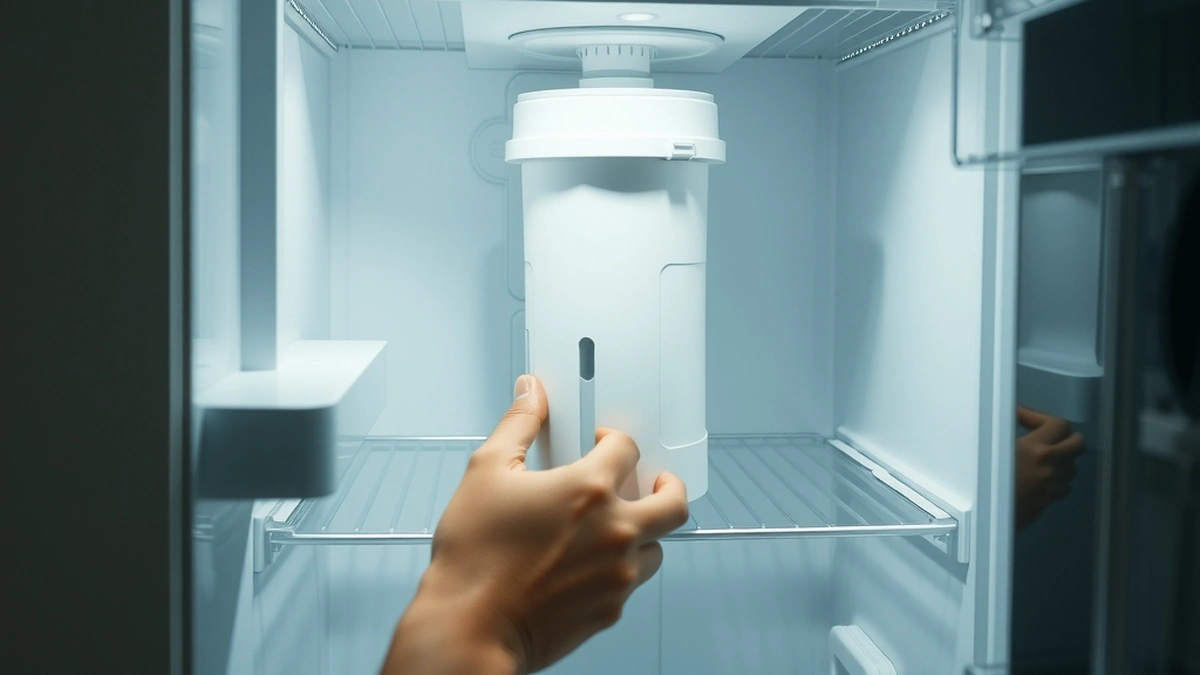
Refrigerator water filter installation takes about 2 minutes and no tools: twist out the old cartridge, twist in the new one, and run 2-3 gallons through the dispenser. Cartridges cost $15-$70 each and last about 6 months.
- Time
- 2 - 5 minutes
- Tools
- None
- Cartridge cost
- $15 - $70
- Cartridge life
- 6 months
- Flush volume
- 2 - 3 gallons
Some links on this page are affiliate links.If you buy through them we may earn a commission at no extra cost to you. We do not accept payment for rankings. Read the full disclosure.
Refrigerator water filter installation takes about 2 minutes and requires no tools on most models. You twist out the old cartridge, twist in the new one, and run 2-3 gallons through the dispenser. Cartridges cost $15-$70 and last roughly six months.
Three housing types
A refrigerator water filter is a small carbon cartridge inside the fridge that treats water for the dispenser and ice maker. The housing design decides how the change works.
Twist-in cartridges sit in the fridge ceiling or a side wall. A quarter turn releases them, and a quarter turn seats the new one. This is the most common design and the easiest.
Pull-down cartridges sit behind the crisper drawers or in the grille at the base. You release a latch, pull the cartridge straight out, and push the new one in until it clicks.
Inline cartridges sit behind the fridge on the water line, in a housing with a sump that unscrews. These take 5 minutes and sometimes a supplied wrench.
Changing it, step by step
- Locate the filter housing; check the manual if it is not obvious.
- Turn off the ice maker to prevent a cycle during the change.
- Twist or pull the old cartridge out, keeping it upright to avoid drips.
- Remove the protective cap from the new cartridge and align any tabs.
- Seat the cartridge and turn until it locks or clicks.
- Run 2-3 gallons through the dispenser, discarding the water, until flow is steady.
- Reset the filter indicator if the fridge has one.
The flush is not optional. New carbon cartridges shed fines that show up as grey or cloudy water, and air in the line makes the dispenser sputter for the first several glasses.
Matching the cartridge
| Housing style | Change time | Typical cost | Common issue |
|---|---|---|---|
| Twist-in (in fridge) | 2 minutes | $25 - $70 | Cross-threading the cap |
| Pull-down (base grille) | 2 minutes | $20 - $60 | Not clicking fully into place |
| Inline (behind fridge) | 5 minutes | $15 - $45 | Sump O-ring pinched |
| Built-in pitcher | 2 minutes | $15 - $40 | Wrong model fit |
Model numbers matter. A cartridge that looks identical but is a millimeter off will leak or fail to seat, and the fridge will bypass it or stop dispensing. Buy by the model number printed on the old cartridge or in the manual, not by a photo.
Certification matters more than brand. Look for an NSF/ANSI 42 listing for taste and chlorine, or 53 for lead and cysts. A generic cartridge without a listing may fit and flow but has no verified reduction claim.
What it treats, and what it does not
A fridge filter is a carbon cartridge. It reduces chlorine, taste, and odor compounds, and some models add lead or cyst reduction. That is the realistic scope.
It does not soften water. If the ice maker is scaling up, the fix is a softener at the entry point, not a different cartridge. It does not remove nitrate, and it does not address bacteria.
If the water has a sulfur odor, a fridge filter will exhaust in weeks and the ice will still smell. That problem belongs at the well or the main line, not at the dispenser.
For the broader picture of what carbon does, carbon block versus GAC explains the media difference, and chlorine in tap water covers what the cartridge is actually removing.
Cost per year
One cartridge every 6 months at $35 is $70 per year. A $60 OEM cartridge is $120 per year. A $20 generic is $40 per year, if it is certified and fits.
That is the cheapest filtration in the house per year, which is why the fridge filter is often the only treatment a household runs. It is also the one most often left unchanged for two years, at which point it is a flow restrictor with a spent carbon bed.
Set a reminder when you change it. The indicator light on many fridges is a timer, not a sensor, and it is accurate enough to trust.
When to bypass or remove it
A bypass plug replaces the cartridge when filtration is not wanted: winterizing a cabin, storing a fridge, or waiting for a replacement to arrive. It keeps the dispenser working with unfiltered water.
Some homeowners remove the fridge filter entirely and install a dedicated under-sink filter feeding the fridge line. That moves the cartridge to a larger housing with cheaper replacements, at the cost of running a line.
If the fridge line is fed by a reverse osmosis system, do not install a second carbon cartridge downstream unless the RO system lacks a post-filter. Two carbon stages in series just add pressure drop.
For the under-sink alternative, under sink water filter installation covers the tee and tubing. And if the ice tastes off after a cartridge change, cloudy water explains the air-and-fines phase that clears after a proper flush.
Installation mistakes worth avoiding
The first is forcing a cartridge that does not want to seat. Plastic housings have keyed tabs, and a cartridge inserted at the wrong angle will turn partway and then stop. Forcing it cracks the receiver, which is a $150-$400 repair on a fridge that otherwise works fine.
The second is skipping the ice maker shutoff. If the auger runs while the filter is out, the line can draw air and the ice maker will produce hollow or cloudy cubes for a day.
The third is buying by photo. Cartridge model numbers change between fridge generations that look identical, and a filter that is a few millimeters short will bypass water around the media instead of through it. Check the number stamped on the old cartridge, then check the certification listing on the replacement.
Frequently asked questions
How long does it take to install a refrigerator water filter?
About two minutes for a twist-in cartridge and five minutes for a housing that needs the sump removed. No tools are required on most models, though some need a quarter turn with a supplied wrench.
How often should a refrigerator water filter be replaced?
Every six months, or when the filter indicator light comes on. A 200-gallon rating means roughly 1 gallon per day for a household that uses the dispenser regularly.
Do I need to flush a new refrigerator filter?
Yes. Run 2-3 gallons through the dispenser and discard it, which clears carbon fines and air. Skipping this step leaves grey water and a sputtering dispenser for the first few glasses.
What is a bypass plug and do I need one?
A bypass plug replaces the cartridge when you do not want filtration. It is useful for winterizing a vacation home or when a filter housing leaks, but it means unfiltered water at the dispenser.
Why is my water dispenser slow after a filter change?
Air in the line, usually. Run water until the sputtering stops. If flow stays weak, the cartridge is not seated fully or is the wrong model for the housing.
Are generic refrigerator filters as good as OEM?
Some are, and some are not certified. Look for an NSF/ANSI 42 or 53 listing on the cartridge or box. An uncertified filter may fit but not reduce what the OEM filter was tested to remove.
Sources
Some links are affiliate links.If you buy through them we may earn a commission at no extra cost to you. We do not accept payment for rankings. Read the full disclosure.


