
under sink water filter installation: what it involves
Under sink filter installation takes 30-90 minutes, needs no permit, and costs $0-$200 in labor. See the supply tee, faucet hole, and leak-check steps.
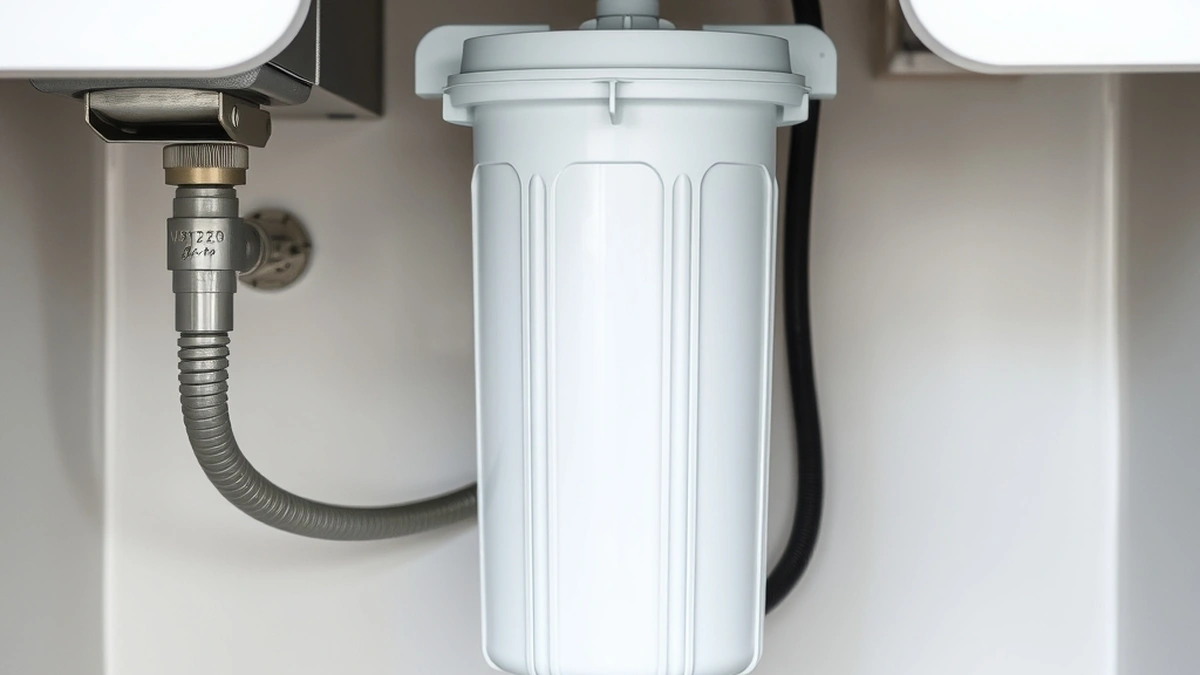
Under sink water filter installation takes 30-90 minutes and costs nothing in labor if you do it yourself, or $100-$250 if a plumber does. The job is a supply tee, a mounting bracket, tubing, and optionally a new faucet hole.
- DIY time
- 30 - 90 minutes
- Labor if hired
- $100 - $250
- Equipment
- $60 - $400
- Faucet hole
- 7/8 inch
- Cartridge life
- 6 - 12 months
Some links on this page are affiliate links.If you buy through them we may earn a commission at no extra cost to you. We do not accept payment for rankings. Read the full disclosure.
Under sink water filter installation takes 30-90 minutes and costs $100-$250 in labor if you hire it out, or nothing beyond parts if you do it yourself. The work is a tee on the cold supply, a bracket for the housing, tubing to a dedicated faucet, and a leak check. No drain line, no electrical work, no permit in most jurisdictions.
What the install actually consists of
An under sink water filter is a point-of-use system mounted in the cabinet below the kitchen sink, feeding a separate drinking water faucet. Installation connects it to the cold supply line and gives it its own outlet at the counter.
Four connections define the job: the supply tee, the housing inlet, the housing outlet, and the faucet shank. Every one is a compression or push-fit fitting on a residential unit. That is why the job is friendly to a homeowner with basic tools.
The one irreversible step is the faucet hole. If the sink has a fourth hole with a soap dispenser or a plugged opening, you reuse it. If not, you drill.
The parts and what they cost
| Part | Cost | Notes |
|---|---|---|
| Filter system | $60 - $400 | Single stage to two-stage with faucet |
| Supply tee | $8 - $20 | 3/8-inch compression or push-fit |
| Tubing | $8 - $25 | 1/4-inch or 3/8-inch, 6-10 feet |
| Drinking water faucet | $25 - $120 | Often included with the system |
| Hole saw or step bit | $15 - $40 | Only if drilling |
| Labor, if hired | $100 - $250 | 1-2 hours at plumbing rates |
Add the DIY path: $60 system + $10 tee + $12 tubing + $20 bit = $102 for a basic single-stage install. A two-stage system with a lead-certified carbon block and a decent faucet lands at $250-$400 in parts.
Drilling the counter, carefully
A standard drinking water faucet needs a 7/8-inch hole. Check the faucet spec first, because some need 1/2 inch and some need 1-3/8 inches, and a hole is not adjustable.
On stainless steel, use a step bit with cutting oil at low speed. On quartz or granite, use a diamond hole saw with water for cooling, and keep the bit wet the whole time. On laminate, drill from the top with a backing block to prevent chip-out.
If the counter is stone and you have never drilled it, the $100-$250 plumber visit is cheap insurance. A cracked countertop costs more than every filter on this page combined.
Single stage versus two stage
A single-stage carbon filter at $60-$150 handles chlorine taste and odor at one tap. It is the cheapest way to get better drinking water and it changes one cartridge every 6-12 months.
A two-stage system at $150-$400 adds a sediment stage or a second carbon block for lead, cysts, or PFAS. Cartridges run $40-$120 per year instead of $25-$60. The extra stage is worth it when a lab report names something the first stage cannot hold.
An under-sink RO system is a different category at $300-$900 installed. It adds a membrane, a storage tank, and a drain connection, and it removes 80-95 percent of dissolved solids. If total dissolved solids or nitrate is the concern, reverse osmosis system cost is the relevant page, not a carbon filter.
For a direct comparison of media types in the same housing, carbon block versus GAC explains why a block is usually the better choice under a sink: higher contact density in a smaller space.
Pressure and flow at one tap
Under-sink filters run on house pressure, typically 40-70 psi, and most units are rated for 20-80 psi. Below 20 psi the flow from a 1/4-inch line is a trickle. Above 80 psi, add a $25-$40 regulator to protect the housing.
Flow at the faucet is usually 0.5-1.5 GPM, which is fine for filling a glass or a pot but slow for cooking. If you want filtered water at the main faucet too, that is a different product with a diverter or a larger flow rating.
The tubing size matters more than people expect. A 1/4-inch line at 50 psi delivers about 0.6 GPM; a 3/8-inch line delivers roughly double. If the faucet feels slow, the line is usually the reason, not the cartridge.
Six steps to install it
- Close the cold supply valve and open the faucet to release pressure.
- Fit the supply tee between the valve and the faucet riser.
- Mount the housing bracket to the cabinet wall, high enough for cartridge clearance.
- Connect supply tubing to the inlet and faucet tubing to the outlet.
- Open the valve and check every fitting for weeping over 10 minutes.
- Flush the new cartridge for 2-5 minutes before drinking the water.
What changes the job
The faucet hole is the biggest variable. An existing hole makes this a 30-minute job. A stone counter with no hole makes it a two-hour job with a specialist bit and a nervous homeowner.
The second variable is the shutoff valve. A working quarter-turn valve is a 5-minute connection. A seized gate valve may not close at all, which turns a filter install into a valve replacement at $150-$350.
Third is cabinet space. A two-stage housing needs about 14 inches of height below the shelf and 4 inches of clearance in front. Measure before buying, especially in a sink base with a disposal and a drawer above.
If the goal is better water at every tap instead of one, whole house water filter installation covers the point-of-entry version, and whole house versus under sink filter explains the tradeoff in cost and maintenance.
Frequently asked questions
How long does under sink water filter installation take?
Thirty to ninety minutes. The variable is the faucet: reusing an existing hole takes 30 minutes, while drilling a new hole in a countertop adds 20-40 minutes and requires the right bit.
Do I need a plumber to install an under sink filter?
No. Most systems use a push-fit tee on the cold supply and require no soldering. A plumber is worth hiring if the shutoff valve is seized or the countertop is stone.
What size hole does a drinking water faucet need?
Most standard filter faucets need a 7/8-inch hole, though some require 1/2 inch or 1-3/8 inches. Check the faucet spec before drilling, not after.
Can I install an under sink filter without drilling?
Yes, if the sink already has a fourth hole or you use a countertop diverter. Otherwise a filter that shares the main faucet, such as a faucet-mount unit, avoids drilling entirely.
What water pressure does an under sink filter need?
Between 20 and 80 psi for most units. Below 20 psi the flow is slow; above 80 psi you should add a regulator, since housings are typically rated to 100 psi.
How often do under sink filter cartridges need changing?
Every 6-12 months for carbon stages, or sooner if flow drops noticeably. Sediment pre-stages in two-stage systems usually need changing every 3-6 months.
Sources
Some links are affiliate links.If you buy through them we may earn a commission at no extra cost to you. We do not accept payment for rankings. Read the full disclosure.


