Whole-House vs Under-Sink Filter: Cost and Coverage.
Compare whole-house and under-sink water treatment systems by installed cost, flow rate, maintenance, and what each setup actually treats.
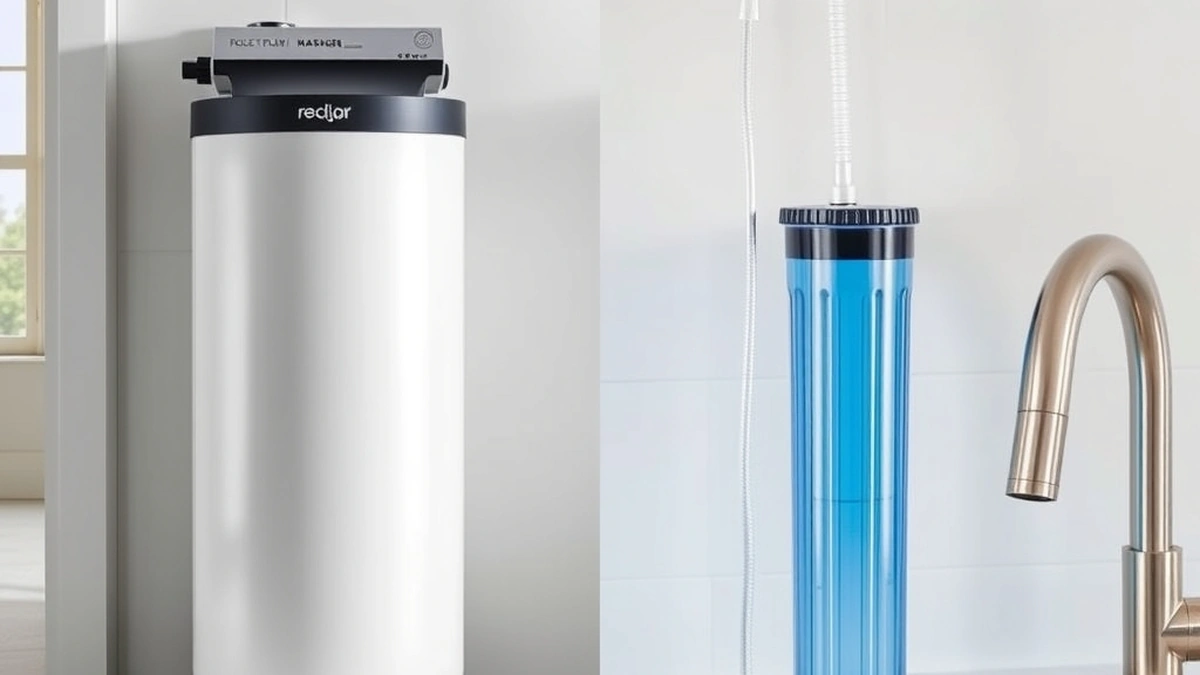
Install a whole-house system to protect plumbing and fixtures throughout the home; add an under-sink unit if you only need treated drinking and cooking water at one tap.
- Whole-house primary role
- Point-of-entry treatment for all plumbing and fixtures
- Under-sink primary role
- Point-of-use treatment for drinking and cooking water
- Whole-house flow rate
- 8-15 gallons per minute
- Under-sink RO installed cost
- $300-$900
- Whole-house carbon installed cost
- $500-$1,800
Some links on this page are affiliate links.If you buy through them we may earn a commission at no extra cost to you. We do not accept payment for rankings. Read the full disclosure.
A whole-house filter treats water where it enters the home, while an under-sink filter treats water at one faucet. Choose whole-house coverage when you want to protect plumbing, water heaters, and fixtures throughout the house. Choose under-sink treatment when your goal is filtered drinking and cooking water at a single tap.
How Whole-House and Under-Sink Systems Differ
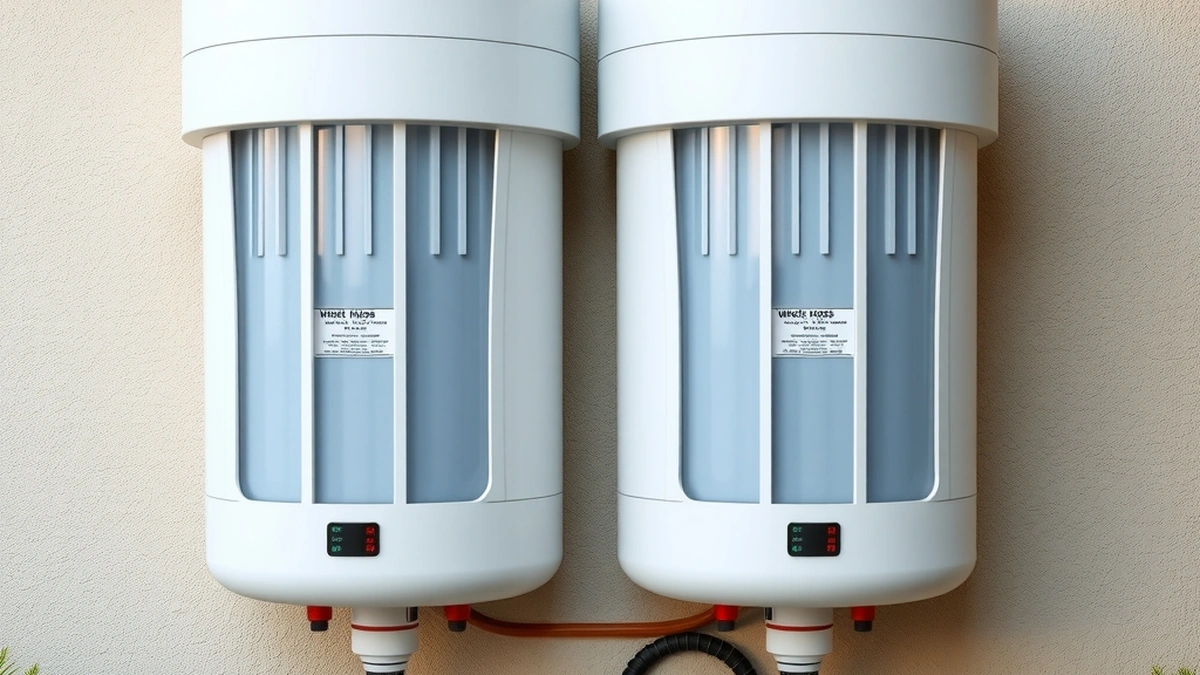
Whole-house equipment is point-of-entry (POE). It sits on the main line after the meter or pressure tank, so every shower, toilet, washing machine, and faucet receives treated water. Under-sink equipment is point-of-use (POU). It connects to one cold-water line and usually has a dedicated faucet at the sink.
Flow rate is the biggest mechanical difference. Whole-house filters are sized for household demand and commonly deliver 8-15 gallons per minute. Under-sink reverse osmosis (RO) units produce a much smaller flow and rely on a storage tank to fill a glass or pitcher. If you try to run a whole-house flow through an under-sink line, pressure drops quickly.
Installed Cost Comparison
Under-sink RO is the lower-cost entry point. Equipment runs $200-$600, and installed cost is typically $300-$900. Ongoing cost is estimated at $60-$150 per year for cartridges and membrane replacement. The membrane itself lasts about 2-3 years.
Whole-house carbon filtration costs $500-$1,800 installed. A water softener costs $1,200-$4,500 installed, including equipment at $600-$2,500 and installation at $500-$1,500. Whole-house RO is substantially more expensive, at $3,000-$8,000 installed.
Here is how installed cost compares across common configurations:
| System type | Installed cost (USD) | Typical annual cost (USD) |
|---|---|---|
| Under-sink RO | $300-$900 | $60-$150 |
| Whole-house carbon filter | $500-$1,800 | $80-$300 |
| Water softener | $1,200-$4,500 | $120-$400 for salt |
| Whole-house RO | $3,000-$8,000 | Varies by water volume |
For more detail on softener pricing, see how much does a water softener cost and water softener installation cost. For whole-house filter pricing, see whole house water filter cost.
What Each System Treats
Neither system treats everything automatically. A whole-house carbon filter is typically selected for chlorine, sediment, or general taste and odor reduction across the home. A softener addresses hardness minerals measured in grains per gallon (GPG): soft is 0-3 GPG, moderate is 3-7 GPG, hard is 7-10 GPG, and very hard is 10 GPG or higher.
Softener capacity ranges from 24,000 to 64,000 grains. To size a system, multiply household size by daily water use and hardness. For example, four people using 75 gallons per day at 10 GPG hardness create a daily load of 4 × 75 × 10 = 3,000 grains. A 32,000-grain softener would theoretically handle about 10 days of that load before regeneration, not accounting for reserve capacity.
Iron treatment has limits. Softeners can handle limited clear-water iron, often cited around 2-3 ppm depending on the unit and conditions. Higher iron or sulfur usually calls for dedicated equipment: iron filters at $800-$2,500 installed and sulfur filters at $1,000-$3,000 installed. See iron filter cost for more.
Under-sink RO is selected when the concern is specific to drinking water. RO rejection rates are estimated at 80-95 percent depending on the contaminant and membrane condition. Waste ratio is typically 3-4 gallons sent to drain for every gallon of product water, so a household using 3 gallons of RO water per day could send 9-12 gallons to drain. That trade-off matters in areas with metered sewer or septic constraints.
Maintenance and Operating Cost
Under-sink RO maintenance is cartridge-based. Carbon and sediment pre-filters commonly require changes on a schedule measured in months, and the RO membrane lasts 2-3 years. Annual running cost is estimated at $60-$150.
Whole-house carbon cartridges run $80-$300 per year and usually need replacement every 6-12 months. Sediment cartridges may need replacement every 3-6 months depending on incoming water quality. Softener salt runs $120-$400 per year, using 8-12 pounds per regeneration. Resin rebed costs $300-$600 and is typically needed after 8-12 years, while the softener itself may last 10-15 years.
UV disinfection, if added to either configuration, uses a lamp replaced every 12 months at $30-$90. See uv water purifier cost for details.
Sizing and Installation Considerations
Whole-house systems need space near the main shutoff, a drain connection for backwashing filters or softeners, and enough inlet pressure to maintain 8-15 GPM through the media. Installation often involves cutting into the main line and may require a bypass for outdoor irrigation so you do not treat water used on lawns.
Under-sink units need cabinet space, typically under the kitchen sink, plus a drain saddle for RO waste and a dedicated faucet hole in the countertop or sink deck. Renters should confirm that modifications are allowed, and homeowners should check local plumbing codes.
A lab water test costs $40-$150 and should come before any equipment decision. Test results determine whether you need hardness reduction, iron removal, sediment filtration, or RO, and whether one tap or the whole house requires treatment.
When to Choose One, Both, or Neither
Choose whole-house treatment if hardness is causing scale in the water heater, iron is staining fixtures, or chlorine is affecting every tap. The benefit is household-wide protection, but the cost and maintenance are higher than a single under-sink unit.
Choose under-sink RO if your main concern is drinking and cooking water and your plumbing is otherwise in good condition. It is less expensive to install and does not change water quality at the shower or laundry.
Choose both if you want whole-house protection for appliances and plumbing plus a dedicated drinking-water line. For example, a whole-house carbon filter or softener can handle general water quality, while an under-sink RO unit provides additional reduction at the kitchen sink. See reverse osmosis system cost for pricing context.
If your water test shows no parameters above typical limits and you have no taste, odor, or staining issues, you may not need treatment at all. Test first, then buy equipment matched to the results.
For homes on private wells, additional well-specific equipment and testing considerations apply. See well water treatment cost for an overview of well-system pricing and options.
Frequently asked questions
What is the main difference?
A whole-house filter treats water at the point of entry so every tap and appliance receives treated water, while an under-sink filter treats water at a single faucet only.
Does an under-sink filter protect my water heater?
No. Under-sink systems are point-of-use devices and do not treat water before it enters the water heater or other plumbing.
Can I install both?
Yes. Many homes use a whole-house system for scale, sediment, or chlorine reduction plus an under-sink RO unit for drinking water.
How often do under-sink RO membranes need replacement?
RO membranes typically last 2-3 years, while pre- and post-carbon cartridges usually require more frequent changes.
What whole-house flow rate should I expect?
Whole-house filters commonly operate at 8-15 gallons per minute, depending on unit size and plumbing.
Should I test water before buying?
Yes. A lab water test costs $40-$150 and identifies hardness, iron, and other parameters before equipment is selected.
Sources
Some links are affiliate links.If you buy through them we may earn a commission at no extra cost to you. We do not accept payment for rankings. Read the full disclosure.