
TFC vs CTA membranes
TFC membranes reject more but hate chlorine; CTA tolerates chlorine but rejects less. See which fits municipal versus well water and what each costs.
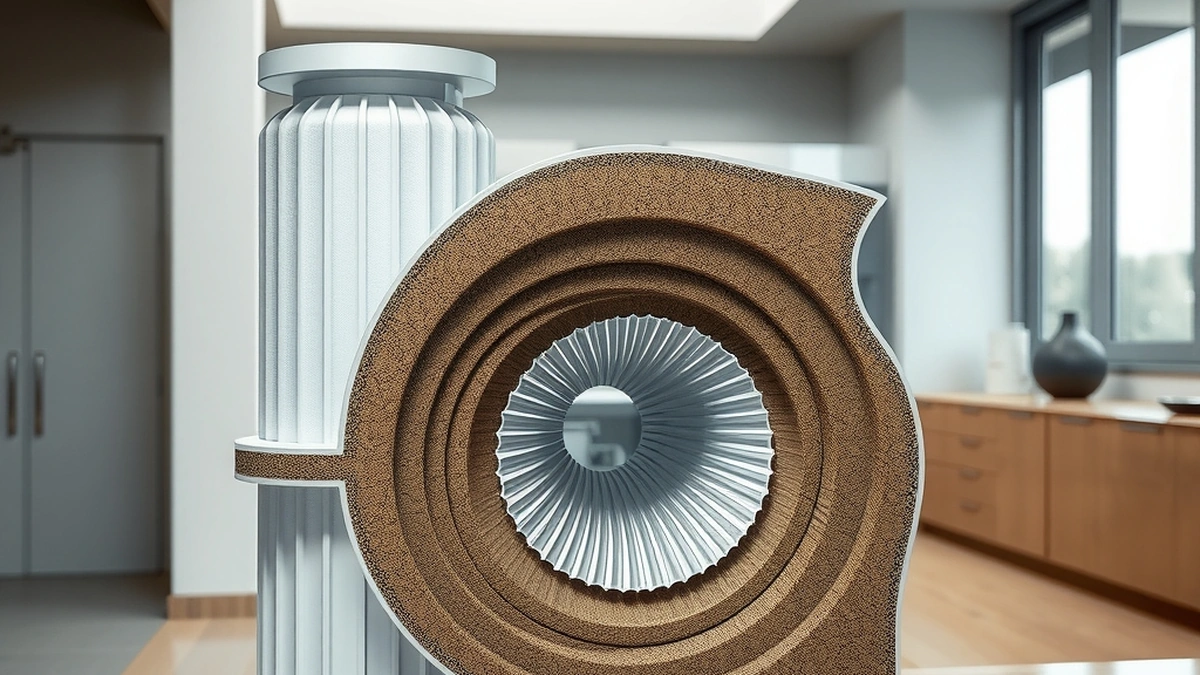
TFC, or thin film composite, is the standard residential RO membrane: it rejects 80 to 95 percent of dissolved solids but is degraded by chlorine. CTA, or cellulose triacetate, tolerates chlorine but rejects less and is now uncommon outside specific applications.
- Rejection rate
- 80 - 95 percent
- Membrane life
- 2 - 3 years
- Waste ratio
- 3 - 4:1
- TFC chlorine tolerance
- Low, needs carbon pre-filter
- CTA chlorine tolerance
- High, but lower rejection
Some links on this page are affiliate links.If you buy through them we may earn a commission at no extra cost to you. We do not accept payment for rankings. Read the full disclosure.
TFC and CTA describe two ways to build a reverse osmosis membrane. TFC, thin film composite, is a polyamide layer on a porous support and rejects 80 to 95 percent of dissolved solids. CTA, cellulose triacetate, is a cast cellulose sheet that tolerates chlorine but rejects less. For residential drinking water, TFC is the default and CTA is the niche.
What Each Membrane Is
A reverse osmosis membrane is a semi-permeable barrier. Water passes; most dissolved ions and larger molecules do not. The membrane material determines how well that works and what it can survive.
TFC is built in layers. A polyester support web carries a polysulfone mid-layer, and the active barrier is an ultra-thin polyamide film formed on top. That film is what rejects ions. Because the active layer is so thin, TFC achieves high rejection at relatively low pressure, which is why residential systems can run on household line pressure.
CTA is a homogeneous cellulose acetate film, cast and dried. It is simpler to make and inherently more chlorine-tolerant because the polymer backbone is not attacked the way polyamide is. Its rejection is lower and it hydrolyzes over time, especially at extreme pH.
Rejection, Pressure, and Life
| Property | TFC | CTA |
|---|---|---|
| Rejection of dissolved solids | 80 - 95 percent | Lower, typically 85 - 90 percent for some ions but weaker overall |
| Operating pressure | Lower | Higher for the same output |
| Chlorine tolerance | Very low | High |
| pH tolerance | Wide | Narrow, roughly 4 - 6 ideal |
| Biological resistance | Moderate | Better |
| Typical life | 2 - 3 years | 2 - 3 years with good care |
| Residential availability | Common | Limited |
The chlorine row is the one that decides most installations. Municipal water arrives with a chlorine or chloramine residual, by design. A TFC membrane exposed to that residual degrades within weeks to months, and the degradation is permanent: passage increases and does not recover.
Why TFC Needs Carbon Ahead of It
Every TFC system includes a carbon pre-filter. That is not a marketing feature; it is a requirement. The carbon removes chlorine before the water reaches the membrane.
This is also why “RO removes chlorine” is a misleading claim. The membrane does not; the carbon stage does. If the carbon is exhausted and the homeowner keeps running the system, chlorine reaches the membrane and the membrane fails early. A $10 cartridge becomes a $60 membrane.
Chloramine is harder to remove than free chlorine and requires catalytic carbon. Utilities that use chloramine are common enough that this matters. If your water report lists chloramine, confirm the pre-filter is rated for it.
Why CTA Still Exists
CTA survives chlorine, which makes it useful where pre-treatment is unreliable or where the system must run unattended. It also tolerates biological activity better in some setups. Those advantages are why it persists in a few niches: marine systems, some medical and laboratory applications, and older installations that were designed around it.
For a home, the disadvantages outweigh it. Lower rejection means more dissolved solids pass into the product water. Higher pressure requirements mean a booster pump on low-pressure supplies. Narrow pH tolerance means the feed water has to be controlled. And availability is poor, so replacements are harder to source.
Matching the Membrane to the Water
| Water source | Recommended membrane | Reason |
|---|---|---|
| Municipal, chlorinated | TFC with carbon pre-filter | Higher rejection, chlorine removed first |
| Municipal, chloramine | TFC with catalytic carbon | Chloramine needs catalytic media |
| Well, no chlorine | TFC | No chlorine risk, best rejection |
| Well, high hardness | TFC after softener | Protect membrane from scale |
| Unattended or remote | CTA possible | Chlorine tolerance, but expect lower output |
Well water has no chlorine residual, so the TFC chlorine weakness is irrelevant there. The threat on well water is scale and iron, not oxidant. That means a softener ahead of the RO unit, and an iron filter ahead of the softener if iron is high.
Five Steps for Membrane Care
- Identify the membrane type from the label or part number before ordering a replacement.
- Change pre-filters on schedule, every 6 to 12 months for carbon blocks and 3 to 6 months for sediment.
- Check rejection annually with a TDS meter: compare feed and product readings to see whether rejection has fallen.
- Protect from hardness with a softener if hardness exceeds 7 GPG; scale is the second most common killer after chlorine.
- Replace at 2 to 3 years regardless of apparent performance, because rejection declines gradually before it becomes obvious.
Reading a TDS Meter Correctly
A handheld TDS meter is the cheapest diagnostic for a membrane. Measure the feed water and the product water, then calculate rejection as (feed − product) ÷ feed × 100. Feed at 300 ppm and product at 30 ppm gives (300 − 30) ÷ 300 = 0.90, or 90 percent rejection.
Below about 80 percent, the membrane is due. Above 90 percent, it is working as designed. Do not expect 99 percent from a residential unit; 80 to 95 percent is the published range and the upper end requires good pre-treatment and decent pressure.
Pressure matters here too. An RO membrane needs roughly 40 psi at the inlet to produce at rate. Below that, output drops and rejection can suffer. A permeate pump or booster helps, which is covered in permeate pumps. If you are choosing between housing styles, tankless versus tank RO covers the trade-off, and change an RO membrane walks the swap.
The Short Version
Buy TFC, run carbon ahead of it, change the carbon on schedule, and replace the membrane every 2 to 3 years. That sequence delivers the 80 to 95 percent rejection the spec sheet promises. Choose CTA only if you have a specific reason, and accept the lower rejection and higher pressure that come with it.
Frequently asked questions
What is the difference between TFC and CTA membranes?
TFC membranes are made of a thin polyamide layer on a support, giving higher rejection, while CTA membranes are cellulose-based and tolerate chlorine better at lower rejection.
Which membrane is better for municipal water?
TFC, provided a carbon pre-filter removes the chlorine, because it rejects a wider range of dissolved contaminants at a lower operating pressure.
Do TFC membranes fail from chlorine?
Yes. Chlorine attacks the polyamide layer and permanently increases passage, which is why every TFC system includes a carbon stage ahead of the membrane.
Why are CTA membranes less common now?
They reject fewer contaminants, need higher pressure for the same output, and are more sensitive to pH, so most residential systems have moved to TFC.
How do I know which membrane my system has?
The membrane label or the cartridge part number states TFC or CTA; if neither is marked, assume TFC and always run a carbon pre-filter.
How often should an RO membrane be replaced?
Every 2 to 3 years on properly pre-treated water, sooner if pre-filters are neglected or hardness and sediment are high.
Sources
Some links are affiliate links.If you buy through them we may earn a commission at no extra cost to you. We do not accept payment for rankings. Read the full disclosure.


