Salt mushing in the brine tank
Salt mush is wet salt that has dissolved into sludge and blocked the brine pickup. See why it happens, how to clear it, and how to prevent it.
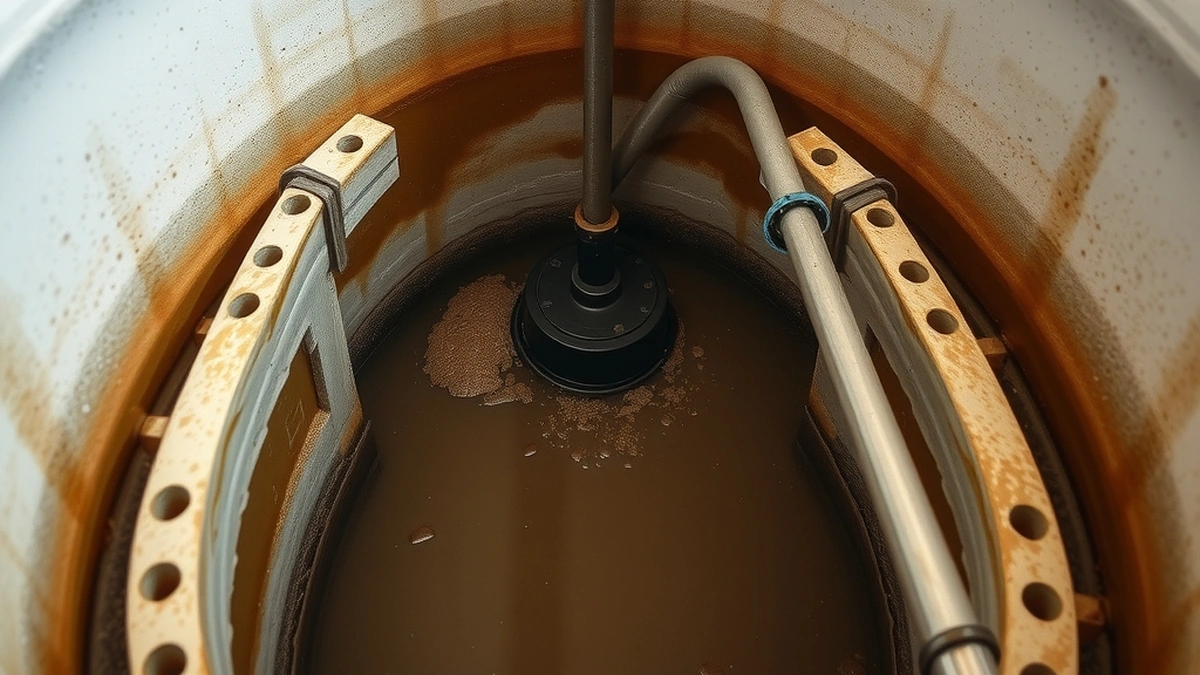
Salt mush is softener salt that has absorbed water and dissolved into a solid sludge at the bottom of the brine tank, blocking the brine pickup. Clear it by scooping out the wet salt, breaking up the crust, and cleaning the tank, then refill with fresh pellets.
- Cause
- Excess water and impurities in salt
- Symptom
- Hard water, no salt use, sludge in tank
- Cleaning time
- 1 - 2 hours
- Salt cost per year
- $120 - $400
- Prevention
- Correct fill level and clean tank
Some links on this page are affiliate links.If you buy through them we may earn a commission at no extra cost to you. We do not accept payment for rankings. Read the full disclosure.
Salt mush is a layer of wet, partially dissolved salt at the bottom of a brine tank that has turned into a solid sludge. Water sits above it, the brine pickup cannot draw through it, and the softener regenerates with weak or no brine. The water goes hard while the tank still looks full, which is why it is often misdiagnosed as a valve failure.
How Salt Turns to Sludge
A brine tank is not supposed to be full of water. It holds salt above a shallow water layer, and the water becomes saturated brine as salt dissolves. The float assembly maintains that level.
Mush forms when the water level stays too high or the salt sits wet for too long. The mechanisms:
- Overfill. A stuck float valve or a brine refill that runs too long leaves excess water, which dissolves the lower salt into a saturated slurry.
- Impurities. Rock salt and inexpensive crystals carry insoluble matter that settles and forms a paste.
- Humidity. In a damp basement, salt absorbs moisture from the air and cakes.
- Blocked brine line. If brine cannot be drawn out, it sits and dissolves more salt, compounding the problem.
Once the sludge forms, it sets like wet sand. Water flows over it rather than through it, so the brine concentration falls even though salt is present.
Mush vs Bridge
These two failures produce the same symptom and need different fixes.
| Feature | Salt mush | Salt bridge |
|---|---|---|
| Location | Bottom of tank | Top of tank |
| Appearance | Wet sludge | Hard crust with void below |
| Probe test | Resists a broom handle | Handle breaks through into air |
| Water level | Often high | Often normal |
| Fix | Empty and clean tank | Break crust, stir salt |
A bridge can be broken in two minutes. Mush requires emptying the tank, which is a messy hour of work. Both end with the same result if ignored: hard water and no salt consumption.
Clearing the Tank
- Bypass the softener so the house has water while you work.
- Shut off the water supply to the brine tank and disconnect the brine line at the valve.
- Scoop out the wet salt with a plastic scoop or cup; do not use metal that can scratch the tank.
- Break up the crust at the bottom and remove it, then flush the tank with a hose and a small amount of warm water.
- Reconnect, refill with fresh pellets, and run a manual regeneration to restore brine.
Do not pour the sludge down a drain. It is concentrated salt and grit, and it can clog a trap. Bag it and put it out with the trash.
If the tank is a cabinet-style unit with the brine well built into the softener body, the same procedure applies but access is tighter. Use a wet/dry vacuum to pull the sludge out rather than scooping, and rinse the well with a hose before refilling. A vacuum makes the job 20 minutes instead of an hour and avoids dragging wet salt across the floor.
What a Clean Tank Looks Like
After cleaning, fill salt to no more than two-thirds of the tank height and leave the recommended air gap above the salt. The water layer at the bottom should be a few inches, enough to dissolve salt into brine but not enough to submerge the whole bed.
| Salt type | Dissolve speed | Residue | Best for |
|---|---|---|---|
| Evaporated pellets | Moderate | Low | Most homes |
| Solar salt, coarse | Moderate | Low to moderate | Most homes |
| Rock salt | Slow | High | Budget, if cleaned often |
| Block salt | Slow | Low | Small tanks, UK style |
| Potassium chloride | Moderate | Low | Sodium-restricted households |
Salt cost runs $120 to $400 per year at 8 to 12 pounds per regeneration. Buying the cheapest rock salt and cleaning the tank twice a year often costs more in time than the pellets save.
Prevention Rules
Do not overfill. Two-thirds full is the practical maximum. A full tank compacts under its own weight and the lower salt stays wet.
Check the float and brine refill. If the water level is above the normal mark, the fill is running too long. That is a valve setting or a float problem.
Use a salt with low insolubles. Evaporated pellets leave the least residue.
Clean annually. Once a year, let the salt run low, scoop out the residue, and rinse. Fifteen minutes prevents an hour of chipping.
Keep the brine line clear. A blocked line is both a cause and an effect of mush. Check the injector screen and the brine valve when you clean.
When Mush Has Already Caused Damage
A softener that has been running on weak brine for months may have a resin bed loaded with hardness and iron. Clearing the mush and running two manual regenerations usually restores capacity. If hardness persists after that, the resin may be fouled and a rebed at $300 to $600 is the next step.
Check the brine draw after cleaning by watching the line during regeneration. It should pull steadily for 10 to 20 minutes. If it does not, the problem was never the salt. The diagnostic order in softener stopped softening covers the valve side, clean brine tank gives the full cleaning procedure with the tank in place, and water softener salt compares pellet types by residue.
One last habit worth building: look into the brine tank every time you add salt. Mush is obvious a month before it causes a problem, and a glance at the water level tells you whether the fill is running long. That single check is the difference between a fifteen-minute cleanup and a service call.
Frequently asked questions
What does salt mush look like?
A thick, wet layer of fine crystals at the bottom of the brine tank that feels like damp sand and does not dissolve even when water sits above it.
Why does softener salt turn to mush?
Too much water in the tank, high humidity, impurities in cheap salt, and a blocked brine line all let salt dissolve into a saturated sludge that cannot be drawn out.
Is salt mush the same as a salt bridge?
No. A bridge is a hard crust at the top with a void below, while mush is a solid sludge at the bottom; both stop brine production but they look different.
Can I still use the softener with mush in the tank?
The unit will run but will not regenerate properly, so hardness returns; clear the tank before assuming the valve or resin has failed.
How often should the brine tank be cleaned?
Once a year is a reasonable interval, or whenever the salt level is low enough to expose the bottom and any sediment is visible.
Which salt type causes the least mush?
Evaporated pellets and coarse solar salt with low insoluble content tend to leave less residue than rock salt or fine crystals with additives.
Sources
Some links are affiliate links.If you buy through them we may earn a commission at no extra cost to you. We do not accept payment for rankings. Read the full disclosure.