Shower filter for hard water
What a shower filter can and cannot do about hard water, which media help with chlorine, and when a softener is the real fix.
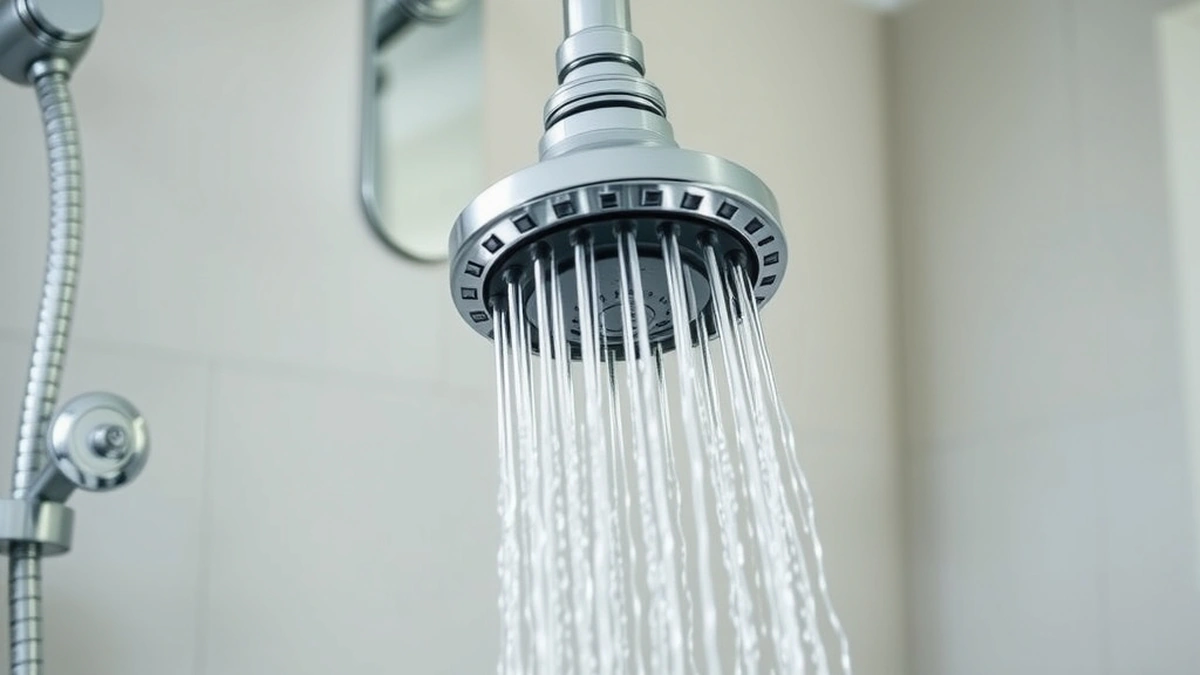
A shower filter for hard water can reduce chlorine and sediment, but it does not remove calcium and magnesium, so it does not soften water. If scale and soap scum are the problem, a softener at $1,200 to $4,500 installed is the fix.
- Softens water
- No
- Removes chlorine
- Yes, with carbon media
- Hardness bands
- 7 - 10 gpg is hard
- Softener installed
- $1,200 - $4,500
- Water test
- $40 - $150
Some links on this page are affiliate links.If you buy through them we may earn a commission at no extra cost to you. We do not accept payment for rankings. Read the full disclosure.
A shower filter for hard water can reduce chlorine, sediment, and some metals, but it cannot soften water. Softening means removing calcium and magnesium, and a shower filter does not do that. If the complaint is scale on the glass, soap scum, or dull hair, the number to check is hardness in grains per gallon, and the fix is usually a softener.
What the filter does
Most shower filters contain carbon media, sometimes with a KDF or ceramic stage. Water passes through the cartridge on its way to the shower head.
Carbon reduces chlorine and chloramine, which are the main causes of the chlorine smell in a bathroom. Some cartridges also catch sediment and rust particles.
That is a real improvement for odour and for the feel of chlorinated water. It is not a hardness treatment, and no cartridge at shower flow rates performs ion exchange at a useful capacity.
What hardness means in the shower
Hardness is measured in grains per gallon. Soft is 0 to 3 gpg, moderate is 3 to 7, hard is 7 to 10, and very hard is above 10.
At 12 gpg, every gallon carries roughly 12 grains of dissolved calcium and magnesium. Those minerals react with soap to form scum and precipitate as scale when the water dries.
A shower filter lets all of that through. The scale on the glass, the film on the tiles, and the dullness in hair are the same after the filter as before it, unless the filter also changes something else.
Filter versus softener
| Factor | Shower filter | Whole-house softener |
|---|---|---|
| Removes chlorine | Yes | No, unless combined with carbon |
| Removes hardness | No | Yes |
| Scale on glass | No effect | Reduced |
| Soap lather | Little change | Improved |
| Cost | Low per fixture | $1,200 - $4,500 installed |
| Maintenance | Cartridge changes | Salt, resin every 8 - 12 years |
A household with chlorine odour and soft water gets real value from a shower filter. A household with 14 gpg hard water gets very little, because the minerals pass straight through and the scale keeps forming on the glass.
Where a shower filter is worth it
It is worth it when the water is soft but chlorinated, and the complaint is the smell of chlorine or the feel of the water.
It is worth it in a rental where installing a softener is not permitted. A shower filter is a fixture-level change that is easy to reverse.
It is worth it as a stopgap while a softener is being specified, provided the homeowner understands it does not address hardness.
It is also useful on a well with sediment that discolours the shower, because the cartridge catches particles before they reach the head. That is a cosmetic and maintenance benefit rather than a water-quality fix, and the well still needs its own treatment plan.
Where it is not
It is not worth it as a substitute for a softener on hard water. The scale will continue, and the cartridge will foul faster because it is catching the same minerals that the softener should have removed.
It is not worth it if the cartridge is not changed. A spent carbon cartridge can become a bacterial habitat, particularly on unchlorinated well water, and the shower then smells worse than before.
It is not worth it if the shower head is the problem. Low flow, clogged nozzles, and a failing mixing valve are plumbing issues, not filtration issues.
How to decide
- Test the water at $40 to $150 and note hardness and chlorine.
- If hardness is above 7 gpg, price a softener before buying filters.
- If hardness is low and chlorine is the complaint, choose a carbon shower filter.
- Confirm the cartridge is certified for chlorine reduction and check the rated capacity.
- Set a replacement reminder based on the rated volume, not the calendar alone.
- Keep the shower head flow rate in mind, since filters add a small pressure drop.
The pressure drop matters on a low-pressure system. A filter that costs 2 psi at 2.5 gallons per minute is fine; one that costs 8 psi makes the shower feel weak, and the homeowner usually blames the plumbing rather than the new cartridge.
A note on hair and skin products
Product choice does real work here, and it is cheaper than equipment. A chelating shampoo once a week lifts mineral residue that ordinary shampoo leaves behind, and it costs $15 to $30 a bottle.
That is not a water treatment and it does not pretend to be. It is the honest workaround for a renter or a household that is not ready to soften, and it pairs badly with an expensive shower filter that promises the same result.
Products marketed for hard water, including chelating shampoos, address mineral buildup on hair rather than the water itself. They can help with the symptom, and they do not change the supply. That is a reasonable purchase for someone who cannot install a softener, as long as the expectation is set correctly.
If the goal is to stop scale at the source, the equipment decision is a softener or a salt-free conditioner. A salt-free conditioner at $500 to $1,800 installed changes how minerals behave rather than removing them, which is a different result from ion exchange.
For the softener comparison, see salt based versus salt free softener and water softener installation cost. For the fixture-level option, shower water filter installation covers the fitting.
Bottom line
A shower filter for hard water reduces chlorine and sediment but does not soften. Test the hardness first, and if it is above 7 gpg, spend the money on a softener rather than a cartridge that cannot change the mineral content.
Frequently asked questions
Does a shower filter soften hard water?
No. A shower filter removes chlorine, sediment, and some metals, but it does not remove the calcium and magnesium that make water hard.
What does a shower filter actually do?
It reduces chlorine and chloramine with carbon media, catches sediment, and can reduce rust particles, improving taste and odour at the shower.
Why does my skin feel different after a filtered shower?
The difference is usually reduced chlorine rather than softened water, since the hardness minerals remain in the water.
Will a shower filter stop scale?
Not on its own. Scale comes from hardness minerals, and only ion exchange or a similar process removes them from the water.
How often should the cartridge be changed?
Most shower filter cartridges are rated for a few months of use, and the manufacturer's rating should be followed rather than guessed.
What is the cheapest way to deal with hard water?
A whole-house softener at $1,200 to $4,500 installed addresses hardness everywhere, while a shower filter addresses only chlorine at one fixture.
Sources
Some links are affiliate links.If you buy through them we may earn a commission at no extra cost to you. We do not accept payment for rankings. Read the full disclosure.