Why the Softener Regenerates Every Night
A nightly regeneration cycle is usually normal, but frequency depends on grain capacity, water hardness, and household usage. Here is how to read the numbers.
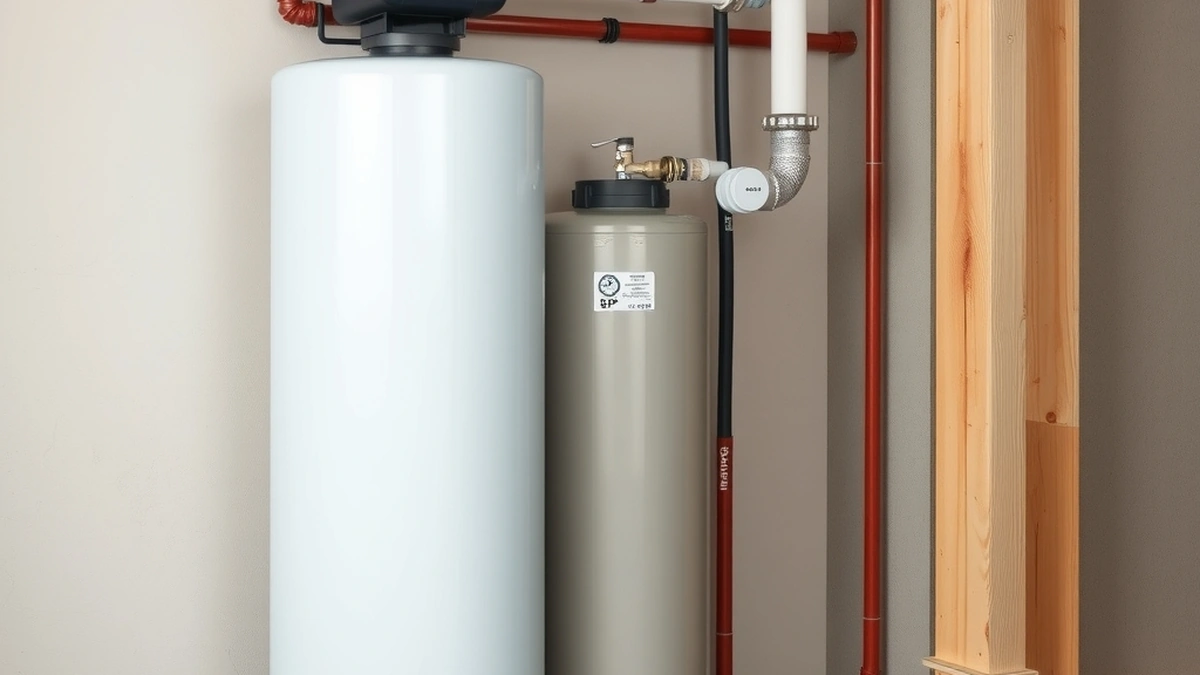
Most softeners regenerate every night because the timer or meter is set to recharge the resin bed once daily based on your programmed hardness and household water use.
- Typical equipment cost
- $600–$2,500
- Typical installed cost
- $1,200–$4,500
- Salt per year
- $120–$400
- Resin bed life
- 8–12 years
- Full unit life
- 10–15 years
Some links on this page are affiliate links.If you buy through them we may earn a commission at no extra cost to you. We do not accept payment for rankings. Read the full disclosure.
A water softener that regenerates every night is usually following its programmed schedule, not signaling a failure. Timer-initiated units commonly recharge the resin bed once per day, typically overnight when water demand is low. Whether nightly regeneration is efficient for your home depends on grain capacity, water hardness, household usage, and the control valve settings.
How Regeneration Works
A softener removes hardness minerals by passing water through a resin bed charged with sodium ions. Over time, the resin captures calcium and magnesium until its exchange capacity is used up. Regeneration flushes the bed with a brine solution drawn from the salt tank, rinses away the hardness minerals, and recharges the resin so it can continue softening water.
The process has several stages: backwash, brine draw, slow rinse, fast rinse, and brine tank refill. A complete cycle can take roughly 60 to 90 minutes, depending on the model and programming. Because the unit cannot soften water during part of that cycle, most systems are set to regenerate at night.
Timer vs. Meter Initiation
There are two common ways a softener decides when to regenerate.
Timer-initiated softeners regenerate on a fixed schedule, such as every night or every other night, regardless of how much water you actually used. These units are simple and predictable, but they can regenerate before the resin is fully exhausted, which uses more salt than necessary.
Meter-initiated softeners track actual water usage and regenerate only when the calculated capacity is nearly depleted. A household with low water use might go several days between cycles, while a large household might regenerate nightly or even more often.
If your meter-initiated softener is regenerating every night, that may simply mean your daily water use matches or exceeds the available capacity between cycles. If your timer-initiated unit is set to every night, that is the programmed behavior unless you change it.
The Arithmetic Behind Nightly Cycles
Regeneration frequency is driven by grain capacity and daily hardness removal. Softeners are commonly rated from 24,000 to 64,000 grains of capacity. To estimate daily grain removal, multiply grains per gallon (GPG) of hardness by gallons used per day.
Example:
- Water hardness: 10 GPG
- Daily household use: 300 gallons
- Daily hardness load: 10 × 300 = 3,000 grains per day
On a 30,000-grain softener with a safety reserve, the unit might be programmed to regenerate every 7 to 10 days. On a 24,000-grain unit with the same water and usage, the capacity could be exhausted in roughly 7 days or less, depending on reserve settings. If your household uses more water or your water is harder, a smaller unit can reach its limit quickly and regenerate nightly.
Salt use follows the same logic. A regeneration typically uses 8–12 pounds of salt. If a unit regenerates every night, that is roughly 365 cycles per year.
- Low estimate: 365 × 8 = 2,920 pounds of salt per year
- High estimate: 365 × 12 = 4,380 pounds of salt per year
At retail salt prices, that can land in the estimated range of $120–$400 per year for salt, depending on local pricing, salt type, and actual dosage settings. Reducing unnecessary regenerations can lower salt consumption and operating cost.
When Nightly Regeneration May Be a Problem
Nightly regeneration is not automatically a defect, but it can indicate a mismatch between equipment and household demand. Check these possibilities:
- Incorrect hardness setting. If the control valve is programmed for a higher hardness number than your water actually contains, the softener will calculate that it needs to regenerate more often than necessary. Verify your water hardness with a lab test before adjusting settings. A water test typically costs $40–$150.
- Too small a unit for the household. A 24,000-grain softener in a large home with hard water may exhaust its capacity daily. Upgrading to a larger grain capacity can extend the interval between regenerations.
- Programmed reserve too high. The reserve is a safety margin held back so the unit does not run out of softened water between regenerations. A large reserve forces more frequent regeneration.
- Leaking fixtures or running toilets. Hidden water use increases daily demand and can trigger nightly regeneration on a meter-initiated unit.
- Brine tank or valve issues. A stuck valve, salt bridge, or low water level in the brine tank can cause incomplete regeneration, leading the system to cycle again sooner than expected.
If the softener is regenerating every night and you also notice hard water returning quickly, salt use far above the estimated range, or error codes on the control valve, the unit may need service.
Cost Context for Ownership
A water softener is a long-term appliance, and regeneration frequency affects operating cost more than purchase price. Equipment typically ranges from $600–$2,500, with installed costs from $1,200–$4,500 depending on plumbing complexity and location. Resin beds generally last 8–12 years, and full units often last 10–15 years. A resin rebed is estimated at $300–$600.
If nightly regeneration is driven by undersized equipment or incorrect programming, the main cost is salt, not equipment replacement. Still, running more cycles than necessary adds wear to the control valve and rotor over time. Matching regeneration to actual usage helps protect that 10–15 year service life.
For homes with additional water quality issues, such as iron above the softener’s typical limit of 2–3 ppm, a separate iron filter may be appropriate before or alongside softening. Iron filters are estimated at $800–$2,500 installed. For broader whole-house treatment, whole-house filters typically flow at 8–15 GPM and are estimated at $500–$1,800 installed.
Adjusting Regeneration Settings
Most control valves allow you to change regeneration time, day interval, hardness setting, and salt dosage. Before making changes:
- Confirm your water hardness with a laboratory test.
- Know your unit’s grain capacity rating.
- Estimate daily household water use.
- Check the manufacturer manual for recommended salt dosage and reserve settings.
Setting the regeneration time to a period when no one is using water—commonly 2:00 a.m. to 4:00 a.m.—prevents hard water from bypassing the unit during the cycle. If you have a meter-initiated softener and it is regenerating nightly, verify that the gallon counter and turbine are working correctly before assuming the frequency is wrong.
Alternatives and Complementary Equipment
If nightly regeneration and salt use are undesirable, salt-free conditioners are an option. These do not remove hardness minerals through ion exchange and do not use salt, but they do not produce the same softened-water results as a traditional softener. Salt-free conditioners are estimated at $500–$1,800 installed.
For drinking water at the kitchen sink, a reverse osmosis system is estimated at $300–$900 installed, with running costs around $60–$150 per year and membrane replacement every 2–3 years. RO systems waste water at a ratio of roughly 3–4:1 and reject an estimated 80–95 percent of dissolved solids, depending on the membrane and feed water.
If you are considering a softener as part of a larger treatment plan, whole-house reverse osmosis is estimated at $3,000–$8,000 installed and is usually reserved for specific water quality needs rather than hardness alone. Whole-house filter and softener combinations can be discussed in the context of whole-house water filter cost and well-water treatment cost.
Bottom Line
A softener regenerating every night is often normal behavior for a timer-initiated unit or a meter-initiated unit in a high-demand household. The key numbers are grain capacity, daily hardness load, and salt use per regeneration. If the frequency seems excessive, start with a water test and review the control valve programming before assuming the equipment is faulty. Adjusting hardness settings, reserve, or regeneration time can often bring the cycle into better alignment with actual water use.
Next, compare how much does a water softener cost, water softener installation cost, whole house water filter cost before you commit.
Frequently asked questions
Is nightly regeneration normal?
Yes. Many timer-initiated softeners are programmed to regenerate once per night, often between 2:00 a.m. and 4:00 a.m., when household water use is low.
Does every night mean something is broken?
Not necessarily. A meter-initiated unit regenerates based on actual usage, so nightly cycles can be normal if your daily demand matches the programmed reserve.
How much salt does one regeneration use?
A typical regeneration uses 8–12 pounds of salt, depending on the unit size and salt dosage setting.
Can I change the regeneration time?
Yes. Most control valves let you set the regeneration time and day, though you should match the schedule to your water use pattern.
What happens if I skip regeneration?
The resin bed can become exhausted and stop removing hardness minerals, so hard water may pass through to fixtures and appliances.
How often should I check salt levels?
Check the brine tank at least once a month and keep salt above the water line so the unit can draw brine during regeneration.
Sources
Some links are affiliate links.If you buy through them we may earn a commission at no extra cost to you. We do not accept payment for rankings. Read the full disclosure.