
Temporary vs Permanent Hardness: Differences and Treatment
Learn the difference between temporary and permanent hardness, how each is measured, and which treatment equipment fits each type.
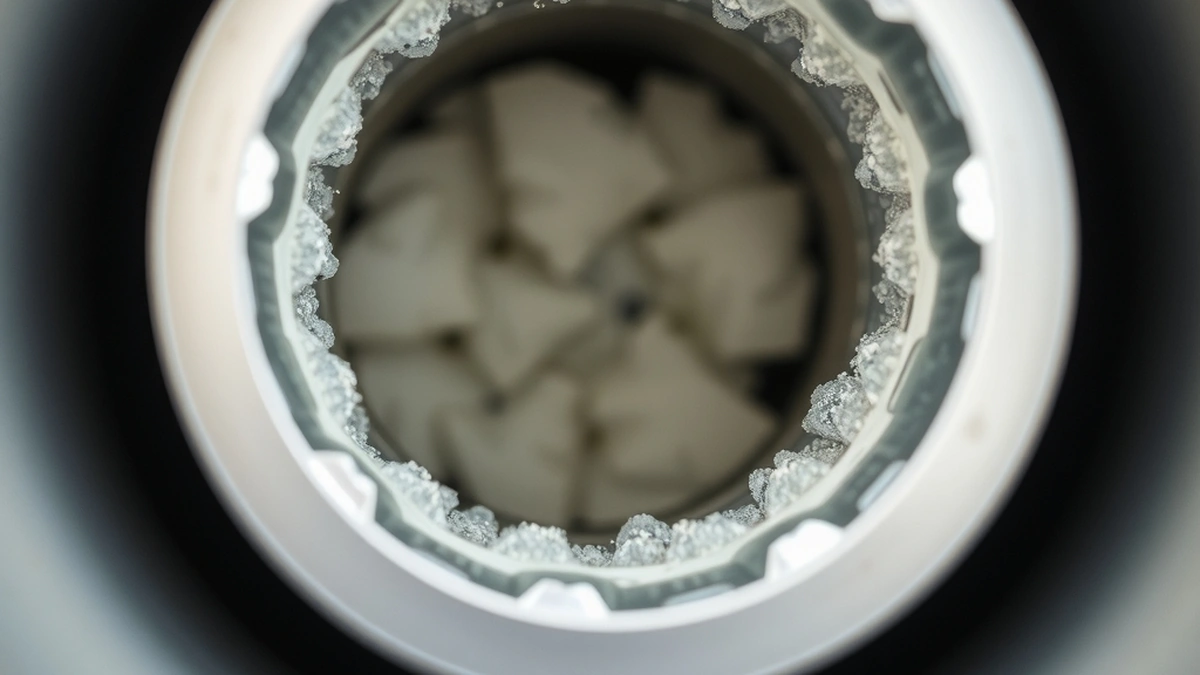
Temporary hardness is caused by bicarbonate minerals and can be reduced by boiling; permanent hardness comes from chlorides and sulfates and requires ion exchange or reverse osmosis.
- Temporary hardness cause
- Calcium and magnesium bicarbonates
- Permanent hardness cause
- Calcium and magnesium chlorides and sulfates
- Soft water range
- 0-3 grains per gallon
- Very hard water range
- 10+ grains per gallon
- Softener installed cost
- $1,200-$4,500
Some links on this page are affiliate links.If you buy through them we may earn a commission at no extra cost to you. We do not accept payment for rankings. Read the full disclosure.
Temporary hardness is caused by calcium and magnesium bicarbonates and drops out of solution when the water is heated, which is why it scales a kettle and can be reduced by boiling. Permanent hardness is caused by calcium and magnesium chlorides and sulfates, stays dissolved at any temperature, and needs ion exchange or reverse osmosis to remove. Total hardness is the sum of the two, and only a lab test separates them.
The difference in one sentence
Temporary hardness is carbonate hardness — calcium and magnesium held as bicarbonates — while permanent hardness is non-carbonate hardness held as chlorides and sulfates.
Both are measured in gpg or milligrams per liter as calcium carbonate, and both feel the same at the tap. Temporary hardness is the fraction heat can drive out of solution; permanent hardness is the fraction it cannot.
Why boiling only fixes temporary hardness
When water containing calcium bicarbonate is heated, the bicarbonate breaks down into insoluble calcium carbonate, carbon dioxide and water. The carbon dioxide escapes as gas, and the carbonate precipitates as the white scale that coats a kettle or a water heater element. That reaction explains why the scale stays in the vessel instead of leaving with the water.
Permanent hardness does not participate. Calcium chloride and calcium sulfate remain soluble at boiling point, so heating changes nothing. They stay in the water and deposit slowly as it evaporates. Boiling permanently hard water and then filtering it will not lower the hardness reading.
Reading the split from a lab test
A laboratory water test costs $40–$150 and reports total hardness along with calcium, magnesium, alkalinity, chloride and sulfate. As a rule of thumb, when total hardness exceeds alkalinity, the carbonate share is approximately equal to the alkalinity and the remainder is permanent.
The numbers that matter for equipment sizing:
- Soft water: 0–3 gpg
- Moderately hard: 3–7 gpg
- Hard: 7–10 gpg
- Very hard: 10+ gpg
- Lab water test: $40–$150
- Softener installed: $1,200–$4,500
- Salt-free conditioner installed: $500–$1,800
- Under-sink reverse osmosis: $300–$900 installed
- Whole-house reverse osmosis: $3,000–$8,000 installed
Test strips and digital meters measure total hardness only. They are useful for a quick check and useless for the split, so use the lab result when treatment depends on the distinction.
Side-by-side comparison
| Factor | Temporary hardness | Permanent hardness |
|---|---|---|
| Mineral form | Calcium and magnesium bicarbonates | Calcium and magnesium chlorides and sulfates |
| Other name | Carbonate hardness | Non-carbonate hardness |
| Removed by boiling | Yes, as carbonate scale | No |
| Behaves in a water heater | Scales quickly when heated | Scales slowly, but deposits are harder to remove |
| Whole-house treatment | Ion exchange softener | Ion exchange softener or reverse osmosis |
| Point-of-use treatment | Boiling, then filtration | Reverse osmosis |
| Salt-free conditioner | Alters scaling, does not remove minerals | Same |
The practical read: a softener removes both types, and nothing else does at whole-house scale. Boiling targets temporary hardness but is a kitchen-scale solution.
Treating temporary hardness
Boiling works for drinking and cooking water in small volumes. A gallon heated to a boil precipitates the bicarbonate as carbonate, which can settle or be filtered out. It is not a whole-house method: the energy cost is high, the scale stays in the pot, and the water cools before it reaches a tap.
For the whole house, a cation exchange softener handles both types. Hard water passes through a resin bed charged with sodium or potassium ions; calcium and magnesium attach to the resin and sodium is released. When the resin is exhausted, the system regenerates with brine and flushes the captured minerals to drain.
A residential softener holds 24,000–64,000 grains. A household using 300 gallons a day at 10 gpg carries 3,000 grains daily, so a 32,000-grain unit lasts about a week between regenerations. Each regeneration uses 8–12 pounds of salt, and annual salt cost runs $120–$400. Resin lasts 8–12 years before a rebed at $300–$600, inside a 10–15 year life.
Treating permanent hardness
Permanent hardness cannot be boiled out, so the options are ion exchange and reverse osmosis. Ion exchange is the standard whole-house answer because it removes the minerals regardless of which compound they arrived as.
Under-sink reverse osmosis costs $300–$900 installed, with $60–$150 a year in running costs and membranes every 2–3 years. It treats one tap, rejects 80–95 percent of dissolved ions, and sends 3–4 gallons to drain per gallon produced. That waste is why whole-house RO at $3,000–$8,000 is rarely chosen for hardness alone.
Carbon filters at $500–$1,800 remove chlorine and taste compounds but leave calcium and magnesium dissolved. Sediment cartridges remove particles. UV systems disinfect but do not change mineral content. A salt-free conditioner at $500–$1,800 alters how minerals behave on surfaces but leaves the hardness reading unchanged.
The cost arithmetic for one household
Take a household at 12 gpg total hardness, with 5 gpg temporary and 7 gpg permanent, using 300 gallons a day.
The daily load is 12 × 300 = 3,600 grains. A 32,000-grain softener with a 20 percent reserve has 32,000 × 0.8 = 25,600 usable grains, so it regenerates every 25,600 ÷ 3,600 = 7.1 days, about 51 times a year. At 10 pounds per regeneration, that is 510 pounds a year. At $0.40 per pound, salt costs 510 × $0.40 = $204 a year, inside the $120–$400 estimate.
Over 10 years, a $2,500 installed softener plus $204 a year in salt is $2,500 + ($204 × 10) = $4,540. Add one resin rebed at $450 for $4,990. At 300 gallons a day for 10 years — 300 × 365 × 10 = 1,095,000 gallons — that is $4,990 ÷ 1,095,000 = about $0.0046 per gallon.
The comparison is not like for like: a $1,200 salt-free conditioner has no salt cost but leaves all 12 gpg, and a $600 under-sink RO at $100 a year is $1,600 over 10 years for the kitchen tap only.
What to do next
- Order a lab test that reports hardness, alkalinity, chloride and sulfate, not just a strip reading.
- Convert the results to one unit — 1 gpg equals about 17.1 mg/L as calcium carbonate.
- Compare alkalinity with total hardness to estimate the temporary share; the remainder is permanent.
- Size a softener from total hardness × daily gallons, then check iron against the 2–3 ppm limit.
- Choose treatment: softener for whole-house removal, RO for one tap, boiling for nothing beyond a kettle.
For pricing, see how much a water softener costs and water softener installation cost. If hardness arrives with sediment, chlorine or well-water contaminants, compare whole-house water filter cost before buying two separate systems.
Temporary hardness is the bicarbonate fraction heat removes; permanent hardness is the chloride and sulfate fraction it cannot. A softener removes both, reverse osmosis removes both at one tap, and boiling removes only the first, in a pot. Test the water, split the number, size the equipment for total hardness.
Frequently asked questions
What is temporary hardness?
Temporary hardness is water hardness caused by dissolved calcium and magnesium bicarbonates. It can be reduced by heating or boiling the water, which precipitates the minerals as scale.
What is permanent hardness?
Permanent hardness is caused by dissolved calcium and magnesium chlorides and sulfates. Boiling does not remove it, so it remains in the water after heating.
Can a water softener remove both types?
Yes. A cation exchange water softener exchanges calcium and magnesium ions for sodium or potassium ions regardless of whether the hardness is temporary or permanent.
Does boiling remove permanent hardness?
No. Boiling only reduces temporary hardness by converting bicarbonates to insoluble carbonate scale. Permanent hardness minerals stay dissolved after boiling.
How is hardness measured?
Hardness is typically measured in grains per gallon (gpg) or parts per million as calcium carbonate. A lab water test costs $40-$150 and reports total hardness and mineral breakdown.
What equipment treats permanent hardness?
Ion exchange softeners and reverse osmosis systems treat permanent hardness. Salt-free conditioners alter mineral behavior but do not remove hardness minerals from the water.
Sources
Some links are affiliate links.If you buy through them we may earn a commission at no extra cost to you. We do not accept payment for rankings. Read the full disclosure.


