
Water filter system for home
A home filter system is sized to the house's flow and staged to the water report. See the formats, the stage order, and the installed cost of each.
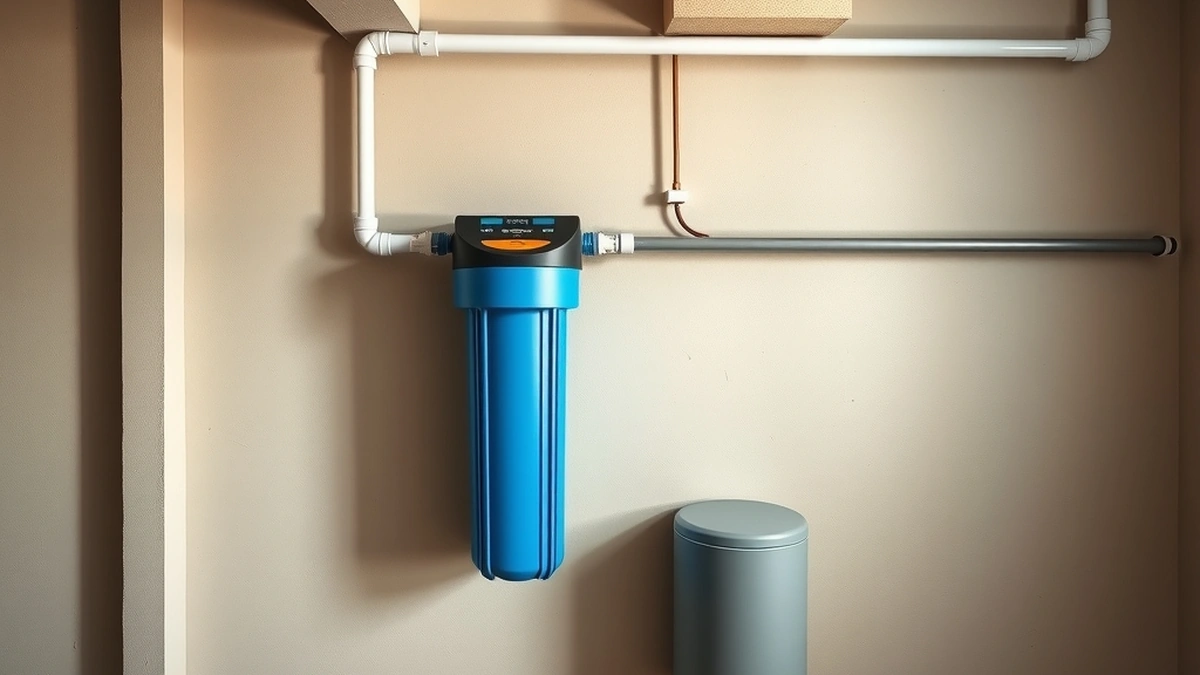
A home water filter system is either whole-house at the point of entry, costing $500 to $1,800 installed, or point-of-use at one tap, costing $150 to $500. Stage count follows the water test, and housing size follows the flow rate the house needs.
- Whole-house installed
- $500 - $1,800
- Under-sink installed
- $150 - $500
- Annual cartridges
- $80 - $300
- Whole-house flow
- 8 - 15 gpm
- Sediment interval
- 3 - 6 months
Some links on this page are affiliate links.If you buy through them we may earn a commission at no extra cost to you. We do not accept payment for rankings. Read the full disclosure.
A water filter system for a home is sized in two dimensions: how much flow it must pass, and what it must remove. Flow decides the housing size. The water report decides the stages. Get those two right and the system runs cheaply; get either wrong and cartridges become a monthly expense.
Whole-House or Point-of-Use
Whole-house treats every fixture. It sits on the main line after the meter or pressure tank and before the water heater. Housings are large because the system must pass 8 to 15 gallons per minute without choking the showers.
Point-of-use treats one tap. It is smaller, cheaper, and can be more selective, which is why reverse osmosis belongs at the kitchen rather than the entry.
The choice usually comes down to where the complaint appears. Chlorine smell in the shower, faded laundry, and scale on shower glass are whole-house problems. A metallic taste in drinking water, or a contaminant that only matters if you swallow it, is a point-of-use problem. Treating the whole house for a problem that only exists in the glass wastes money and consumables; treating one tap for a problem that affects the laundry does not solve it.
| Format | Flow | Installed | Treats |
|---|---|---|---|
| Whole-house 2 stage | 8 - 15 gpm | $500 - $1,800 | Every fixture |
| Whole-house 3 stage | 8 - 15 gpm | $900 - $2,500 | Every fixture |
| Under-sink carbon | 1 - 2 gpm | $150 - $500 | One tap |
| Under-sink RO | 50 - 75 gpd | $300 - $900 | One tap |
Most homes with chlorinated municipal water benefit from whole-house carbon plus an under-sink RO if dissolved contaminants are present. A home with clean water and no taste complaint may need only a sediment filter ahead of the softener.
Stage Order
- Sediment, 20 or 10 micron. Takes the coarse load and protects everything downstream.
- Carbon block. Removes chlorine, taste, and odour.
- Specialty media. Iron, arsenic, or chloramine reduction if the report calls for it.
- Polishing carbon or UV. Final taste stage, or a microbial barrier.
Carbon before sediment is a common installation error. The carbon block blinds with grit in weeks while the sediment cartridge behind it stays clean.
Sizing by Flow
| Housing | Cartridge | Practical flow | Use |
|---|---|---|---|
| 2.5 x 10 | Standard | 4 - 6 gpm | Under sink, single fixture |
| 4.5 x 10 | Big blue | 8 - 12 gpm | Whole house, small to mid |
| 4.5 x 20 | Jumbo | 12 - 20 gpm | Whole house, large |
A whole-house system on a 2.5 inch housing will not keep up, no matter which cartridge is inside. The fix is a larger housing, not a looser micron rating. Pressure drop across a correct system is 2 to 8 psi; an undersized one costs 15 psi or more.
What It Costs
Two-stage whole-house at $700 installed, with sediment cartridges at $20 three times a year and carbon blocks at $40 twice a year: annual consumables $140. Over ten years, $700 + $1,400 = $2,100, or $210 per year.
Under-sink carbon at $300 installed plus $80 per year is $1,100 over ten years, or $110 per year.
Those figures are estimates from published ranges. Labor varies with pipe material and access, and a new drain or electrical outlet adds to the total.
There is a second cost that rarely appears in the quote: the water and sewer charge for backwashing media filters. A backwashing carbon tank might use 100 gallons per backwash, twice a week, which is roughly 10,400 gallons a year. At a cent per gallon combined, that is about $104 annually. Cartridge systems do not backwash, which is one reason they are cheaper to run on a small house.
The equipment itself is the smallest part of the ten-year number. Housings and brackets last decades; cartridges do not. That is why the cartridge price and availability matter more than the housing brand.
What Filtration Cannot Do
It cannot soften. Carbon and sediment leave calcium and magnesium in the water, so scale continues to form. If hardness is above 7 GPG, a softener is the other half of the system.
It cannot remove nitrate. That needs reverse osmosis or a nitrate-selective resin.
It cannot reliably remove bacteria. Carbon is not a microbiological barrier; UV is.
| Goal | Filter system alone |
|---|---|
| Chlorine taste | Yes |
| Sediment | Yes |
| Hardness | No |
| Nitrate | No |
| Bacteria | No |
| Iron above 3 ppm | No |
Five Steps to Specify
- Test the water. A $40 to $150 lab panel names the contaminants.
- Measure peak flow by adding simultaneous fixtures.
- Choose the format from where the problem appears: every fixture or one tap.
- Set the stage order and confirm each cartridge is certified for its claim.
- Install a bypass so cartridges can be changed without shutting off the house.
Maintenance
Sediment every 3 to 6 months, carbon every 6 to 12. Write the date on the housing. If pressure drops before the interval, the upstream stage is undersized or missing.
Keep a spare set of cartridges. A filter that sits exhausted for a month is worse than no filter, because it can pass what it already captured.
A simple habit makes the whole schedule manageable: keep one spare sediment and one spare carbon cartridge on the shelf, and write the change date on each housing with a permanent marker. When the pressure drops or the water tastes different, you have both the spare and the record without a trip to the store. Households that skip this end up changing cartridges late, which is the only way a well-designed system underperforms.
For the whole-house detail, see whole house water filtration and how a whole house filter works. If the report shows hardness, water softener systems covers the equipment that handles it, and water filter system compares the formats in more depth.
Frequently asked questions
What is the best water filter system for a home?
The best system is the one whose stages match the lab report and whose housing passes the house's peak flow; a two-stage sediment and carbon system covers most municipal water.
How much does a home water filter system cost?
Whole-house systems run $500 to $1,800 installed with $80 to $300 per year in cartridges, while under-sink systems run $150 to $500 installed.
Do I need a whole-house filter or an under-sink filter?
Whole-house if chlorine, sediment, or taste affects showers and laundry; under-sink if only drinking water matters, or if dissolved contaminants need reverse osmosis.
How often do home filter cartridges need changing?
Sediment every 3 to 6 months, carbon every 6 to 12 months, and RO pre-filters on a similar schedule, with the exact interval set by the manufacturer and the load.
Will a home filter system remove hardness?
No. Carbon and sediment filtration leave calcium and magnesium in the water, so a softener is still required if hardness is above 7 GPG.
Does a home filter system need a drain?
Cartridge housings do not, but backwashing media filters and reverse osmosis systems do, so confirm the drain before choosing a format.
Sources
Some links are affiliate links.If you buy through them we may earn a commission at no extra cost to you. We do not accept payment for rankings. Read the full disclosure.


