
Can You Install a Softener in a Condo?
Condo softener installation rules, costs, and alternatives for shared plumbing.
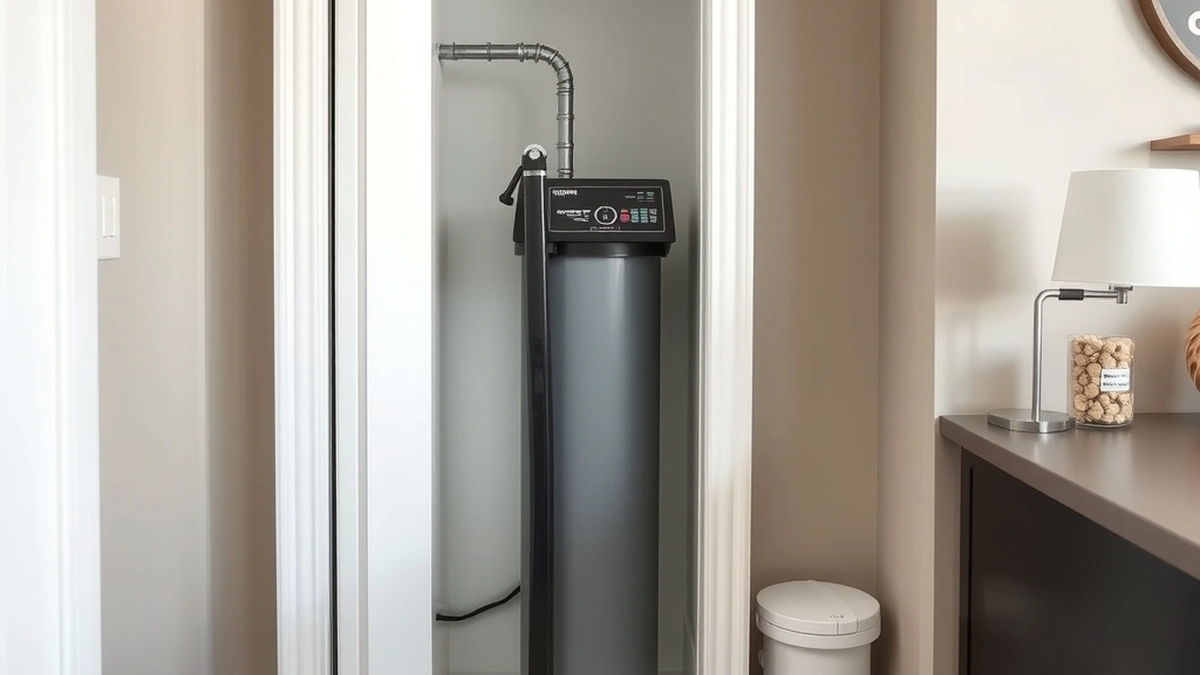
Yes, you can install a water softener in a condo, but you typically need HOA or landlord approval and access to a main water line, drain, and power.
- Equipment range
- $600–$2,500
- Installed range
- $1,200–$4,500
- Salt per year
- $120–$400
- Resin rebed
- $300–$600
- Typical capacity
- 24,000–64,000 grains
Some links on this page are affiliate links.If you buy through them we may earn a commission at no extra cost to you. We do not accept payment for rankings. Read the full disclosure.
Yes, you can install a water softener in a condo. Approval from your HOA or landlord is usually required, and you need physical access to a cold-water supply line, a drain, and an electrical outlet. This guide covers what to check before buying, what the equipment costs, and what alternatives work when a plumbed softener is not practical.
Check HOA Rules and Lease Terms First
Condo buildings often share water mains, drain stacks, and utility closets. Before you buy anything, review your HOA bylaws or rental agreement for rules on plumbing modifications. Some associations prohibit tapping into common lines or require a licensed plumber to perform the work. Others may limit where discharge water can go, especially during regeneration.
If you rent, get written permission from the landlord. A landlord may allow a softener but require you to remove it when you move out, which can add labor cost to the project.
Find a Suitable Location
A standard ion-exchange softener needs three things at the install point:
- A cold-water line to feed the unit
- A drain for regeneration discharge
- A 120-volt outlet for the control valve
Common condo locations include a kitchen sink cabinet, a laundry closet, or a dedicated mechanical room. Measure the space before shopping. Residential softeners in the 24,000- to 64,000-grain range vary in footprint, and a tall cabinet may not fit under a low sink.
If your condo has no drain near the intended spot, installation cost rises because a plumber must run a drain line. If there is no outlet, an electrician may be needed. These factors push installed prices toward the top of the $1,200–$4,500 range.
Get a Water Test Before Buying Equipment
Water treatment starts with a test, not a purchase. A lab water test typically costs $40–$150 and tells you hardness in grains per gallon (GPG), iron levels, and whether other contaminants are present.
Hardness levels are generally classified as:
- Soft: 0–3 GPG
- Moderate: 3–7 GPG
- Hard: 7–10 GPG
- Very hard: 10+ GPG
If your water is only moderately hard, a small-capacity softener may be enough. If iron is above 2–3 ppm, a standard softener may not be the right tool, and you may need separate iron treatment before softening.
Size the Softener for Condo Usage
Condo households often use less water than single-family homes, but capacity still matters. Softeners are rated in grains, with common residential sizes from 24,000 to 64,000 grains.
Here is a simplified load example:
- Test result: 10 GPG hardness
- Two-person household using about 60 gallons per person per day: 120 gallons daily
- Daily hardness load: 120 gallons × 10 GPG = 1,200 grains per day
- A 24,000-grain softener could theoretically run about 20 days between regenerations at that load, though actual settings depend on salt dose and reserve capacity.
Salt use is typically 8–12 pounds per regeneration. At $120–$400 per year for salt, operating cost is modest compared to equipment price.
Understand Condo Installation Costs
Equipment alone usually runs $600–$2,500. Professional installation adds $500–$1,500, bringing total installed cost to $1,200–$4,500. In a condo, labor can be higher if the plumber must navigate tight spaces, run a drain through a shared wall, or coordinate with building management.
Ongoing costs include:
- Salt: $120–$400 per year
- Resin rebed: $300–$600, typically needed after 8–12 years
- Full unit replacement: roughly every 10–15 years
For a detailed breakdown of equipment and labor, see our water softener installation cost guide. For salt pricing over time, see our water softener salt cost article.
Alternatives When a Plumbed Softener Is Not Allowed
If your HOA denies a plumbed softener or your condo lacks space and drain access, consider these options:
Portable exchange tank service. A company delivers a tank of softened water and swaps it on a schedule. No plumbing changes are required, but you pay a recurring service fee rather than owning equipment.
Salt-free conditioner. Installed cost is typically $500–$1,800. These units do not remove hardness minerals in the same way as ion-exchange softeners and do not require a drain or salt, but they are a different technology with different performance characteristics.
Point-of-use options. If your main concern is drinking water or scale at one fixture, an under-sink reverse osmosis system costs $300–$900 installed and runs about $60–$150 per year in consumables. A whole-house filter runs $500–$1,800 installed and handles sediment or chlorine, but it does not soften water. For whole-house filter pricing, see our whole house water filter cost guide.
Get Permission in Writing
Before scheduling installation, get approval from your HOA board or landlord in writing. The approval should cover:
- Where the unit can be placed
- Who performs the plumbing work
- Where regeneration discharge goes
- Whether you must remove the unit when you sell or move out
Keep a copy with your home records. If the building later claims the installation violated rules, written approval protects you from removal orders or fines.
Bottom Line
Installing a softener in a condo is possible, but the harder part is usually approval and logistics, not the equipment itself. Test your water first, confirm you have a supply line, drain, and power, then get written HOA or landlord permission. If a plumbed unit is not an option, a salt-free conditioner, portable exchange service, or point-of-use system may fit your situation better.
Next, compare how much does a water softener cost, water softener installation cost, whole house water filter cost before you commit.
Frequently asked questions
Can I install a softener without HOA approval?
Most condo associations require written approval before modifying shared plumbing or adding a drain connection to common lines.
Where does a condo softener go?
Common spots include a storage closet, utility room, or under a kitchen sink if space, a drain, and power are available.
Do softeners work with low water pressure?
Softeners need adequate flow to regenerate; check your condo’s pressure before choosing a unit.
Is a salt-free conditioner easier in a condo?
Salt-free conditioners often cost $500–$1,800 installed and do not require a drain line or salt storage.
How much salt does a softener use per regeneration?
Typical usage is 8–12 pounds of salt per regeneration, depending on capacity and settings.
What if I rent my condo?
Renters usually need landlord permission and may prefer a portable or exchange-tank service instead of a plumbed unit.
Sources
Some links are affiliate links.If you buy through them we may earn a commission at no extra cost to you. We do not accept payment for rankings. Read the full disclosure.


