
Water softener near me
How to find and vet a local softener installer: what to ask, what a fair quote contains, and how to compare dealer and independent pricing.
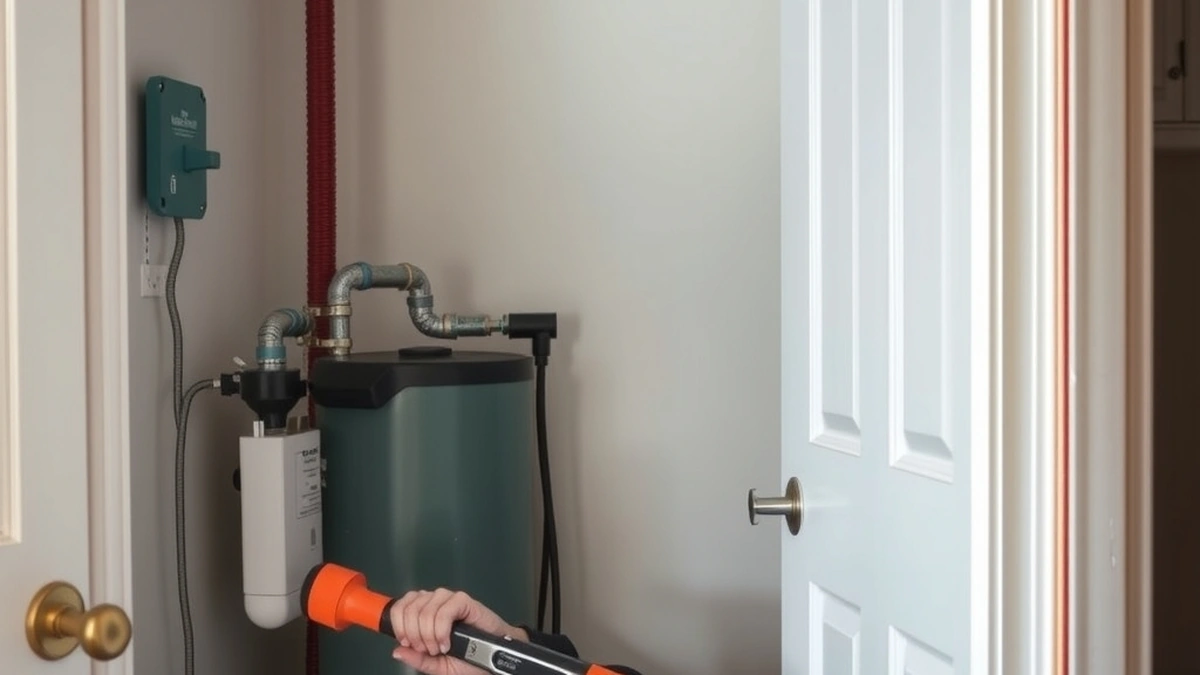
Local softener installers fall into three groups: water treatment dealers, independent plumbers, and big-box subcontractors. Get two quotes that itemize equipment, labor, drain work, and permit, and compare the installed total rather than the unit price.
- Labor
- $500 - $1,500
- Installed total
- $1,200 - $4,500
- Quotes to get
- At least two
- Permit
- $50 - $300 where required
- Install time
- 2 - 4 hours
Some links on this page are affiliate links.If you buy through them we may earn a commission at no extra cost to you. We do not accept payment for rankings. Read the full disclosure.
Searching “water softener near me” returns three kinds of businesses, and they price differently. Water treatment dealers sell their own equipment with service bundled. Independent plumbers install equipment you buy or supply their own and charge labor. Big-box retailers subcontract to local installers with a fixed package price. Knowing which one you are talking to is the first step to a fair quote.
The Three Types of Installer
Water treatment dealer. Often a franchise or a regional company. They test the water, recommend their own softener, install it, and offer service and salt delivery. Pricing is quoted, not listed, and it bundles more than hardware.
Independent plumber. Licensed to do the plumbing, happy to install a unit you bought, and charges by the job or the hour. Usually the lowest labor cost and the least hand-holding.
Retail subcontractor. A store sells a package and sends a contractor. Convenient, mid-priced, and the quality depends entirely on which contractor shows up.
| Type | Equipment choice | Service included | Typical price |
|---|---|---|---|
| Dealer | Their brand only | Yes, often contract | Highest |
| Independent plumber | Yours or theirs | No | Lowest to mid |
| Retail subcontractor | Package | Installation only | Mid |
What a Fair Quote Contains
A softener quote should itemize, not summarize. Ask for these lines separately.
- Equipment with model, grain capacity, and valve type
- Bypass valves and unions
- Drain line and air gap
- Labor and any pipe or fitting allowance
- Permit if required
- Old unit removal and disposal
A single lump sum hides which of those is missing. The two most commonly omitted are the bypass and the air gap, and both matter. A unit installed without a bypass costs more to service later; a drain without an air gap is a code violation in most jurisdictions.
Five Questions to Ask
“What is the tested hardness?” If they cannot answer, they did not test. A size recommendation without a number is a guess.
“What is the peak flow rating?” Capacity and flow are separate limits. A quote that addresses only grains can still leave a house with weak showers.
“Is the drain already suitable?” Ask whether the quote includes a new drain connection or assumes an existing one.
“Is a permit required here?” Rules are local; the installer should know.
“What does the warranty cover, and who honors it?” Equipment warranty and labor warranty are different, and a one-year labor warranty is standard.
Comparing Quotes Fairly
The installed total is the number to compare, but only after checking that both quotes include the same scope.
| Line | Quote A | Quote B |
|---|---|---|
| Equipment | 48,000 grain, metered | 32,000 grain, metered |
| Bypass | Included | Not listed |
| Drain work | New standpipe | Existing floor drain |
| Permit | Included | Not included |
| Labor warranty | 1 year | 90 days |
| Installed total | $2,400 | $1,850 |
Quote B looks cheaper until you add the bypass at $150, the drain at $300, and the permit at $120, which brings it to $2,420. The comparison only works when the scopes match.
What Installation Should Include
- A level set on a stable surface
- A three-valve or single-lever bypass
- Full-port ball valves, not gate valves
- Unions at the unit connections
- A drain line with continuous fall and an air gap
- Programming from the tested hardness and capacity
- A full manual regeneration before the installer leaves
That last item is the one to insist on. Running a cycle with the installer present catches leaks, drain problems, and programming errors while someone else is still responsible for them.
Ask to see the salt bag and the manual before the installer leaves, too. A unit with proprietary salt or an unusual cartridge is a commitment you should understand on day one rather than discover at the first service call. Standard consumables mean you can buy locally for a decade.
What Labor Actually Covers
Labor is not one task. It is cutting and fitting pipe, mounting the unit, running a drain, connecting the brine line, wiring the valve to an outlet, programming the controller, and testing. A two-hour job at a low rate and a four-hour job at a high rate can land at the same price, which is why comparing hourly rates across trades is less useful than comparing the total.
Access drives the range. A unit going into an open basement beside an existing floor drain is the low end. The same unit in a finished closet with galvanized pipe, no drain, and no outlet is the high end, and no amount of shopping will change the physics of that installation.
Red Flags
A quote without a water test. Sizing without hardness is guesswork.
A pressure to sign the same day. Legitimate installers do not need a same-day decision.
A lease presented as a purchase. Ask whether you own the equipment at the end.
No written scope. If it is not on paper, it is not included.
A capacity far above your load. Oversizing costs more and can leave water stale between regenerations.
After the Install
Test hardness at the kitchen tap the same day. Confirm the bypass is in service position. Watch the first regeneration complete. Read the programmed settings against the lab report.
If the water is still hard after a week, the diagnosis order in softener stopped softening finds the fault faster than calling the installer back blind. For the cost breakdown, see water softener installation cost and how much does a water softener cost. If you are weighing a dealer against an independent, Culligan water softener explains the bundled model.
Frequently asked questions
How do I find a good water softener installer near me?
Search for licensed plumbing and water treatment contractors, check state licensing and insurance, and ask for two recent local references before scheduling a quote.
How much should a local installer charge?
Labor runs $500 to $1,500, so the installed total lands at $1,200 to $4,500 depending on equipment, drain work, and whether a permit is required.
Should I use a dealer or an independent plumber?
A dealer bundles equipment, service, and salt; an independent plumber installs equipment you choose and charges for labor, which is usually cheaper but leaves maintenance to you.
What should a softener quote include?
Equipment model and capacity, bypass valves, drain line and air gap, permit if required, labor, and removal of the old unit, itemized rather than as one lump sum.
Do installers test the water first?
A good one does, or asks for your lab results; an installer who quotes a size without knowing hardness is guessing.
How long does installation take?
Two to four hours for a straightforward replacement with an existing drain and outlet, longer if new pipe or a drain connection is needed.
Sources
Some links are affiliate links.If you buy through them we may earn a commission at no extra cost to you. We do not accept payment for rankings. Read the full disclosure.


