
Regeneration Explained: Brine, Backwash, Fast Rinse
How water softener regeneration works, what each cycle does, and what it costs in salt and water.
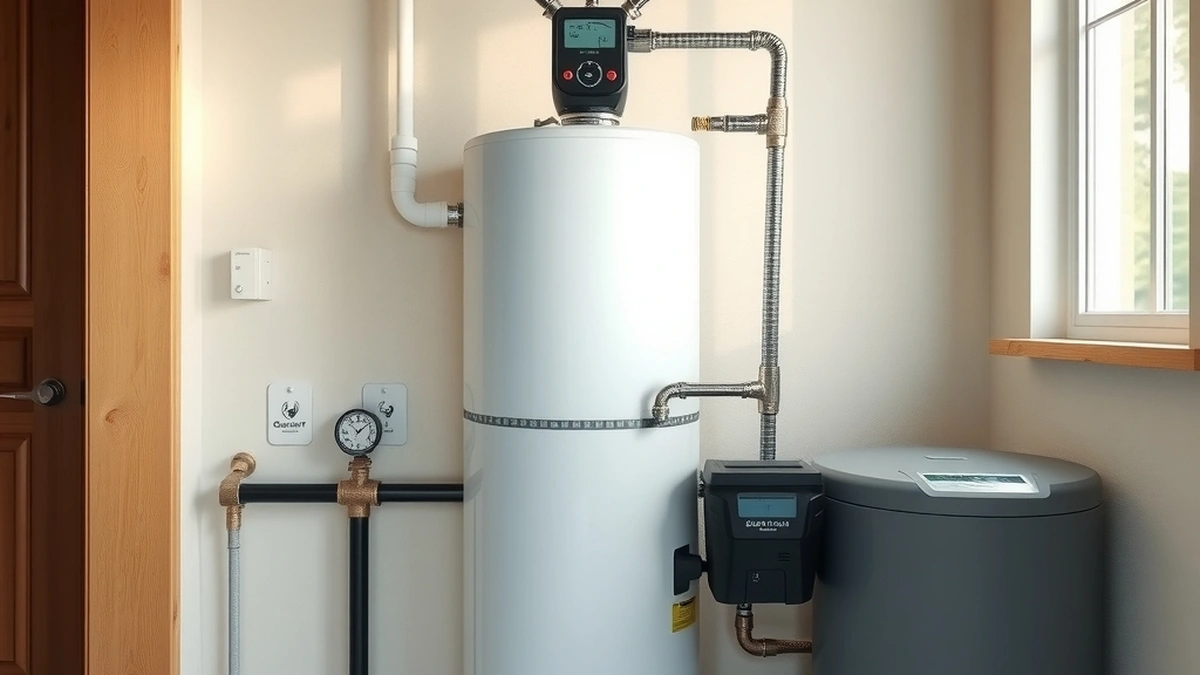
Regeneration is the cleaning cycle that recharges resin beads using brine, backwash, and fast rinse stages to restore hardness removal capacity.
- Typical equipment cost
- $600–$2,500
- Typical installed cost
- $1,200–$4,500
- Salt per regeneration
- 8–12 lbs
- Salt cost per year
- $120–$400
- Resin life
- 8–12 years
Some links on this page are affiliate links.If you buy through them we may earn a commission at no extra cost to you. We do not accept payment for rankings. Read the full disclosure.
Water softener regeneration is the cleaning cycle that restores the resin bed’s ability to remove hardness minerals. It uses three main stages—brine, backwash, and fast rinse—to flush captured calcium and magnesium, recharge the beads with sodium, and return the unit to service. Understanding what each stage does helps you verify the softener is operating as programmed and anticipate salt and water use.
How Regeneration Fits Into Softening
A water softener passes hard water through a tank of resin beads coated with sodium ions. As water flows down through the bed, calcium and magnesium trade places with sodium, and softened water exits to the plumbing. Eventually the beads hold so much hardness that they can no longer exchange ions effectively. At that point the control valve starts regeneration to reset the bed.
Regeneration is not continuous filtration. It is a scheduled or metered event that interrupts normal softening for roughly 60 to 120 minutes, depending on programming and unit size. Most modern softeners are meter-initiated, meaning they track gallons used and regenerate only when resin capacity is close to its limit. Time-clock models regenerate on a fixed calendar interval regardless of actual water use.
Brine Cycle: Recharging the Resin
During the brine cycle, the control valve draws a concentrated salt solution from the brine tank into the resin tank. The brine flows through the resin bed, and sodium ions from the salt displace the calcium and magnesium ions that accumulated during softening. Those hardness minerals are carried away to the drain with the spent brine.
Salt dose is typically set in pounds per regeneration. Canonical range for residential units is 8 to 12 pounds per regeneration. If a softener is programmed for 10 pounds of salt and regenerates twice per week, that is roughly 20 pounds per week, or about 1,040 pounds per year. At bulk salt prices, that falls inside the estimated $120 to $400 annual salt cost range, though local salt prices and regeneration frequency change the actual total.
The brine tank should contain clean salt pellets or solar salt, and the water level inside the tank should be checked periodically. A salt bridge—a hardened crust above the water—can prevent the valve from drawing brine properly, which leaves the resin undercharged and reduces softening capacity until the bridge is broken up.
Backwash: Lifting and Cleaning the Bed
After the brine draw, the valve reverses flow and sends water upward through the resin tank. This is backwash. The upward flow expands and agitates the resin bed, lifting trapped particles such as iron, sediment, and organic matter so they can be flushed to the drain.
Backwash also reclassifies the resin beads after they have been compressed by normal service flow. If the bed is not backwashed, channeling can develop, where water finds paths of least resistance and bypasses portions of the resin. That reduces effective capacity and can let hard water slip through.
Backwash flow rates are determined by the valve and tank size, not by household water pressure alone. Drain line size and elevation matter: if the drain is too small or runs uphill too far, backwash flow can be restricted and the bed may not clean properly. Installers typically check drain line requirements during setup; more on installed cost ranges is covered in our water softener installation cost guide.
Fast Rinse: Clearing Residual Brine
Once backwash finishes, the valve runs water downward through the resin bed at a higher flow rate. This fast rinse stage pushes remaining brine and loosened particles out of the tank and down the drain. It also repacks the resin bed so it is ready for normal downflow service.
If fast rinse is cut short, salty water can carry into the home plumbing at the start of the next service cycle. You might notice a brief salty taste at the tap or higher sodium in the first gallons after regeneration. Proper fast rinse length depends on tank size and drain line configuration, and it is usually factory-set or adjusted during installation.
The three stages run in a fixed sequence: brine draw and slow rinse, backwash, then fast rinse. Some valves include a separate slow rinse after brine to displace remaining salt, but the core sequence remains the same. After fast rinse, the valve returns the softener to bypass-free service and resumes tracking gallons until the next regeneration.
Capacity, Salt, and Regeneration Frequency
Softener capacity is measured in grains of hardness removal. Residential units commonly range from 24,000 to 64,000 grains. A grain is a unit of weight; one grain per gallon (GPG) equals 17.1 parts per million as calcium carbonate. Hardness is commonly classified as soft (0–3 GPG), moderate (3–7 GPG), hard (7–10 GPG), and very hard (10+ GPG).
To estimate regeneration frequency, you need daily grain removal. For example, a household using 300 gallons per day with water at 10 GPG removes 3,000 grains per day. On a 32,000-grain softener set to reserve capacity, regeneration might occur every 7 to 10 days depending on the safety reserve programmed into the valve. Higher hardness or higher usage shortens the interval; lower hardness or lower usage extends it.
Salt efficiency also matters. Using more salt per regeneration increases capacity but reduces efficiency—more salt is wasted per grain removed. Using less salt improves efficiency but lowers total capacity between regenerations. The 8- to 12-pound salt range per regeneration reflects common programming for standard resin; high-efficiency settings may use less, while very hard water may require the higher end to fully recharge the bed.
Installed Cost and Ongoing Expense
Equipment alone typically runs $600 to $2,500. Installed, a water softener usually costs $1,200 to $4,500, depending on plumbing access, drain routing, and whether a prefilter is needed. Salt runs $120 to $400 per year for most households. Resin rebeds, when needed after roughly 8 to 12 years, cost $300 to $600. Total installed life cost over a 10- to 15-year softener life depends heavily on local salt prices, water hardness, and how often the unit regenerates.
If your water contains iron above the softener’s typical limit of 2 to 3 ppm, a softener alone may not handle it effectively, and an iron filter may be required ahead of or instead of softening. Iron filter installed cost is typically $800 to $2,500. For broader whole-house treatment, a whole-house water filter costs $500 to $1,800 installed, and reverse osmesis under-sink systems run $300 to $900 installed. These are separate systems with different maintenance schedules and should be selected based on water test results, not assumed to be necessary with every softener.
Water testing first is the recommended step. A lab water test typically costs $40 to $150 and tells you hardness, iron, and other parameters that determine whether a softener is the right tool and how it should be programmed. Equipment selection comes after the numbers are known.
Maintenance and What to Watch
Regeneration happens automatically, but the system still needs attention. Check the brine tank monthly to make sure salt is not bridged and the tank is not empty. Inspect the drain line during regeneration to confirm water is flowing freely. Listen for the valve cycling; if regeneration runs too often or not at all, the programming may not match actual water use or hardness.
Resin lasts roughly 8 to 12 years under normal conditions, though chlorine, iron, and sediment can shorten that life. A softener itself typically lasts 10 to 15 years. If softening performance declines and salt use and settings are unchanged, a resin rebed or valve service may be needed.
Regeneration is a mechanical process, not a water quality treatment in itself. It restores capacity so the softener can continue removing hardness minerals. It does not remove bacteria, nitrate, or arsenic, and it should not be represented as a health treatment. If your water test shows contaminants beyond hardness, those require separate treatment decisions based on the specific results.
This article is for informational purposes only. Costs and capacities are estimates and vary by region, equipment, water chemistry, and usage. Test your water before purchasing treatment equipment.
Next, compare how much does a water softener cost, water softener installation cost, whole house water filter cost before you commit.
Frequently asked questions
What is water softener regeneration?
Regeneration is the automatic cycle that flushes hardness minerals off resin beads and recharges them with sodium so the softener can keep treating water.
How much salt does one regeneration use?
Most residential softeners use 8 to 12 pounds of salt per regeneration, depending on unit size and programming.
What happens during the brine cycle?
Concentrated salt water is drawn through the resin tank, trading sodium ions for the calcium and magnesium ions collected during softening.
What happens during backwash?
Water flows upward through the resin bed to lift and loosen the beads, flushing trapped iron, sediment, and debris to the drain.
What happens during fast rinse?
Water flows downward at a higher flow rate to rinse remaining brine and loose particles out of the resin bed before service resumes.
How often does a softener regenerate?
Frequency depends on water hardness, household usage, and programmed capacity; a meter-initiated unit regenerates only when resin capacity is nearing its limit.
Sources
Some links are affiliate links.If you buy through them we may earn a commission at no extra cost to you. We do not accept payment for rankings. Read the full disclosure.


