Water softener replacement
When a softener is worth replacing rather than repairing, what a new unit costs, and how to dispose of the old one without leaving brine in the yard.
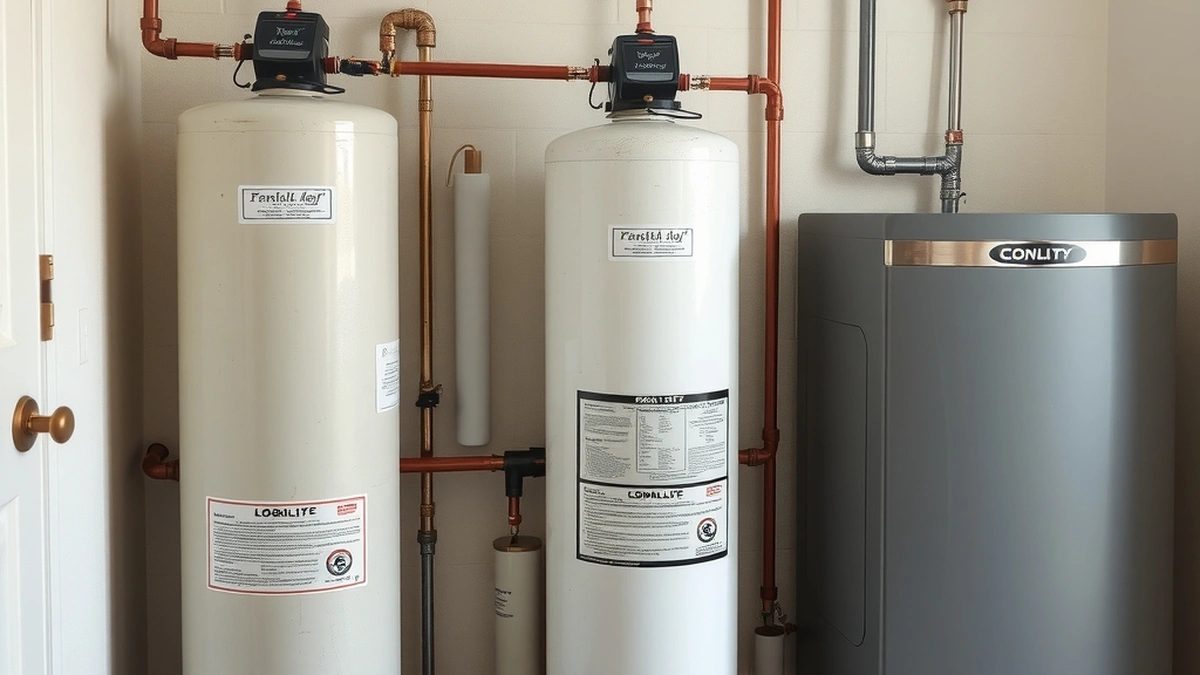
Replace a water softener when it is 10 to 15 years old and the repair exceeds about a third of a new unit's cost. A replacement runs $1,200 to $4,500 installed, and the old tank and brine tank are usually accepted as bulky waste or scrap.
- Installed cost
- $1,200 - $4,500
- Equipment life
- 10 - 15 years
- Resin life
- 8 - 12 years
- Typical install time
- 2 - 4 hours
- Old unit disposal
- Bulky waste or scrap
Some links on this page are affiliate links.If you buy through them we may earn a commission at no extra cost to you. We do not accept payment for rankings. Read the full disclosure.
Water softener replacement is a decision, not a repair. The unit lasts 10 to 15 years, the resin 8 to 12, and the economics flip once the valve and the bed both need work. A replacement runs $1,200 to $4,500 installed, which is the number to compare against the repair quote.
When Replacement Wins
The rule of thumb is straightforward: if the repair exceeds about a third of a new installed price and the unit is past year ten, replace it.
A $400 valve repair on a twelve-year-old unit with a fouled bed is $400 now and a $450 rebed next year, against $2,000 for a new unit with a fresh valve and fresh resin. The new unit also comes with a warranty.
Repair still wins in the middle years. A $180 injector screen and seal job on a six-year-old unit is obviously worth doing, and a $450 rebed on an otherwise sound nine-year-old unit buys several more years.
| Age | Fault | Decision |
|---|---|---|
| Under 5 years | Any single part | Repair |
| 5 - 8 years | Valve or resin, not both | Repair |
| 8 - 10 years | Valve plus resin | Compare quotes |
| Over 10 years | Valve plus resin | Replace |
| Any age | Cracked tank or body | Replace |
What a Replacement Costs
Equipment runs $600 to $2,500 depending on capacity and valve. Installation runs $500 to $1,500, and a replacement is usually at the low end because the drain, outlet, and bypass already exist.
| Item | Range |
|---|---|
| Equipment | $600 - $2,500 |
| Labor | $500 - $1,500 |
| Permit, if required | $50 - $300 |
| Old unit haul-away | $0 - $150 |
| Installed total | $1,200 - $4,500 |
Reusing the existing bypass and brine tank can trim $100 to $300, though some installers prefer new components for warranty reasons. Ask before assuming.
Sizing the New Unit
Do not copy the old unit’s size. Test the water and size from scratch.
Four people at 75 gallons and 10 GPG is 3,000 grains per day, which suits a 32,000 to 48,000 grain unit. If the old unit was a 24,000 grain model installed for two people, the household has outgrown it.
Flow matters as much as capacity. A four-bathroom house needs a unit that passes 10 to 12 gpm at peak, which means a 1 inch valve and adequate tank diameter. Replacing a 24,000 grain unit with a 64,000 grain unit in the same narrow tank does not fix a flow problem.
The sizing method is in water softener sizing, and the capacity-flow distinction is in capacity versus flow rate.
The Removal and Disposal
An old softener is two tanks, a valve, and a bed of resin.
- Bypass and isolate the unit, then relieve pressure.
- Disconnect the inlet, outlet, brine line, and drain.
- Drain the tanks and remove the valve head.
- Vacuum or scoop the resin into heavy bags if local rules require it.
- Take the tanks to bulky waste or a scrap metal recycler.
Resin is plastic beads, not hazardous waste, but it is heavy and messy. Many municipalities accept the tanks as bulky waste; some require the resin bagged separately. A installer who hauls it away is worth the $50 to $150.
Do not dump resin or brine in a garden bed or a storm drain.
Five Steps to Replace
- Test the water and confirm hardness, iron, and flow needs.
- Get two quotes with matching scope and itemized bypass and drain.
- Decide what to reuse from the old installation.
- Confirm the drain and outlet are still serviceable.
- Verify programming after install with a hardness test.
What Changes in a Modern Unit
A twenty-year-old softener and a current model are not the same appliance. The biggest difference is the control valve.
Older units often ran on a timer: regenerate every three days regardless of use. Current metered valves count gallons and regenerate when capacity is actually used, which can cut salt consumption by a third in a household with variable occupancy.
Efficiency settings have also improved. A modern valve can be set to a lower salt dose per regeneration, which uses slightly more water but materially less salt. On 400 pounds a year, a 30 percent reduction is 120 pounds, or roughly $35 to $45 saved annually.
Tank construction has changed less. Fiberglass pressure vessels are still the standard, and the resin is still strong acid cation. The chemistry has not moved.
What to Keep From the Old Install
Not everything should go. The bypass, if it is full-port and sound, is worth keeping and saves $60 to $200. The drain line and air gap can usually stay. The electrical outlet stays.
The brine tank is a judgment call. It is cheap to reuse and cheap to replace. A fifteen-year-old tank may be brittle, and a cracked brine tank leaks slowly onto the floor in a way that is easy to miss.
The old valve should not be reused. It is the part that failed.
For the install detail, see water softener installation. For repair costs on the old unit, water softener repair covers the decision in more depth, and how much does a water softener cost covers the pricing.
Test hardness at the kitchen tap the same day. Confirm the bypass is in service position. Watch a full regeneration complete. Read the settings against the lab report.
A new softener that does not soften is almost always a programming error or a bypass left open. Check both before calling the installer back.
For the install detail, see water softener installation. For repair costs on the old unit, water softener repair covers the decision in more depth, and how much does a water softener cost covers the pricing.
Frequently asked questions
How long does a water softener last before replacement?
Ten to fifteen years for the equipment, with the resin bed lasting eight to twelve years and the valve usually the first component to need major service.
Is it better to repair or replace a softener?
Repair if the unit is under eight years old and the fault is a single part; replace if it is past ten years and the repair exceeds about a third of a new installed price.
How much does a replacement softener cost?
Equipment runs $600 to $2,500, installation $500 to $1,500, and the installed total $1,200 to $4,500, with salt at $120 to $400 per year afterward.
Can I reuse the old brine tank and bypass?
Often yes if they are sound and compatible, which can reduce the cost, though many installers prefer to replace the brine tank with the unit for warranty reasons.
How do I dispose of an old water softener?
Drain it, remove the resin into bags if required locally, and take the tanks to a bulky waste collection or scrap metal recycler; some installers haul it away.
Do I need a new water test before replacing?
Yes. A current test confirms hardness and iron so the new unit is sized correctly, and it catches changes that occurred since the original install.
Sources
Some links are affiliate links.If you buy through them we may earn a commission at no extra cost to you. We do not accept payment for rankings. Read the full disclosure.