
Water Softener Salt Crystals: Cheaper but Messier
Solar salt crystals cost less per bag than pellets but leave more tank sludge. See how they dissolve, when they bridge, and whether the savings hold.
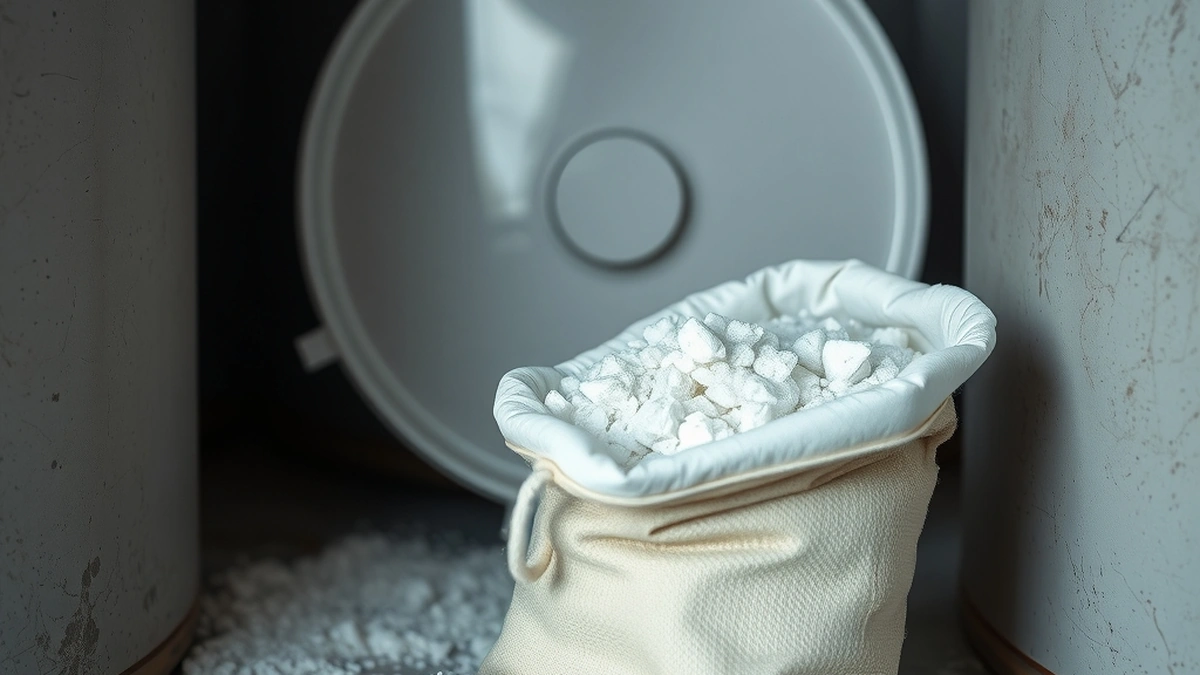
Water softener salt crystals are coarse solar salt that dissolves faster and costs $6 - $10 per 40-pound bag against $7 - $12 for pellets. They leave more insoluble residue and bridge more readily in humid air, so the savings come with more tank cleaning.
- 40 lb bag
- $6 - $10
- Price per pound
- $0.15 - $0.25
- Residue
- Moderate to high
- Dissolve rate
- Fast
- Annual salt cost
- $120 - $400
Some links on this page are affiliate links.If you buy through them we may earn a commission at no extra cost to you. We do not accept payment for rankings. Read the full disclosure.
Water softener salt crystals are coarse solar salt, harvested from evaporation ponds and graded without compression. They cost $6 - $10 per 40-pound bag, dissolve faster than pellets, and leave more residue in the brine tank. The savings are real but smaller than the shelf price suggests.
How Solar Crystals Are Made
Seawater or underground brine is pumped into shallow ponds and left to evaporate in the sun and wind. The remaining salt is harvested, washed, dried, and screened into grades.
The process is low-energy, which is why crystals cost less than compressed pellets. It also leaves more trace minerals in the product. Calcium sulfate, magnesium salts, and insoluble matter remain at a higher percentage than in a pellet that has been purified and compressed.
That difference shows up in the brine tank. The soluble fraction becomes brine; the insoluble fraction settles as sludge on the tank floor and has to be removed.
Crystals vs Pellets
| Feature | Crystals | Pellets |
|---|---|---|
| Price per 40 lb | $6 - $10 | $7 - $12 |
| Price per lb | $0.15 - $0.25 | $0.18 - $0.30 |
| Dissolve speed | Fast | Moderate |
| Tank residue | Moderate to high | Low |
| Bridging risk | Higher in humidity | Lower |
| Best room | Dry utility space | Basement or garage |
Crystals dissolve from the outside and the fines go into suspension, which can cloud the brine briefly. Pellets hold their shape longer and release fewer fines, so the brine stays clearer.
Neither form affects the softener’s capacity. The resin removes the same grains per regeneration regardless of which salt made the brine, as long as the brine is saturated.
The Real Savings
A household using 25 bags a year saves $1 - $3 per bag with crystals, or $25 - $75 annually. That is inside the noise of the $120 - $400 annual salt range.
The savings can be erased by one service call. A bridged tank means a technician visit at $100 - $250, and a tank full of sludge takes an hour to clean. If crystals cause one extra service call every three years, they cost more than pellets.
The case for crystals is strongest where the tank sits in a dry utility room, the fill opening is wide, and the homeowner cleans the tank on schedule. In a damp basement, the case collapses.
Why Crystals Bridge
Bridging is a hard crust that forms above the water line and blocks the salt below from dissolving. The softener regenerates on schedule, but the brine is weak, so the water gradually turns hard while the tank looks full.
Crystals bridge more readily because they carry more fines. The fines absorb moisture from humid air, stick together, and form a shelf. A tank filled too high reduces air circulation and makes the problem worse.
The fix is mechanical: break the crust with a clean broom handle, stir the salt, and lower the fill level. If the space is humid, run a dehumidifier or switch to pellets.
Using Crystals Correctly
- Fill the brine tank to two-thirds at most, leaving room for the salt to shift.
- Pour slowly and do not tamp or pack the salt.
- Keep the salt level above the brine line and below the overflow.
- Check monthly and break any crust before it hardens.
- Clean the tank annually, scooping out sludge and rinsing before refilling.
- Watch for weak brine by testing hardness after a regeneration.
Hardness testing is the honest check. If the treated water reads 0 - 1 GPG, the brine is strong and the salt is dissolving. If it climbs toward 4 GPG while salt remains in the tank, the draw is failing.
Price Per Pound, Not Per Bag
Bag sizes vary. A 25-pound bag at $7 is $0.28 per pound, more expensive than a 40-pound bag at $10, which is $0.25. Compare price per pound before deciding that crystals are cheaper.
Buying in quantity helps either form. A pallet at a spring sale can drop the price by $1 - $2 per bag, which is $25 - $50 a year at typical use. Store bags on a pallet off concrete and away from damp walls, because both forms absorb moisture.
A Note on Tank Hygiene
Crystals leave more than mineral sludge. The brine tank is a dark, wet, room-temperature vessel, and that is a friendly environment for biofilm. A slimy film on the tank walls and the float assembly is common in tanks that are never cleaned.
Empty the tank once a year, scoop out the sludge, scrub the walls with a mild detergent, and rinse before refilling. Do not use bleach at full strength; a dilute solution is enough, and it must be rinsed completely before the softener regenerates.
A clean tank also makes the brine draw easier to diagnose. When the walls are coated, it is hard to see whether the water level is where it should be. A clear tank shows the brine line and the float at a glance.
One more habit: keep the lid on. An open brine tank collects dust, insects, and whatever falls from the shelf above it, and those contaminants end up in the resin during regeneration. The lid also slows evaporation, which keeps the brine concentration stable between cycles.
Buying crystals in bulk has one more catch: the bag weight. Solar salt is often sold in 40-pound bags, but some retailers stock 25-pound bags at a similar shelf price. Read the number on the bag, divide by the price, and compare. A $7 bag that holds 25 pounds is more expensive per pound than a $10 bag that holds 40.
For the full comparison of salt types, see softener salt types and water softener salt pellets. For the bridging fix, see salt bridge in softener. For annual pricing, see water softener salt cost.
Frequently asked questions
Are salt crystals as good as pellets?
Both soften water. Crystals dissolve faster and cost less per bag, but they carry more fines that settle as sludge and need more frequent tank cleaning.
Why do salt crystals cause sludge?
Coarse solar salt contains more calcium sulfate and insoluble matter than compressed pellets. Those impurities settle to the tank floor instead of dissolving.
Can salt crystals cause bridging?
Yes, especially in humid spaces. Fines absorb moisture and fuse into a crust above the water line, which starves the brine draw.
How much do salt crystals cost per year?
At 20-30 bags a year and $6-$10 per bag, the annual cost is roughly $120-$300, slightly below pellets for the same household.
Should I switch from pellets to crystals to save money?
Only if the tank is in a dry space and you will clean it more often. The savings are $1-$3 per bag, which is $20-$90 a year.
Can I mix crystals and pellets?
You can, but finish one bag before opening the next. Layering different forms slows dissolving and makes bridging more likely.
Sources
Some links are affiliate links.If you buy through them we may earn a commission at no extra cost to you. We do not accept payment for rankings. Read the full disclosure.


