
Water Softener Salt Delivery: Cost and How It Works
Salt delivery services bring 40-pound bags or pallets to your door for a per-bag premium. Compare delivered versus retail pricing and set up a schedule.
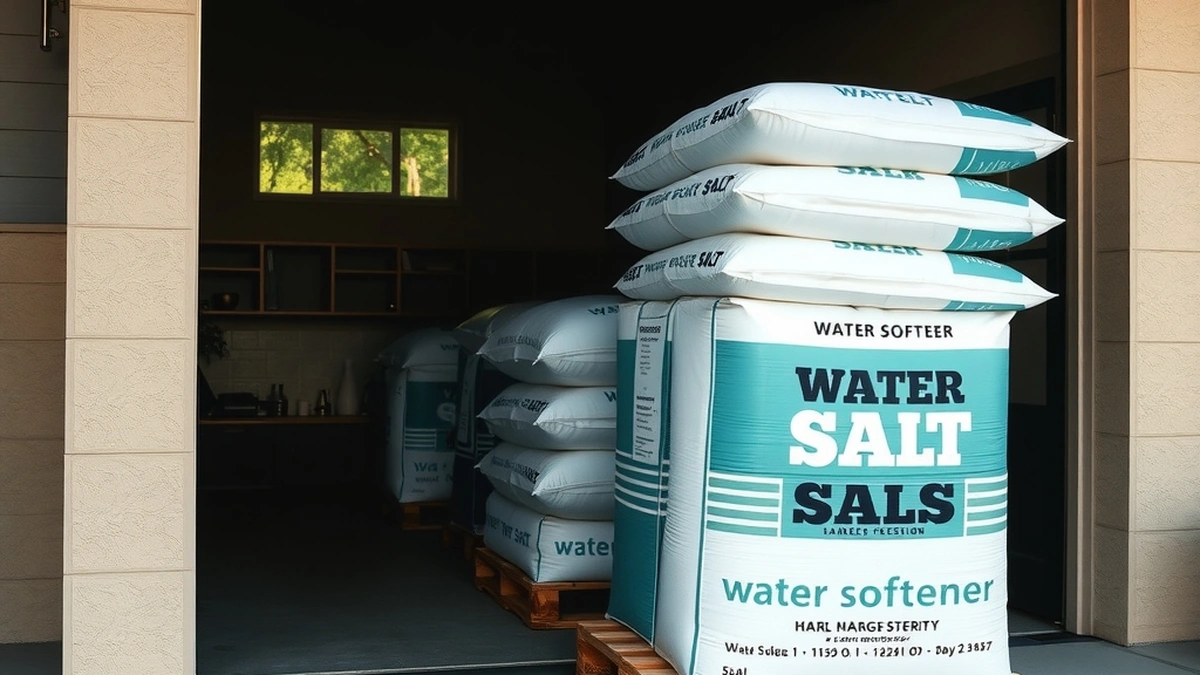
Water softener salt delivery runs about $10 - $16 per 40-pound bag delivered, against $7 - $12 at retail, and most services deliver 10 - 30 bags per drop. Delivery pays off when hauling 800 - 1,200 pounds a year is harder than the $60 - $150 annual premium.
- Delivered price per bag
- $10 - $16
- Retail price per bag
- $7 - $12
- Typical drop size
- 10 - 30 bags
- Annual household use
- 800 - 1,200 lb
- Annual salt cost
- $120 - $400
Some links on this page are affiliate links.If you buy through them we may earn a commission at no extra cost to you. We do not accept payment for rankings. Read the full disclosure.
Water softener salt delivery is a service that brings 40-pound bags or full pallets to your home on a schedule. Delivered salt costs about $10 - $16 per bag against $7 - $12 at retail, and the premium is worth it when a year of salt means hauling 800 - 1,200 pounds from a store.
What a Delivery Service Actually Provides
A salt delivery service is a route-based supplier that stocks softener salt, schedules drops by address, and either leaves bags at the door or carries them to the brine tank. The model exists because softener salt is heavy, cheap, and consumed continuously, which makes it a poor fit for occasional retail trips.
There are three service levels. Curbside delivery leaves a pallet or stack at the garage or front door. Garage placement moves the bags inside, which matters in winter. Full service includes filling the brine tank, checking the salt level, and sometimes testing hardness at the tap. Each step adds labor and cost.
The supplier may be a water treatment dealer, a hardware store with a delivery route, or an independent salt route. Pricing structures vary just as widely: per bag, per drop, per pallet, or an annual contract that includes scheduled visits.
Delivered vs Retail: The Real Premium
| Item | Retail pickup | Delivered |
|---|---|---|
| Price per 40 lb bag | $7 - $12 | $10 - $16 |
| Minimum quantity | 1 bag | 10 bags, often |
| Drop fee | None | $0 - $40 |
| Labor | You load, haul, stack | Driver, sometimes tank fill |
| Annual cost at 25 bags | $175 - $300 | $250 - $400 |
At 25 bags a year, the gap is roughly $75 - $100 before any drop fee. Two drops a year at $25 each adds $50, so the honest premium is $75 - $150 annually. That is the number to weigh against the time, fuel, and physical work of moving a quarter ton of salt.
The premium shrinks per bag as the order grows. A full pallet of 40 - 50 bags usually ships at the low end of the delivered range or with delivery included, while a 10-bag order carries the highest per-bag cost.
How Much Salt Your House Uses
Salt demand follows hardness and occupancy, and the arithmetic is straightforward. A softener draws 8 - 12 pounds per regeneration. A family of four at 10 GPG uses about 250 gallons a day, which is 2,500 grains daily and 17,500 weekly. With a 32,000-grain unit regenerating near 24,000 grains of use, that is roughly 1.4 regenerations a week, or about 70 a year.
Seventy regenerations at 10 pounds equals 700 pounds, which is 17.5 bags. At $12 per delivered bag, that is $210 a year. At 18 GPG the same household lands near 1,260 pounds, 31 bags, and $372. Both sit inside the $120 - $400 annual salt range, with the top of the range belonging to hard water and larger families.
Measure your own use for two months before committing to a schedule. Count bags, not weeks. A service that drops 30 bags every quarter will overstock a household that uses 15.
Setting Up a Delivery Schedule
- Record bag use for 60 - 90 days so you know the real monthly consumption.
- Ask each supplier for the per-bag price, drop fee, minimum order, and whether the tank fill is included.
- Compare the delivered total against retail plus your own trip cost, including fuel and time.
- Choose the smallest drop size that covers three to four months, which limits storage and moisture exposure.
- Confirm the delivery point in writing, garage or basement, and whether stairs change the price.
- Mark the calendar for a reorder when the tank drops below half, not when it runs out.
Storage and Handling Limits
A year of salt is 20 - 30 bags, and that is a lot of weight in one corner of a garage. Stack on a pallet, keep the stack off concrete, and leave air space around it. Bags that sit against a damp wall will absorb moisture and fuse.
If the brine tank is in a basement, the driver may refuse to carry bags down stairs for liability reasons. Ask before the first drop. Moving 40-pound bags down a flight of stairs is the exact task that makes delivery worth paying for, and a service that only does curbside may not solve your problem.
Salt also has a shelf life in humid conditions, not because it expires but because it cakes. A three-month supply stored dry behaves better than a year’s supply stored badly.
When Delivery Is the Wrong Choice
Skip delivery if you use fewer than 10 bags a year, if a store is within a few minutes and you have a vehicle that handles the load, or if storage space is tight. A household at 4 GPG in a condo may need six bags annually, and the delivery minimum makes retail the cheaper path.
Skip it as well if the price per bag is quoted without the drop fee. A $10 bag plus a $40 fee on a 10-bag order is $14 per bag, which is worse than the shelf price at the hardware store.
Delivery fits households using 20 or more bags a year, older homeowners who should not be lifting 40-pound sacks, and anyone whose softener sits in a basement with a difficult stair run. For the wider cost picture, see water softener salt cost and water softener running cost. If you are setting the tank level for the first time, how often to add salt covers the fill schedule.
A Note on Contracts
Some dealers bundle salt delivery into a softener service agreement that includes annual inspection and resin cleaning. That can be reasonable, but read the terms: the salt is often priced at the top of the delivered range, and the contract may auto-renew. A per-drop arrangement keeps the leverage with you and costs nothing when you skip a month.
Ask for the price in writing per bag and per drop, the notice period for cancellation, and whether the driver will fill the tank. Three quotes is enough to see the spread, which is usually $3 - $5 per bag across a single metro area. The cheapest per-bag quote is not always the cheapest year, because drop fees and minimums decide the total.
Frequently asked questions
How much does salt delivery cost?
Most services charge $10-$16 per 40-pound bag delivered, sometimes with a $20-$40 drop fee, which is $3-$5 more per bag than retail pickup.
Is there a minimum order for salt delivery?
Many services set a 10-bag minimum, and some require a full pallet of 40-50 bags for free delivery. Ask before scheduling the first drop.
How often should salt be delivered?
Most households need a drop every two to four months. Track bag use for a year, then set the schedule to match actual consumption rather than a guessed interval.
Will the driver fill the brine tank?
Some full-service dealers will fill the tank and check the salt level for an added fee. Curbside and garage drops usually leave the bags for the homeowner to move.
Can I cancel a salt delivery contract?
Terms vary. Ask about the notice period and any restocking fee before signing, and prefer a service that bills per drop instead of requiring a long contract.
Is delivered salt more expensive than buying it myself?
Yes, by roughly $3-$5 per bag. The premium buys transport, storage, and labor, and it is smallest when a pallet is delivered at once.
Sources
Some links are affiliate links.If you buy through them we may earn a commission at no extra cost to you. We do not accept payment for rankings. Read the full disclosure.


