
Well water testing near me
How to find a certified lab or county program near you, what to ask, and how to avoid the free-test sales visit that ends in a $6,000 quote.
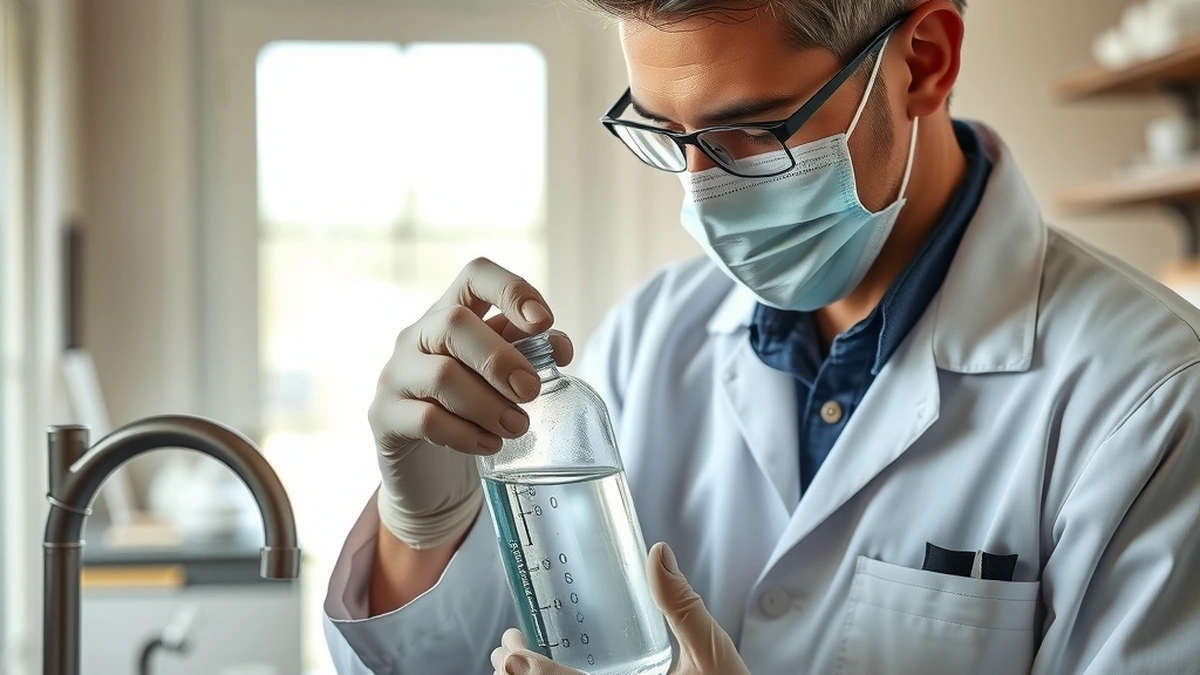
Find a local well test through your state's certified laboratory list, the county health department, or a university extension office. Expect $40 to $150 for a panel, and be wary of free in-home tests that are sales visits with a quote attached.
- Lab panel
- $40 - $150
- County programs
- Often free or subsidized
- Turnaround
- 3 - 10 business days
- Certification
- State-certified lab
- Avoid
- Free test with a same-day quote
Some links on this page are affiliate links.If you buy through them we may earn a commission at no extra cost to you. We do not accept payment for rankings. Read the full disclosure.
Finding well water testing near you means finding a state-certified laboratory, a county health program, or a university extension service. The test costs $40 to $150 and takes a few days. The alternative, a free in-home test, is usually a sales visit, and the quote that follows is the product.
The Three Legitimate Sources
State-certified laboratories. Every state maintains a list of labs certified for drinking water analysis. Certification means the lab meets method and quality-control requirements, and it is the standard that matters for bacteria and nitrate.
County health departments. Many run well testing programs, sometimes free for bacteria, sometimes subsidized for a full panel. They also know which local contaminants are common.
University extension offices. Some states run well owner programs with low-cost testing and interpretation. They are particularly good at explaining what a result means.
| Source | Cost | Best for |
|---|---|---|
| State-certified lab | $40 - $150 | Full panel, defensible results |
| County health | Free - $80 | Bacteria, nitrate screening |
| Extension program | Low cost | Education plus testing |
| National mail-in lab | $50 - $200 | Convenience, PFAS panels |
What a Test Should Include
A basic panel covers bacteria, nitrate, hardness, iron, manganese, and pH. Add arsenic where the geology warrants it, lead if the plumbing is old, and PFAS near industrial or fire-training sites.
The panel should report numbers and the applicable limits, not just pass or fail. A lab that returns a single “safe” verdict is less useful than one that returns the values, because equipment sizing depends on the numbers.
For a softener, the number that matters is hardness in GPG or mg/L as calcium carbonate. For an iron filter, it is iron in ppm. For reverse osmosis, it is nitrate and total dissolved solids.
The Free Test Trap
A free in-home water test is usually performed by a treatment company’s representative using a kit designed to produce a dramatic demonstration. The result is a recommendation, and the recommendation is equipment the company sells.
That does not make every company dishonest. It makes the test a sales tool rather than an independent analysis. The tell is the timing: an independent lab takes days, and a sales visit produces a quote the same hour.
If you accept a free test, ask three questions. Who analyzes the sample? Is the lab state-certified? Will you give me the written results whether or not I buy? A company that answers all three clearly is worth talking to. One that deflects is not.
Taking the Sample Right
A correct sample is half the value of the test.
- Use the lab’s bottle, with its preservative, and check the date.
- Remove the aerator and disinfect the spout.
- Run the water for five to ten minutes before filling.
- Fill without touching the inside of the cap or the neck.
- Deliver within the hold time, refrigerated for bacteria.
Do not sample from a filtered or softened tap when testing for bacteria or nitrate. You want raw well water, not treated water.
Reading the Result Locally
Some county programs will walk through the result with you. That is worth using, because the numbers are easy to misread.
Hardness at 180 mg/L as calcium carbonate is 180 ÷ 17.1 = 10.5 GPG, which is very hard. Nitrate at 8 mg/L is under the 10 mg/L limit but close enough to monitor, especially with an infant at home. Iron at 4 ppm is above the 2 to 3 ppm range a softener can handle.
The conversion table and interpretation are in how to read a water test report, and the broader testing schedule is in well water testing.
One local detail that matters: geology varies by county, and so do the contaminants. A lab two counties away may not routinely test for the metal that is common in your area. Ask the county health department which parameters run high locally, then add those to the panel. That question costs nothing and often catches something a standard panel misses.
What the Lab Needs From You
Labs reject samples for predictable reasons: a bottle past its preservative date, a sample too old, a container that leaked in transit, or a bacteria sample that was not kept cold. Each rejection means a second trip and a second fee.
Ask for the hold time when you pick up the bottle. Bacteria samples typically need to arrive within 24 to 48 hours; nitrate and metals tolerate longer. If you cannot deliver in time, freeze an ice pack in a cooler for transport rather than leaving the bottle on a car seat.
What to Do With the Numbers
- Search your state’s certified lab list or call the county health department.
- Ask for the panel and the price before ordering bottles.
- Collect the sample with clean technique and deliver on time.
- Read the numbers against the limits, not just the summary.
- Retest annually for bacteria and nitrate, and after any change in the water.
What to Do With the Numbers
Test results are only useful if they change a decision. A clean panel means no treatment beyond perhaps a sediment filter. A hardness result above 7 GPG means a softener. Iron above 2 to 3 ppm means an iron filter first. Nitrate near 10 mg/L means reverse osmosis at the tap.
If a treatment company gives you a quote before the lab results are in, the quote is not based on your water. That is the whole reason to test independently first.
For the equipment side, well water treatment cost covers what each stage runs, and well water filtration system covers how the stages are matched to results.
Frequently asked questions
Where can I get well water tested near me?
State-certified environmental laboratories, county health departments, and university extension programs are the reliable options; many counties publish a list of approved labs.
How much does a local well water test cost?
A bacteria and nitrate test runs $40 to $80, and a full panel covering hardness, iron, pH, and metals runs $100 to $150, with some county programs subsidized or free.
Are free water testing offers legitimate?
Some are, but many are sales visits by treatment companies; ask who performs the analysis and whether results come from a certified lab before agreeing.
What should I ask a lab before using it?
Ask whether it is state-certified, which methods it uses for bacteria and nitrate, what the sample hold time is, and whether it reports results against regulatory limits.
Can I mail a sample to a lab?
Yes, many labs accept shipped samples if they arrive within the hold time; bacteria samples usually need to arrive within 24 to 48 hours and stay cold.
How long do results take?
Bacteria results usually take 2 to 5 days, a full panel 5 to 10 days, and PFAS testing 2 to 4 weeks depending on the laboratory.
Sources
Some links are affiliate links.If you buy through them we may earn a commission at no extra cost to you. We do not accept payment for rankings. Read the full disclosure.


