
Well water treatment systems
How to design a well water treatment system for bacteria, nitrate, iron, and hardness, and which stage has to come first.
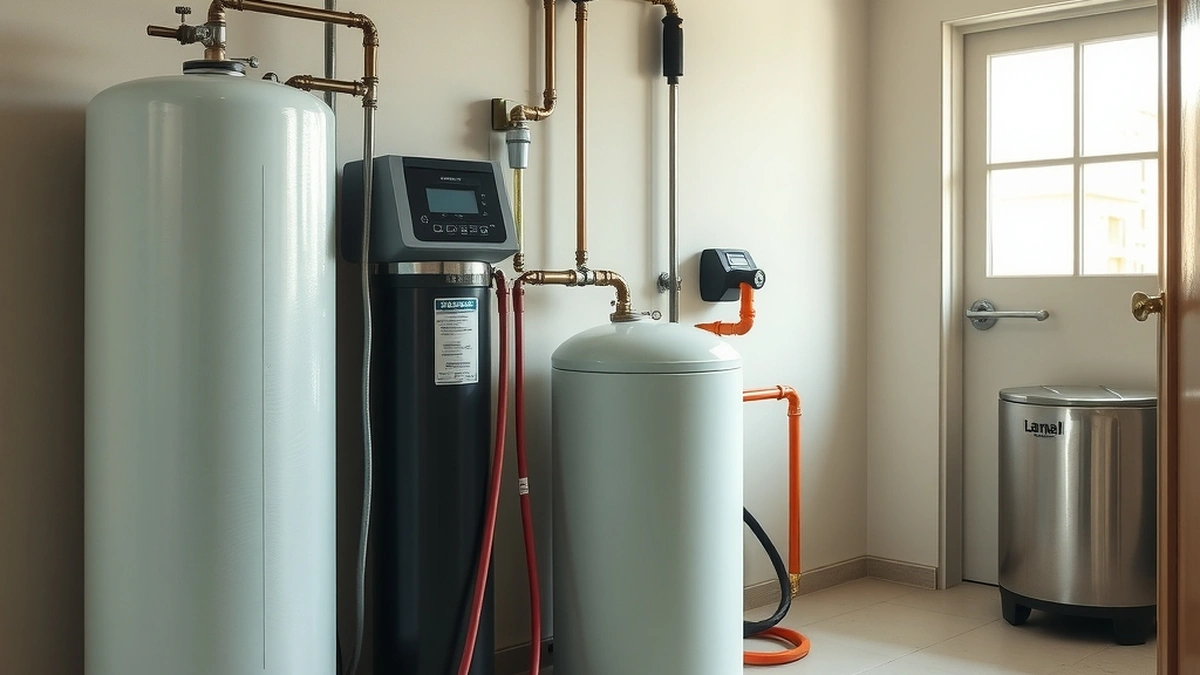
Well water treatment systems start with the lab report and treat safety first: disinfection for bacteria, then iron or sulfur, then nitrate or arsenic if present, then softening and carbon. A full system typically runs $2,000 to $6,000 installed.
- Lab test
- $40 - $150
- Nitrate limit
- 10 mg/L
- Iron filter
- $800 - $2,500
- Sulfur filter
- $1,000 - $3,000
- UV lamp per year
- $30 - $90
Some links on this page are affiliate links.If you buy through them we may earn a commission at no extra cost to you. We do not accept payment for rankings. Read the full disclosure.
Well water treatment systems are designed from the lab report, and the order of stages matters as much as the equipment. Safety comes first: disinfection for bacteria, then iron or sulfur removal, then nitrate or arsenic treatment, then softening and carbon. A full system typically runs $2,000 to $6,000 installed.
Safety before aesthetics
The first decision is whether the water is safe, not whether it tastes good.
A positive coliform test calls for shock chlorination of the well and plumbing, followed by a resample. If the source remains vulnerable, a UV unit provides continuous disinfection. A treatment system that filters but never disinfects leaves the safety question open.
Nitrate at or above 10 mg/L needs a dedicated treatment. A softener does not remove nitrate, and carbon does not either.
Arsenic, lead, and PFAS each need their own method. None of them are solved by a general-purpose filter, and each has a specific test. A treatment train sold without those results is addressing the wrong problem.
Only after the safety questions are settled does taste, odour, and hardness become the agenda. That order is not a sales preference; it is what prevents a taste filter from being installed on water that should not be drunk.
The treatment train
| Order | Stage | Treats | Installed cost |
|---|---|---|---|
| 1 | Sediment and pre-filter | Grit, turbidity | $200 - $600 |
| 2 | Disinfection or UV | Bacteria | Lamp $30 - $90 per year |
| 3 | Iron or sulfur filter | Metals, odour | $800 - $3,000 |
| 4 | Nitrate or arsenic unit | Specific contaminant | Quoted by test result |
| 5 | Softener | Hardness | $1,200 - $4,500 |
| 6 | Carbon | Taste, organics | $500 - $1,800 |
The exact train depends on the report. A well with bacteria and hardness needs disinfection and a softener. A well with iron, sulfur, and hardness needs three stages.
Disinfection options
Shock chlorination is a treatment event, not a permanent system. It disinfects the well, the drop pipe, and the plumbing, and the water is then flushed and retested. If the test returns positive twice, the well itself needs inspection rather than another dose of chlorine.
UV disinfection is a continuous barrier. Water passes a lamp that damages microbial DNA, and the unit needs clear water to work. Sediment and iron shield microbes, so UV goes after filtration.
UV lamps need replacement every 12 months at $30 to $90. A lamp that has been in service for two years may still light but no longer dose properly, which is why the replacement is scheduled rather than judged by appearance.
Iron, sulfur, and hardness
Iron above 2 to 3 ppm exceeds what a softener can handle, and an iron filter at $800 to $2,500 comes first.
Sulfur odour is treated with oxidation and filtration, typically $1,000 to $3,000 installed. The method depends on concentration and whether the smell is constant.
Hardness above 7 gpg calls for a softener at $1,200 to $4,500. It goes before the water heater and after iron treatment.
Designing around the pump
Every backwashing stage needs a flow rate the pump can supply. A filter rated for 12 gpm cannot backwash on a pump that delivers 8 gpm.
The pressure tank also has to be sized for the system. A small tank with a large filter short-cycles the pump.
Ask the installer to measure the pump’s flow at the pressure the house runs, not at zero pressure. That number decides which stages are feasible, and it is the first thing a competent designer asks for.
Installation and permits
A treatment train needs a bypass, a drain for backwash, and power for valves and UV. Some municipalities require a permit for the plumbing work.
Permits vary by city and county and typically take one to three weeks, so the installation date usually follows the paperwork rather than the other way round.
Maintenance that keeps it working
- Test the water annually at $40 to $150, including bacteria and nitrate.
- Replace sediment and carbon cartridges on schedule.
- Replace the UV lamp every 12 months.
- Check the brine tank and salt level monthly.
- Inspect media for compaction or fouling every few years.
- Re-test after any service that opens the system.
A treatment system that is not tested after service is a system that may be bypassed and forgotten. Write the service date and the test result inside the cabinet door so the next visit starts with the history.
A well can change after a new neighbour drills, after a septic field is replaced, or after a season of heavy rain. A system sized for the old water may no longer be right.
Retest before assuming the equipment has failed. A sudden iron problem is often a water change rather than a broken filter, and a sudden sulphur smell after heavy rain is usually the well rather than the media.
For the filtration detail, see well water filtration systems and iron in water treatment. For nitrate, nitrate in water treatment covers the options.
Bottom line
Well water treatment starts with the test and treats safety first. Build the train in order, size every backwashing stage to the pump, and test annually. A $2,000 to $6,000 system is only as good as the report it was designed from.
Frequently asked questions
What is the first step in treating well water?
A certified lab test at $40 to $150, because the results decide which stages are needed and in what order they should be installed.
How is bacteria in well water treated?
Shock chlorination of the well and plumbing, followed by a resample, with UV disinfection added where the source remains vulnerable.
Can a softener remove nitrate?
No. Nitrate needs a dedicated treatment such as reverse osmosis or ion exchange selected for nitrate, and the federal limit is 10 mg/L.
What order should treatment stages go in?
Disinfection and sediment first, then iron or sulfur, then nitrate or arsenic treatment, then softening, then carbon and UV as needed.
How much does a well water treatment system cost?
A full system often runs $2,000 to $6,000 installed, with individual stages from $500 to $3,000 depending on the contaminant.
How often should a treatment system be serviced?
At least annually, including a water test, media inspection, and UV lamp replacement every 12 months.
Sources
Some links are affiliate links.If you buy through them we may earn a commission at no extra cost to you. We do not accept payment for rankings. Read the full disclosure.


