
Well water filtration systems
How to build a well water filtration train for sediment, iron, sulfur, and taste, with sizing and cost ranges for each stage.
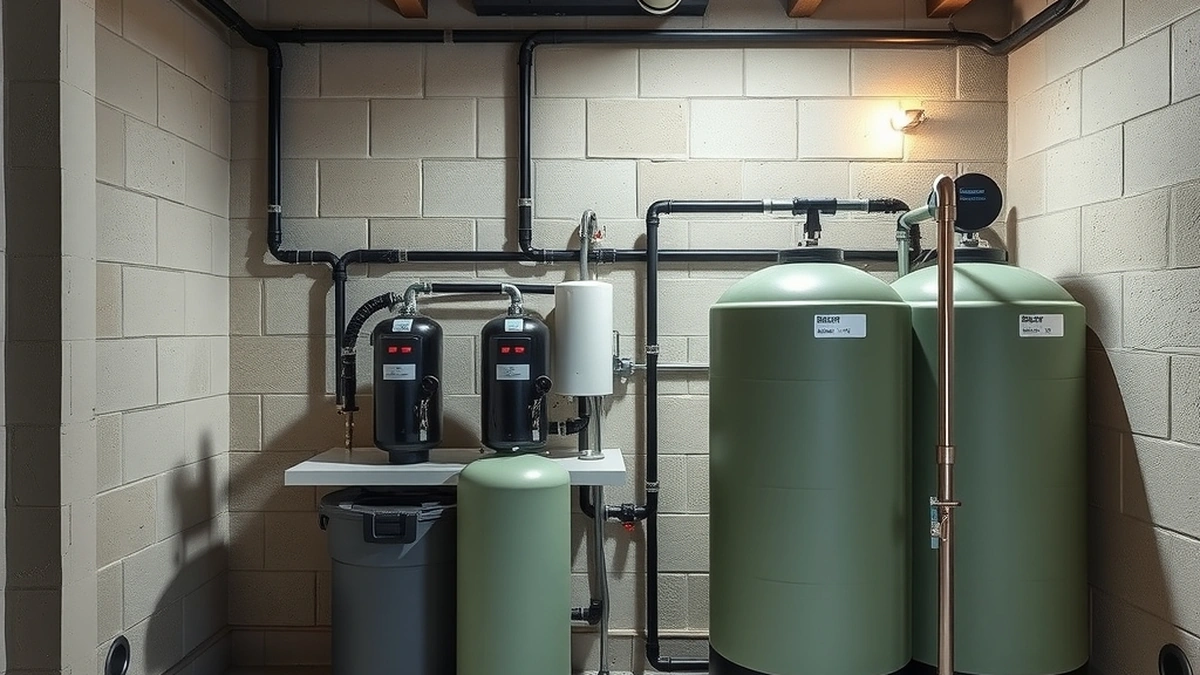
Well water filtration systems are built as a train: sediment first, then iron or sulfur treatment, then carbon, with softening where hardness demands it. Stages cost $500 to $3,000 installed, and the order matters more than the brand.
- Carbon filter
- $500 - $1,800
- Iron filter
- $800 - $2,500
- Sulfur filter
- $1,000 - $3,000
- Household flow
- 8 - 15 gpm
- Water test
- $40 - $150
Some links on this page are affiliate links.If you buy through them we may earn a commission at no extra cost to you. We do not accept payment for rankings. Read the full disclosure.
Well water filtration systems are built as a sequence, not a single box. Sediment comes first, then iron or sulfur treatment, then carbon for taste, with a softener where hardness is high. Each stage costs $500 to $3,000 installed, and getting the order wrong means the downstream stages foul faster than they should.
Start with the lab report
A well test at $40 to $150 reports sediment, iron, manganese, hardness, pH, bacteria, and nitrate. Those numbers decide which stages are needed.
Grit and turbidity call for a sediment filter. Iron above 2 to 3 ppm calls for an iron filter. Sulfur odour calls for oxidation and filtration. Hardness above 7 gpg calls for a softener. Bacteria calls for disinfection, and often UV.
A system sold before the test is a guess. The common failure is a softener installed on water with 6 ppm iron, which fouls the resin within months.
The order of stages
| Order | Stage | Purpose | Typical installed cost |
|---|---|---|---|
| 1 | Sediment filter | Catch grit and protect downstream media | $200 - $600 |
| 2 | Iron or sulfur filter | Remove metals and odour | $800 - $3,000 |
| 3 | Carbon filter | Taste, chlorine, organics | $500 - $1,800 |
| 4 | Softener | Hardness removal | $1,200 - $4,500 |
| 5 | UV | Disinfection | $300 - $900 plus lamp |
The sequence protects the expensive stages. A carbon filter placed before an iron filter will load with iron and need replacing in weeks.
UV goes last because sediment and colour shield microbes from the light. Water has to be clear before UV can work.
Sizing by flow
Whole-house stages are rated in gallons per minute. A household with two bathrooms and standard appliances peaks at 8 to 15 gpm.
| Household | Peak flow | Stage rating |
|---|---|---|
| 2 people, 1 bathroom | 6 - 8 gpm | 10 gpm |
| 4 people, 2 bathrooms | 10 - 12 gpm | 15 gpm |
| 5+ people, 3 bathrooms | 15+ gpm | 20 gpm |
Backwashing filters need enough flow to backwash properly, which is a separate requirement from service flow. A filter that is too large for the pump will not clean itself, and the symptom is pressure loss that gets worse over weeks rather than a sudden failure.
Iron and sulfur treatment
Iron filters oxidize dissolved iron into particles and then trap them. The common media are air-injection, greensand, and catalytic carbon.
Sulfur is treated with oxidation and filtration, and the choice depends on concentration and whether the smell is constant or intermittent.
Both need backwashing, which means a drain and a flow rate the pump can supply. A well pump that delivers 8 gpm cannot backwash a filter rated for 12 gpm, and the media then cakes and stops working.
Carbon and softening
A carbon filter at $500 to $1,800 installed improves taste and reduces chlorine and some organics. Cartridges run $80 to $300 per year and need changing every 6 to 12 months. On well water, carbon is usually the last stage rather than the first, because it has the shortest service life of any media in the train.
A softener at $1,200 to $4,500 installed removes hardness. It goes before the water heater to protect the tank and elements, and after iron treatment so the resin is not doing the iron filter’s job.
If the water is very hard and iron is present, treat the iron first. Softener resin is not designed to carry an iron load.
Building the system
- Get the lab report and list every parameter outside its target.
- Rank the problems: safety first, then equipment protection, then aesthetics.
- Choose the stages in order, with sediment first.
- Confirm the pump can supply the backwash flow each stage needs.
- Size the softener from hardness and daily gallons.
- Install a bypass around the whole train for service.
A bypass is not optional. Without it, every filter change or repair shuts water off to the house, and a service call that could take twenty minutes becomes a half-day job.
Maintenance and running costs
Sediment cartridges last 3 to 6 months. Carbon lasts 6 to 12 months. Iron and sulfur media last several years but need periodic backwash checks. Salt runs $120 to $400 per year. UV lamps need replacement every 12 months at $30 to $90.
A full train often lands between $2,000 and $6,000 installed. That is a wide range because the water decides the stages, not the size of the house.
Not every well needs a train. A well with clean water and moderate hardness may need only a softener and a sediment pre-filter.
A well with low iron, no odour, and no bacteria may need only a carbon filter for taste, plus a sediment pre-filter to protect it.
The test prevents overbuilding as much as it prevents undersizing.
For the treatment side, see well water treatment systems and iron filter installation. For sulfur, sulfur removal options compares the methods.
Bottom line
Well water filtration is a sequence: sediment, iron or sulfur, carbon, softener, and UV where needed. Size by flow and by the lab report, keep the order right, and budget $2,000 to $6,000 for a full train.
Frequently asked questions
What filtration does well water need?
It depends on the test: sediment for grit, iron or sulfur treatment for metals and odour, carbon for taste, and softening for hardness.
What order should filters go in?
Sediment first, then iron or sulfur treatment, then carbon, with a softener before the water heater and UV last if disinfection is needed.
How much does a well water filtration system cost?
Individual stages run $500 to $3,000 installed, and a full train often lands between $2,000 and $6,000 depending on the water.
How do I size the system?
Size by peak household flow of 8 to 15 gallons per minute, then by the contaminant levels in the lab report.
Does a carbon filter remove iron?
A carbon filter can catch some iron, but it fouls quickly; a dedicated iron filter at $800 to $2,500 is the right stage for elevated iron.
Do I need UV treatment?
UV is added when bacteria testing is positive or the well is vulnerable, and the lamp needs replacement every 12 months at $30 to $90.
Sources
Some links are affiliate links.If you buy through them we may earn a commission at no extra cost to you. We do not accept payment for rankings. Read the full disclosure.


